A Generation Strives To Revive Traditional Healing
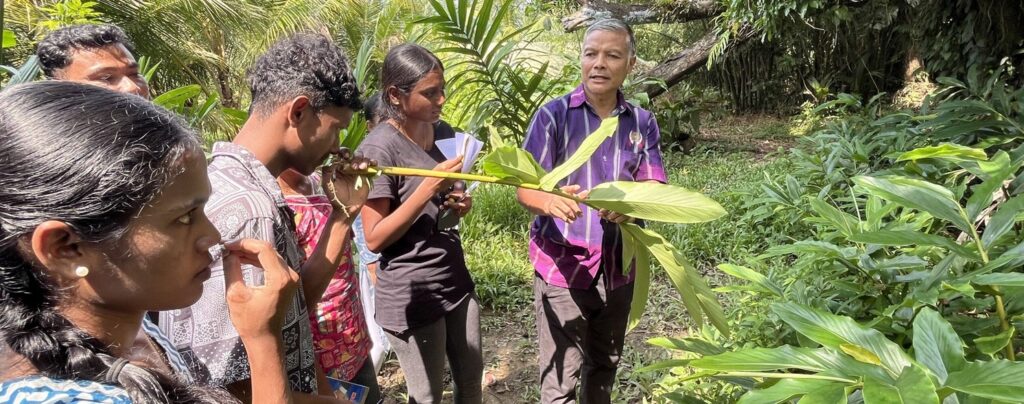
Saw John Aung Thong introduces students of the Local Voices in Conservation summer school to the medicinal plants in his garden (Image by Leesha K Nair)
- Traditional healers among the Andaman and Nicobar Islands’ Karen community have declined sharply, and efforts to revive plant-based healing are struggling due to limited interest and documentation.
- Economic pressures are replacing diverse homegardens with arecanut plantations, offering income but reducing the diversity of medicinal and food plants.
- Homegardens play a crucial role in carbon sequestration and livelihood support, with studies showing that higher plant diversity increases both carbon storage and household economic returns.
“It is not the way it used to be,” says Saw John Aung Thong, as he crosses rows of tall areca nut trees towards a clearing where his plant nursery once stood. This patch of land, now sparse, once held dozens of medicinal saplings in neat rows, awaiting planting. For the 54-year-old, the empty space represents more than a failed gardening experiment. It represents a stalled attempt to revive an old knowledge system that had sustained his community for generations.
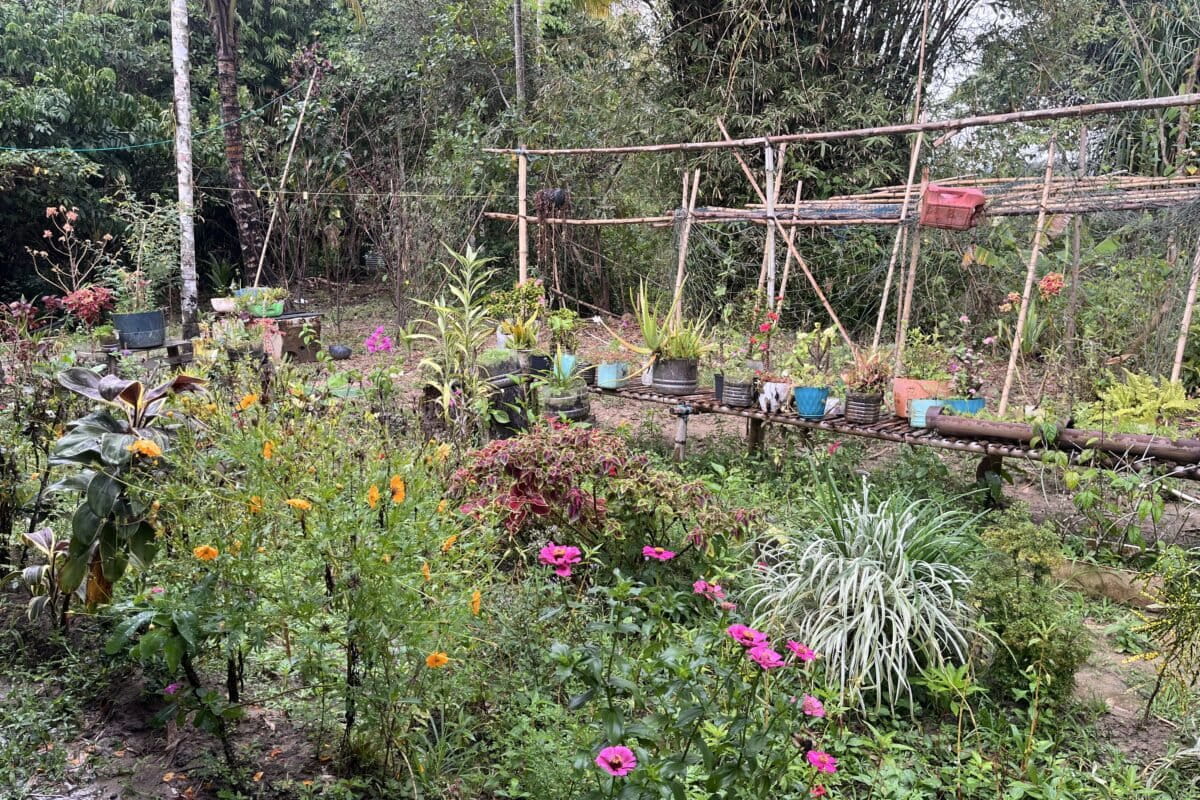
Set deep within Middle Andaman in the Andaman and Nicobar Islands is Webi village, where John runs a homestay named Koh Hee. Webi was also the first settlement for his community, the Karens, when they were brought to the islands from Burma (now Myanmar) by the British in 1925 as foresters and labourers in the timber industry. The Karens are a settler group brought to the archipelago by the British administration in the early 20th century to meet labour demands.
Nearly a century later, while many communities in the Andaman and Nicobar Islands have blended culturally, the Karens have largely retained their distinct traditions, language, and rituals. But in recent years, their medicinal knowledge is quietly slipping out of practice.
“My main motivation to bring back these gardens was my father. He was a traditional healer who passed on this knowledge to others. During his time, there were five to six healers who practised traditional healing; now only one or two remain. He wanted us to learn traditional healing even if we didn’t plan to be professional healers. Now I regret not following his advice because we have lost a big chunk of that knowledge,” John informs Mongabay-India.
In 2019, he travelled from one village to another, collecting saplings and reaching out to elders who knew about these herbs. His plan was to grow and distribute them to the Karens spread across eight villages. While this plan was successful initially, the number of plants started dwindling in many households, including his own.
“Maintaining the plants is a task; I can do only a little on my own. Besides, now it is easier to get on a bike and reach the hospital than to prepare medicines at home,” John points out.
The backyard pharmacy
For decades, these medicinal gardens have been the first line of treatment for everyday ailments, due to the absence of accessible healthcare in the islands. A study on ethnomedical knowledge among the Andaman Karens identified 78 plant species used by traditional knowledge practitioners for treatment, while another study identified 24 species.
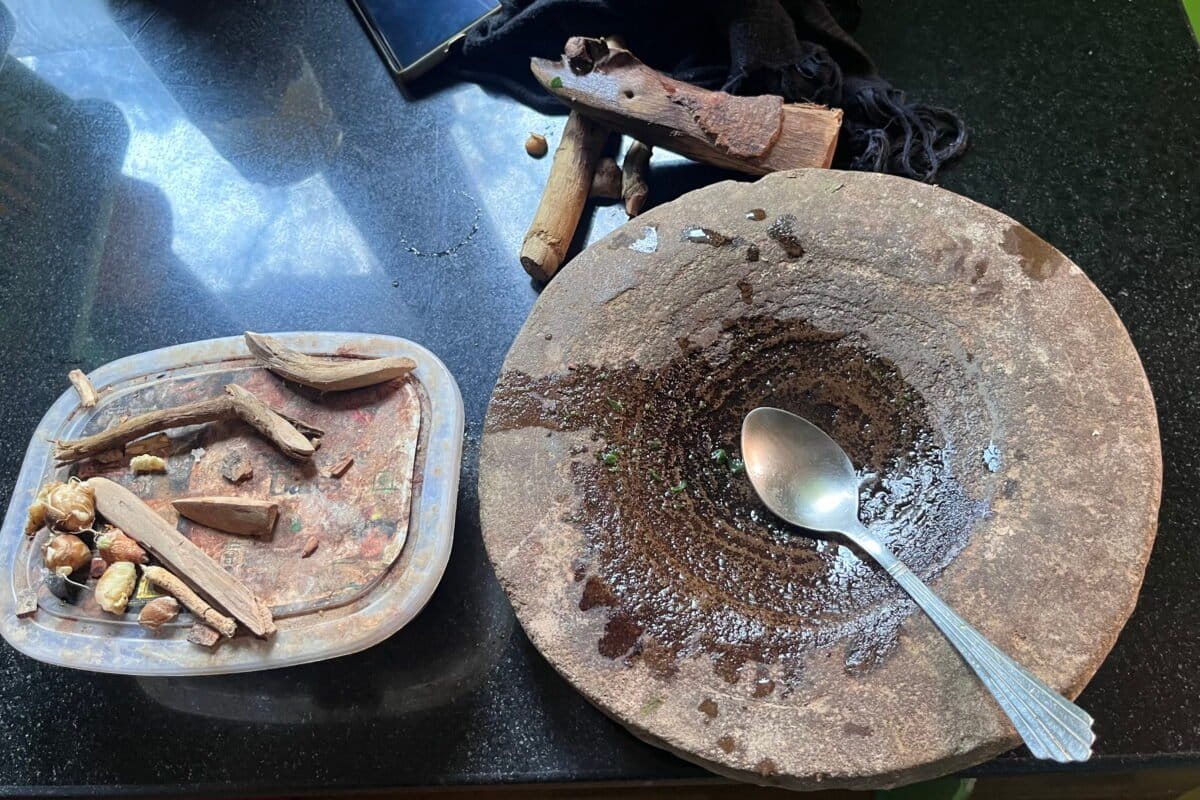
Plants such as Laniti (Acorus calamus Linn.), Ikritie (Millingtonia hortensis Linn.) and Su (Kaempferia rotunda Linn.) were essential in every home.
Since no single household possessed every plant needed for treatment, preparing certain medicines often meant walking to neighbouring homes to gather ingredients, or venturing into nearby forests, according to community members.
Even though access to healthcare has improved in villages like Webi, many people still rely on the practice. For them, reaching out to folk healers like 64-year-old Saw Mougmain, fondly called Pochain, is more desirable.
“It is a big help in remote areas where going to the hospital is difficult. Even in areas where hospitals are close, both the Karens and the Ranchis (another settler community) still choose to get treated by me,” laughs Mougmain.
Mougmain, who has been a folk healer for 24 years, cites the low side effects and credibility of traditional medicines as some of the main reasons for this choice.
Arecanut gets popular
The community has traditionally cultivated vegetables like brinjal, pumpkin and beans among many others alongside medicinal plants in their homegardens, and relied only on the markets for items like oil, onion and garlic. Many have recently replaced parts of these homegardens with areca plantations, owing to the latter’s high market value.
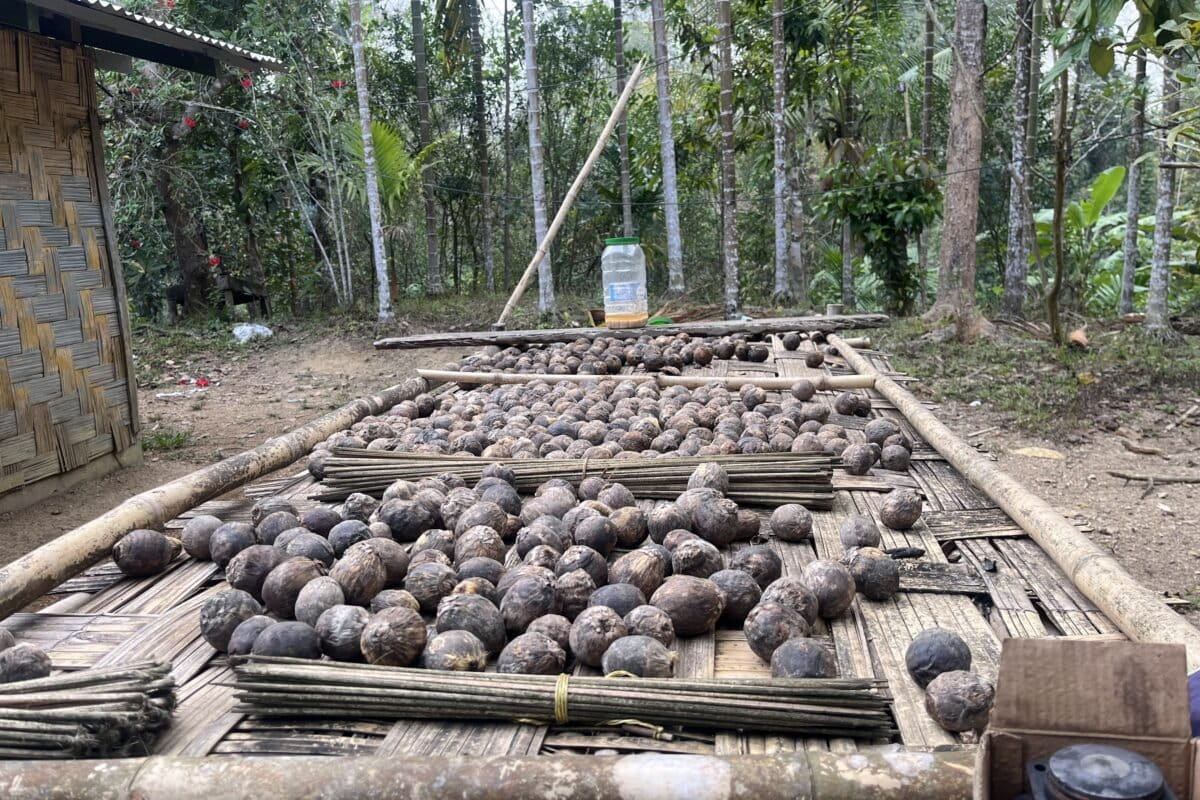
Naw Choti, one of the few women healers, has converted a major portion of her land into areca plantations. “No one in my house has a job and the kids are young. I can make money by selling areca fruits. I have planted 700 trees, but they are still juvenile. Probably by next year, they’ll start fruiting,” Choti says.
She started planting areca nut last year, but the yield got better this year. This year, Choti earned ₹8,000 through arecanut, compared to her previous earnings of ₹20,000 in the entire year of 2025. She also grows pepper, which she sells for ₹1,000 per kg, and made around ₹4,000 by selling lemons and lemon products in 2025.
Despite the economic gains from areca nut, Naw Choti believes that traditional medicinal knowledge remains important, especially for women. She points out that women find comfort in sharing details of certain ailments with women healers which makes it important for women in her community to have an understanding of the practice.
Home gardens capture carbon
Areca nut is the second most important plantation crop in the archipelago, occupying 4,125 hectares of land, as per a 2022 study. Home gardens, though far less extensive, are known for their ecological benefits, particularly their potential to capture carbon.
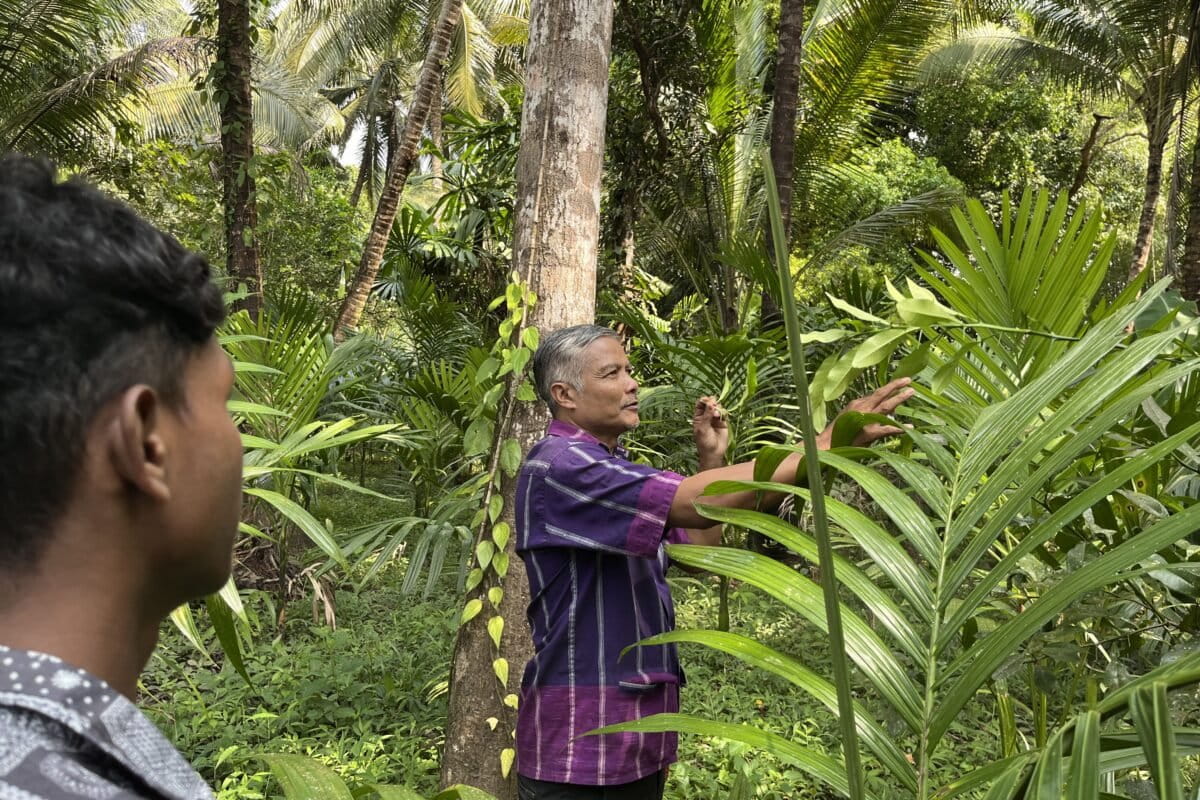
Studies on Andaman home gardens have documented their multi-storeyed structure, where different plant species grow in layered arrangements like a forest. This structure is similar to the home garden systems found in regions such as Kerala, which are known to store significant amounts of carbon.
According to B. Mohan Kumar, who has studied Kerala home gardens and currently serves as the Chairman of the Research Council at the Kerala Forest Research Institute (KFRI) in Peechi, such diversified systems can be more effective at capturing carbon than monoculture plantations. “Biodiverse or high-diversity home gardens have better potential for carbon sequestration than monoculture plantations because there is better utilisation of site resources, particularly light,” he says.
The underground root system too is stratified, which in turn leads to more effective absorption of soil moisture by different layers in a home garden, he says, adding that more research is needed to accurately estimate the carbon stocks of home gardens in the Andaman and Nicobar Islands.
While John says that not every household has the time or space to maintain large homegardens like his, Kumar shares that even smaller gardens can play an important ecological role. Citing results from his studies in Kerala, he elaborates that since smaller homegardens are more species-diverse on a unit area basis, there are higher levels of carbon stock and biomass packing.
Specifics of garden economics
Studies on Andaman home gardens have also found that their economic value is closely linked to plant diversity. One study estimates that a 1% increase in plant diversity in a home garden could raise its total economic value by 0.34% to 0.80%, as households are able to harvest a wider range of food, fruits, and other products from the same space. The medicinal plants account for roughly 5% of total plant diversity in the Andaman home gardens, as per the study.
Younger Karen are increasingly aware of the risk of losing the traditional knowledge. Naw Shemlin has begun documenting the plants and their uses, hoping to create a record of the community’s medicinal expertise before it fades from memory. She began her work during her master’s research on ethnobotany, which explored the relationship between plants, culture, and Karen heritage. While crafts and food are widely recognised aspects of the community’s identity, Shemlin says their medicinal knowledge remains far less known.
“There is no instant money in traditional healing. And it takes a lot of time to learn it. Fishing, on the other hand, gives the youth quick money. Some others take up government jobs,” Shemlin says.
John, however, believes these gardens still hold relevance. He conducts guided walks through his garden, introducing visitors at his homestay to the medicinal plants and their uses. He believes similar efforts could allow the youth to earn a livelihood while conserving traditional knowledge. Others too affirm that the survival of this knowledge now depends on whether the youth choose to carry this forward or not.
“I hope the youth take responsibility for keeping this tradition alive and document the knowledge, because these plants aren’t just for our community. Many people from other communities want to know about them, study them. This knowledge is an important aspect of our identity which we can’t lose,” John says.
(Published under Creative Commons from Mongabay India)