Cong Questions PM Modi’s Silence On Israel-Lebanon Conflict
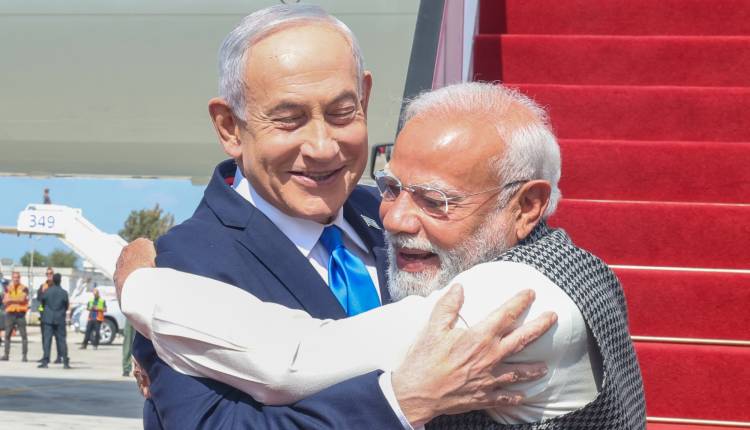
PM Modi with Israeli Prime Minister Benjamin Netanyahu in Tel Aviv in February 2026
The Congress on Tuesday intensified its criticism of Prime Minister Narendra Modi, accusing him of remaining silent on Israel’s ongoing military campaign in Lebanon and its potential consequences for diplomatic efforts between the United States and Iran. The opposition party argued that developments in West Asia carry significant implications for India, particularly in terms of energy security and economic stability, and questioned the government’s position on the escalating conflict.
Congress raises concerns over impact on US-Iran diplomacy
Congress general secretary for communications Jairam Ramesh said that negotiations between Washington and Tehran are of considerable importance not only for the future of West Asia but also for countries such as India that are heavily dependent on stable energy supplies. According to him, progress in the talks could help reduce tensions in the region and contribute to greater stability in global oil markets.
Ramesh highlighted that any successful understanding between the United States and Iran could have immediate economic benefits. He pointed out that improved relations and reduced regional tensions would likely facilitate smoother movement through the Strait of Hormuz, one of the world’s most critical maritime trade routes for oil transportation. A more stable environment in the Gulf, he argued, could also help moderate crude oil prices, an issue of direct relevance to India, which imports a substantial portion of its energy requirements.
In a statement shared on social media, the Congress leader said India has a major stake in developments related to the Strait of Hormuz and international energy markets. He suggested that efforts to achieve a diplomatic breakthrough between Washington and Tehran have faced obstacles due to Israel’s continued military operations in Lebanon.
According to Ramesh, the ongoing conflict has complicated attempts to secure a broader regional understanding. He noted that concerns have been raised internationally about the impact of military escalation on diplomatic initiatives aimed at reducing tensions across West Asia.
The Congress leader also referred to reports indicating growing differences between US President Donald Trump and Israeli Prime Minister Benjamin Netanyahu regarding the handling of the Lebanon situation. He argued that several governments around the world have openly expressed concern about Israel’s actions, while India has not publicly taken a similar position.
Questioning the Prime Minister’s approach, Ramesh claimed that Modi has not spoken out against the offensive despite mounting international criticism. In a sharply worded political attack, he suggested that the Prime Minister appeared more concerned about ideological affiliations than India’s national interests, a remark that underscored the Congress party’s attempt to frame the issue as one with direct domestic implications.
Trump-Netanyahu differences spotlight growing regional tensions
The Congress criticism came against the backdrop of reports describing friction between Washington and Tel Aviv over military operations in Lebanon. International attention has focused on discussions between President Trump and Prime Minister Netanyahu as concerns grow about the possibility of a wider regional conflict.
Trump recently stated that he had personally intervened to prevent a major Israeli military operation in Beirut. Writing on his social media platform, Truth Social, the US president said he had urged Netanyahu not to proceed with a large-scale raid in the Lebanese capital. According to Trump, the Israeli leader subsequently altered the planned course of action.
The remarks drew considerable attention because they appeared to signal a direct effort by Washington to restrain military escalation at a sensitive moment in regional diplomacy. Trump’s comments came shortly after Iranian officials warned that continued Israeli operations in Lebanon could undermine ongoing negotiations between Tehran and Washington.
Iran has consistently argued that military escalation threatens prospects for diplomatic engagement. Analysts have suggested that renewed violence in Lebanon could make it more difficult to sustain momentum in talks aimed at easing tensions between the two countries.
Netanyahu, meanwhile, has maintained a firm stance on security matters. The Israeli Prime Minister had earlier warned that strikes could be carried out against what Israel considers terrorist infrastructure in Beirut if attacks by Hezbollah against Israeli targets continued.
Trump also claimed that discussions had taken place with representatives connected to Hezbollah and that assurances had been received regarding a cessation of attacks on Israel and its military personnel. While details of such contacts remain unclear, the statement added another dimension to the already complex diplomatic landscape.
Reports from international media outlets, including Axios, suggested that conversations between Trump and Netanyahu were marked by disagreements over the best approach to the conflict. These reports have fuelled speculation about emerging policy differences between the United States and Israel at a time when both countries are navigating a highly volatile regional environment.
Against this backdrop, the Congress party has sought to bring India’s foreign policy stance into sharper focus. By linking developments in West Asia to issues such as oil prices, maritime trade routes and economic stability, the opposition is attempting to highlight the domestic consequences of international conflicts. The party has also called on the government to clearly articulate its position as tensions continue to rise across the region and diplomatic efforts face increasing challenges.