Using Coal For Cooking During LPG Crisis Raises Health Concerns
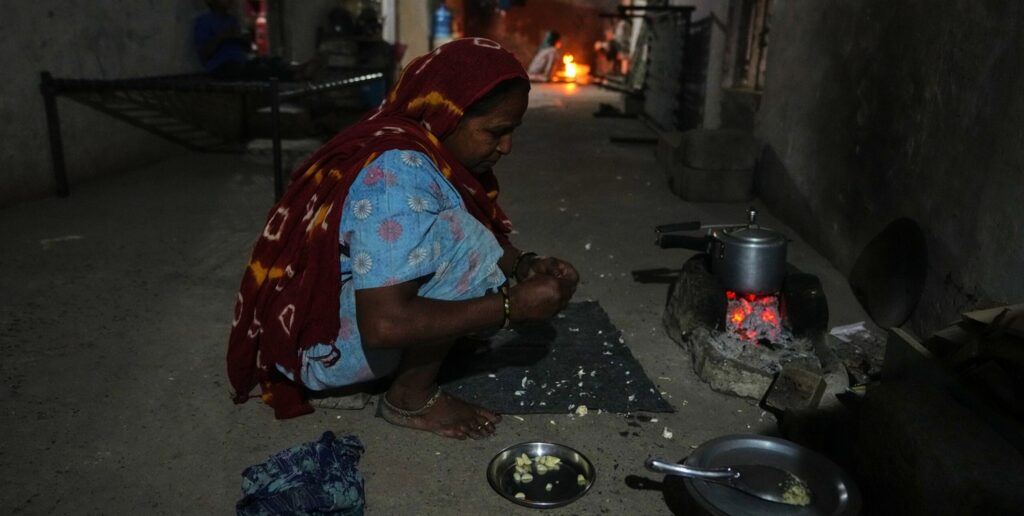
A woman prepares a meal using coal (Representative image; AP Photo/Ajit Solanki)
- The Bihar government has decided to distribute coal for domestic cooking in the wake of the LPG crisis, raising questions about its practicality.
- Experts have called this decision a reversal of the government’s efforts to promote clean energy.
- Experts say the Bihar government should issue strict guidelines on the use of coal for domestic cooking to minimise pollution and health risks.
As the LPG (Liquefied Petroleum Gas) crisis deepens due to the ongoing conflict in West Asia, the Bihar government has taken an unusual decision: to provide coal for cooking to families holding ration cards.
Under guidelines issued by the food and consumer protection department, families in Bihar covered by the National Food Security Act – currently around 17.9 million households – would receive 100 kg of coal every month through more than 50,000 fair price shops in Bihar. In effect, Bihar will burn 1.79 million tonnes of coal for cooking every month. There is no specified end date of this plan.
Following the disruption of critical corridors for LPG supply to India, many parts of the country have faced an LPG shortage. The Bihar government formed a high-level Crisis Management Group to address this and at a March 30 meeting, the group decided to distribute coal for cooking. The Bihar State Mining Corporation Limited (BSMCL) has been designated as the authorised agency for the purpose and has invited applications from wholesalers for coal distribution. Each vendor will be allocated up to 10,000 metric tonnes of coal annually.
In guidelines issued on April 21, the food and consumer protection department classified the LPG shortage as an “anthropogenic disaster.”
Why coal?
This decision to distribute coal for cooking has raised concerns about its practicality. Multiple datasets and surveys suggest that while LPG penetration has expanded, actual usage remains uneven — particularly in rural Bihar, where households continue relying on biomass.
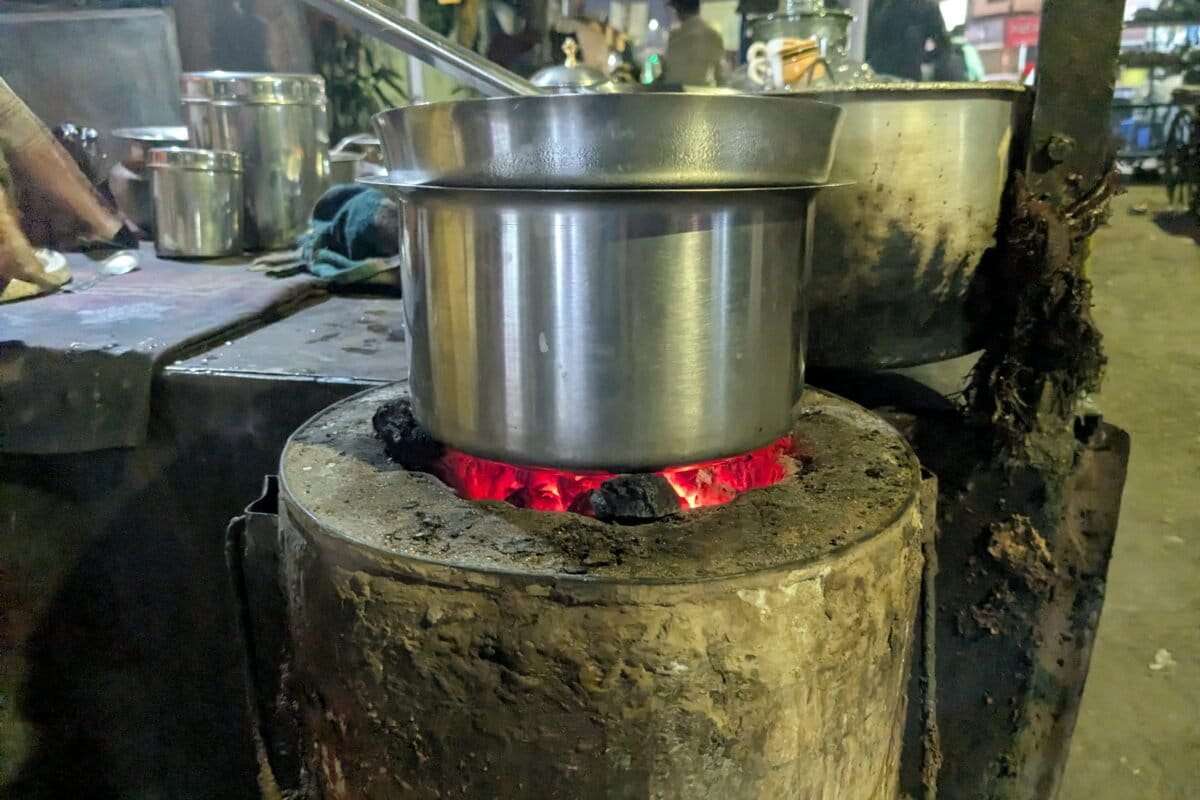
In Bihar, around 23 million families have LPG connections, and almost 12 million of them are beneficiaries of the Pradhan Mantri Ujjwala Yojana (PMUY), a government scheme that offers deposit-free LPG cylinders to economically weaker households.
But the use of LPG is still not widespread as a National Family Health Survey (NFHS) shows. About 29.8% of rural households use LPG for cooking. Among the primary reasons for not using LPG, as determined through other surveys, is the cost of refills and easy availability of free biomass for cooking.
So, why did the government choose coal? When Mongabay-India asked Birendra Kumar Prasad, joint secretary of the food and consumer protection department, about it, he said, “We have exactly as much information about this as you do. A policy regarding this has not yet been finalised. Until the government issues regulations, we are not in a position to say anything.”
Some activists wonder whether the policy would eventually open the door for wider commercial coal use if the LPG shortage continues.
Gopal Krishna, environment lawyer and Director of East India Research Council, a non-government research organisation, said, “LPG crisis has severely hit the commercial activities. So, I think the government’s main target is to allow coal in commercial activities. It is testing the waters by distributing coal to ration card holders.”
The decision to distribute coal clashes with the Graded Response Action Plan prepared by the Bihar State Pollution Control Board (SPCB) to control air pollution in Patna city in 2019-2020. The plan recommended prohibiting the use of coal/firewood in hotels and open spaces.
LPG usage is higher in urban areas, compared to rural areas, with about 78% of urban households using LPG, as per NFHS data.
The coal distribution, hence, could have been with the intention of providing relief to the urban poor from the LPG crisis. However, it raises concerns about their wellbeing, as urban poor live in small rented rooms within densely populated settlements.
Prabhakar Kumar, a guest faculty in the department of sociology at Patna University, said that the Bihar government has taken this decision hastily, without consulting environment and urban planning experts, or departments such as environment and climate change, or the SPCB.
He told Mongabay-India, “Most settlements in urban areas are densely populated. Entire families often live together in a single tiny room. They lack sufficient open space to cook outdoors using a coal-fired stove. So, they will cook inside their rooms, which will lead to increased indoor pollution. Moreover, this practice will also heighten the risk of fire outbreaks within these settlements.”
“On the other hand,” he said, “many urban poor reside in rented rooms; the landlords of these rooms typically do not permit them to cook using coal. Then how will they use it?”
A public health trade-off
Bihar has some of the worst air pollution levels among Indian states.
A report published by independent research organisation Centre for Research on Energy and Clean Air (CREA) in 2025 found that PM2.5 exceeded the National Ambient Air Quality Standards in 20 of the 23 cities it monitored in Bihar.
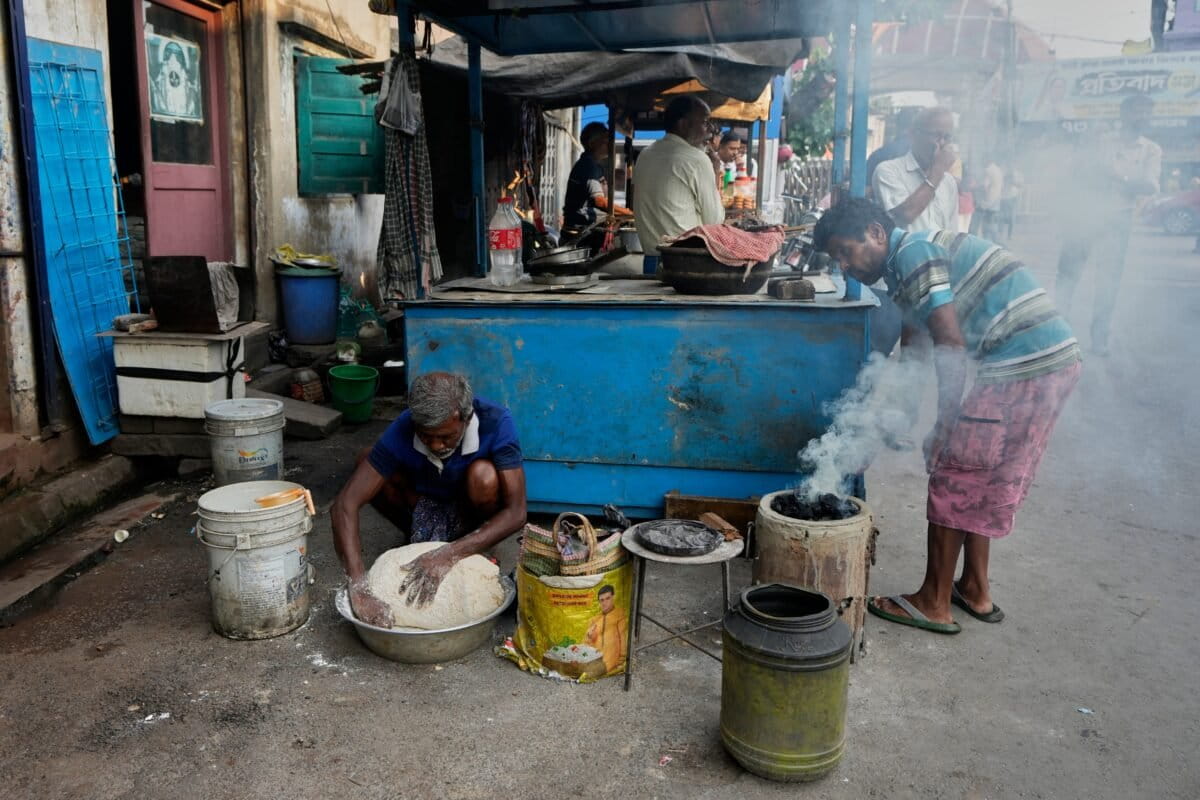
Bhargava Krishna, Convenor at the Sustainable Futures Collaborative, also an independent research organisation, stated, “Coal makes a significant contribution to indoor and outdoor air pollution. Consequently, the government’s provision of coal for cooking purposes constitutes a step backward, even if temporary, from the goal of achieving clean cooking fuels. As an alternative, the focus should have shifted toward electricity.”
Nandikesh Sivalingam, Director of CREA, said, “To solve one crisis, the state government will end up creating a public health crisis, and that will be problematic.” Sivalingam estimates that indoor coal burning for cooking could cause more health impacts than burning coal in thermal power plants.
“Thermal power plants have some mechanisms to control PM emission, but in the household, there is no such mechanism. People exposed could have severe health impacts,” he said.
However, Narendra Kumar, a member of the Bihar State Pollution Control Board, supported the government’s decision.
“Nothing can be one-sided. Gas is the only alternative to coal, but if there’s no clean fuel, we can’t let anyone die of hunger. Right now, there’s no choice. But we will have to strike a balance. If coal is being given for cooking, this does not mean unrestricted use will be permitted,” he told Mongabay-India.
Guidelines for coal burning needed
Experts say there must be strict guidelines on the use of coal, and that the government must ensure they are duly followed.
Bhargava says, “Given the current crisis situation, the government should formulate guidelines for the use of coal — including a stipulation that it must not be used in enclosed spaces. Furthermore, this measure should be explicitly promoted as a temporary arrangement.”
Ishteaque Ahmed, a Bihar-based climate and green energy activist, feared that once coal is allowed to be used again, it could be reinstated as a primary source of energy. “While its use is justifiable in the current crisis, we must prevent this from becoming a standard practice,” he said.
Apart from the environmental costs associated with coal, implementing this decision will be a daunting task in itself. A ration dealer from Nalanda district, Ashok Kumar said he is already worried about where he will store this large amount of coal.
Every ration dealer serves at least 150 to 200 ration card-holding families, so each dealer would require between 15,000 and 20,000 kg of coal every month. Storing such a massive quantity of coal would require adequate space — something that most ration dealers simply do not possess.
Kumar said, “450 ration card holders collect their grain from my fair price shop. Based on that calculation, I would be receiving 45,000 kg of coal every month. While we have space in our ration shop to store grain, where are we supposed to keep such a large quantity of coal? We would need a separate space specifically for this purpose. We would have to pay rent for that space — but who is going to bear that cost? Furthermore, if we were to store the coal out in the open, thieves could steal it under the cover of darkness at night, and we would be the ones held responsible,” Kumar said.
Expressing these various concerns, he has written a letter to the Block Supply Officer. “We have requested that the administration either make the necessary arrangements for storage themselves or provide the funds required to do so,” he said.
There also appears to be waning enthusiasm for using coal as a fuel. Krishna Devi, a Muzaffarpur resident and a daily wage labourer, said, “Coal is not practical for us. We work as daily wage labourers; we leave for work early in the morning. If we were to cook using coal, a significant amount of time would be wasted just waiting for it to catch fire.”
“For us, gas is the best option, as food cooks quickly on it.”
Beyond household exposure, the policy could also increase Bihar’s already high dependence on coal, a fossil fuel which generates sulfur dioxide, nitrogen oxides, and fine particulate matter (PM2.5).
In 2024-25, Bihar consumed 41.87 million tonnes of coal, which is six times higher than in 2015-16, a decade ago, according to NITI Aayog data.