This Is How Nomadic Herders In The Mountains Sustain Forests
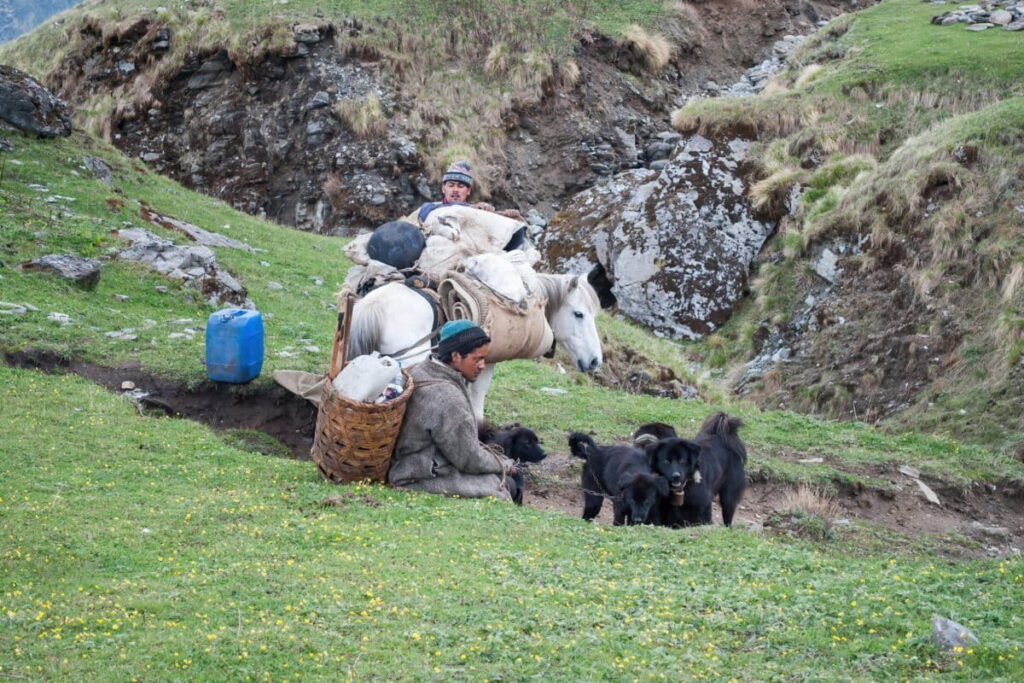
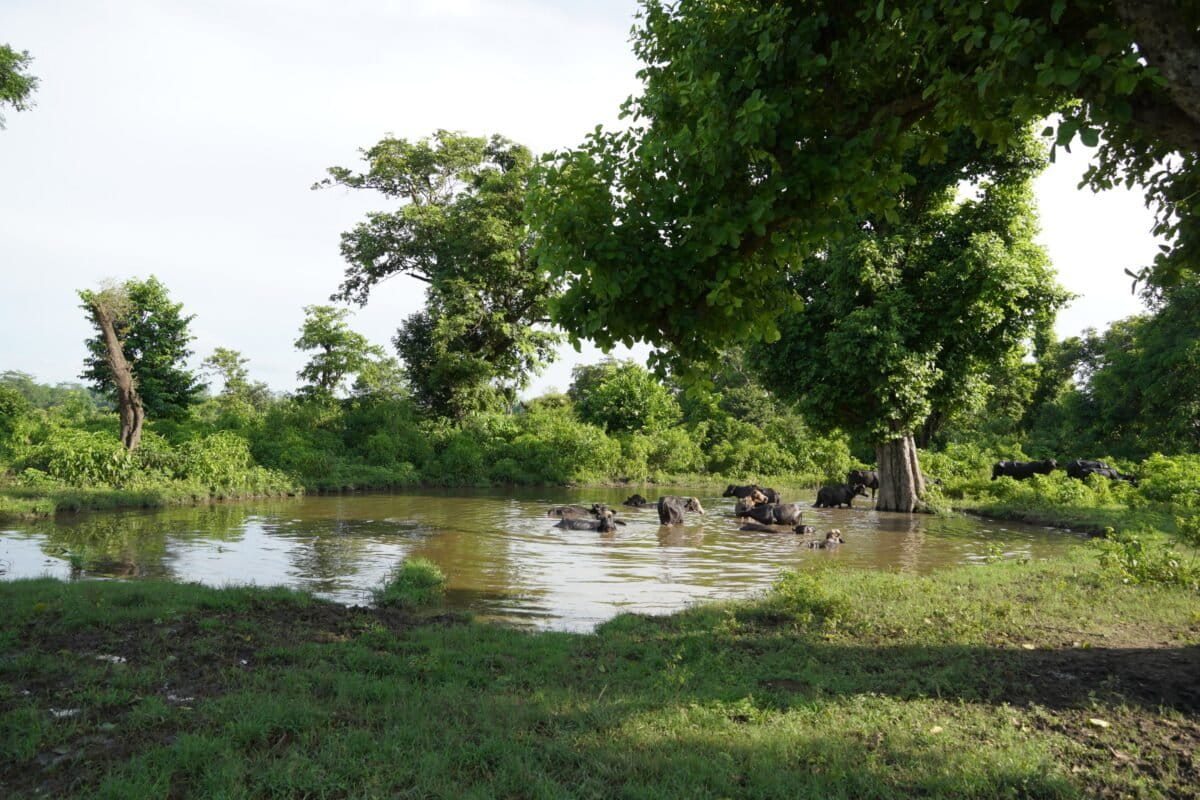
For generations, Van Gujjars have been migrating with their Gojri buffaloes, down to the plains for the winter and up to the alpine meadows in the summer. This movement is guided by elders’ knowledge of rivers, pastures, and seasons (Representative image by Drashokk via Wikimedia Commons)
When you walk with the Van Gujjars in the forest, you realise quickly that conservation with them doesn’t look like warning boards or official patrols. It is in everyday things, in the way the nomadic pastoralist families move with their buffaloes, graze carefully, use medicinal plants, and lop trees in a way that they grow back again. F or them, looking after the herd is just another way of looking after the forest.
For generations, the Gojri buffalo has been at the centre of Van Gujjar life. Families migrate with them season after season, down to the plains in winter where fodder and water are easier to find, up to the alpine meadows in summer where grass grows thick and fresh. This movement is guided by elders’ knowledge of rivers, pastures, and seasons. It is a way of living that has helped keep forests, grasslands, and people in balance.
Ask a Maee (a traditional herder identified by each family for their buffaloes, and shares a mutually intimate relationship with their buffaloes), and they’ll explain it simply, “Our buffaloes eat from the top, not the root.” These small details make all the difference. Grass grows back quickly and is soft, and the forest regenerates. Within days, the same patch turns green again.
In Kunau Chaur, a grassland and scrub forest in Uttarakhand, elders point to the trees that sprouted after buffaloes carried seeds across the ranges. In another landscape, Anjani Chaur, the elders said that the buffaloes do more than walk; they protect, they restore, they regenerate. Gojri buffaloes always walk in a single file, and as they move along the chosen paths, their hooves clear away the dry grass, leaving behind natural fire lines. When summer comes, those lines hold the fire back, preventing spread from one side to the other and protecting the forest and the wildlife within it. What looks like simple grazing becomes a costless system of fire management, one that grows more important each year as the summer grows hotter and the wildfires intensify. The same paths that lead buffalo to water become trails for deer, elephants and other wildlife, guiding them safely to ponds and streams.
Cutting fodder for the buffaloes is not a careless act of chopping but a careful act of regulated use of limited resources. Before a Maee lops the fodder trees for their leaves, they clear the dry grass and lantana around the tree; this clearing also prevents the spread of fire in summer. The buffalo feed on the leaves, and whatever is left is later browsed upon by smaller herbivores like deer and sambhars.
While lopping the Maee also ensures that the growing branches in the tree are left behind, or the lopping happens in the seasons when the birds are not nesting, or the trees are not flowering/fruiting. The Maee, the buffalo, the forest and the herbivores thus have an unspoken connection, sustaining each other.
Buffaloes also shape water, and they shape habitats. As one herder in Baharpili explained, “When the Gojri buffalo sit in ponds, water rises. Small pools form, and other animals drink from them.” Many community members claim that the barasingha has started occupying the marshy grasslands, or as they call it, the khaddar, in the terai region of Uttarakhand ever since more Gojri buffalo started grazing in the area due to hurdles in migrating to the alpine meadows, as they traditionally did.
Gojri buffaloes share bonds with the birds who co-inhabit their habitat and some of them feed on their ticks, and with wildlife, who find cover when herds stand together against predators. Mustafa ji from Mundhal said, “When buffaloes are here, even small animals feel safe. They stand together, and the leopard goes away.” Not surprising that stepping out of a Van Gujjar hut in the night, one can encounter hundreds of chital, peacock and other smaller animals. They seem to know that the buffaloes and their peace-loving, typically vegetarian human families will not harm them but will empathise with them and their fears.
In 2023, after many years of effort by the Van Gujjar Tribal Yuva Sangathan, a youth-led collective of the community in Uttarakhand, along with collaborating organisations, the Gojri buffalo was recognised as India’s 17th registered breed. Today, around 50,000 Gojari buffaloes live in Uttarakhand, although changing circumstances are also leading to their gradual decline.
Migration as ecological knowledge
Every year, the Van Gujjar families move with their herds. In winter, some Van Gujjar families head down to the Terai area of Uttarakhand and Uttar Pradesh and the Shivalik forest of Uttarakhand, where fodder and water are easier to find. In summer, they migrate to the alpine meadows, where grass grows thick and fresh. This migration is not just about survival. It is also a memory that is passed down through generations.
The community members go where the buffalo can live. Plains in winter, bugyals, the Himalayan alpine meadows, in summer. This way, the grass grows back. And in the alpine meadows, the buffaloes seem calm and content, as if the high pastures give them a meditative peace.
Elders add that the buffalo themselves know when it is time to move. “Even if we have not yet decided to start migration, when the time comes, the buffaloes just take off! We just have to catch up with them; we can stop them. They understand the seasons better than we do,” said one Maee. Migration allows pastures to recover and keeps water sources flowing.
Families know which routes to take, which rivers to cross, which meadows to rest in. Buffaloes know the paths too; they respond to the Maee’s call across valleys, refusing to be milked by anyone else, waiting patiently for her/him to lop the leaves for them.
Migration keeps pastures healthy, prevents overuse, and balances life between plains and mountains. It is ecological knowledge passed through generations, not textbooks.
Threats to migration and survival
The community’s right to live in the forest and graze their buffaloes is protected under the Forest Rights Act (FRA) 2006. But on the ground, these rights remain largely unrecognised and often disregarded. A lack of awareness among agencies responsible for implementing the law, stringent forest laws not providing space for their knowledge and way of being to be included in forest management and governance and negative narratives against pastoralists only make survival harder every passing year, both for the buffaloes and the Van Gujjars.
This breed is under strain. As forests have been converted into tiger reserves and protected areas, the community and their buffaloes are being forced to relocate outside forests and adopt a settled life in small settlements. Some families have already been relocated. Grazing access is shrinking, and migratory routes are being disrupted.
Elders warn that this directly impacts the buffalo as they are used to migration. “If they cannot move, they suffer. And when the buffalo suffers, the forest suffers too,” said one Maee.
When migration stops, the impact can be seen across the landscape and within the community. The Forest Rights Act (FRA) 2006 provides a legal framework to address this by recognising the rights of forest-dwelling communities over the forests they have traditionally used. Through Individual Forest Rights (IFR) and Community Forest Resource (CFR) rights, grazing areas and seasonal routes can be formally recognized.
In Govind Pashu Vihar Wildlife Sanctuary in Uttarakhand, some Van Gujjar families have received CFR titles. This has allowed them to help secure their traditional rights over forests and the migratory routes they have followed for generations. Extending IFR and CFR recognition to other Van Gujjar families can help both the Gojri buffalo and the forest to thrive, and the community to continue living their traditional way of life.
The Gojri buffalo is not just another registered breed. For the Van Gujjars, it is part of everyday life and part of the forest itself. Today, that way of life is becoming difficult to sustain. Climate Change and the pressure of displacement have made the future uncertain for many pastoral communities. Still, the experience of the Van Gujjars suggests something simple: forests do not always remain healthy because people are kept out. In many places, they have survived because communities lived with them carefully for generations.
For the Van Gujjars, the buffalo still walks those paths. And as long as the herd continues to move between the plains and the high meadows, that relationship between forest, people, and buffaloes continues as well.