A Bauxite Mining Project, Contested Consent And Growing Tensions
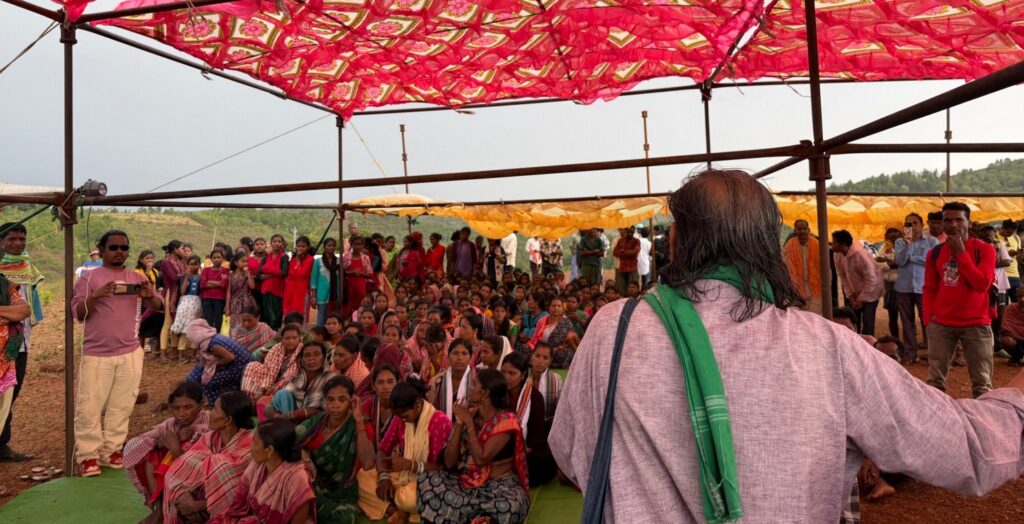
People gather to oppose mining activities in Odisha (Image by Ashwini Kumar Shukla)
- A bauxite mining proposal in Odisha’s Sijimali hills has triggered a conflict between local communities and the administration.
- Violent clashes broke out on April 7 between the local residents and police over Vedanta Limited’s contested Sijimali bauxite mining project.
- Meanwhile, India’s environment ministry has moved ahead with the forest clearance process, even as experts warn that environmental assessments fail to account for the deeper ecological and cultural impacts of mining.
It was past 2:30 in the morning on April 7, 2026, when the banging on the doors began, locals of Kantamal village narrate. Kantamal is one of over 44 villages nestled in the foothills of Sijimali range in Odisha’s Rayagada and Kalahandi districts. More than 200 police personnel had encircled the village, say the residents. The power was out.
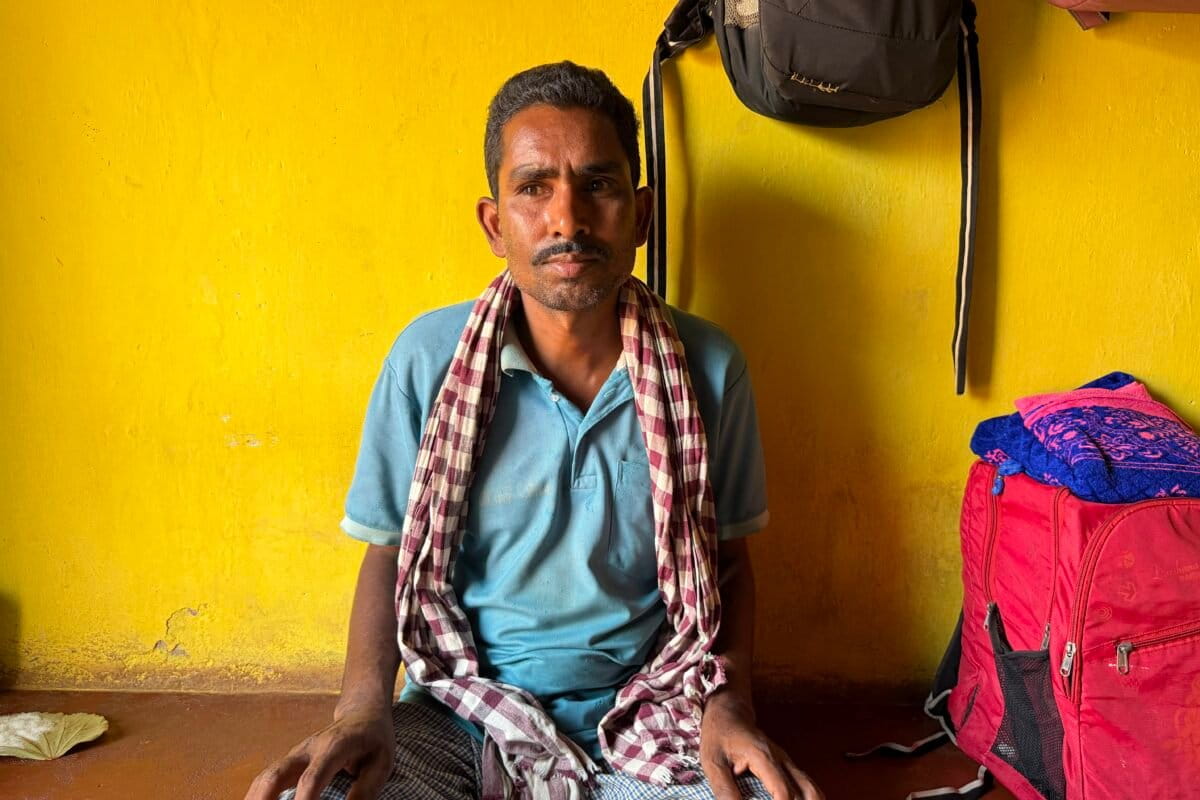
“We had no idea what was happening,” says Subash Singh Majhi, a 32-year-old who heads Maa Mati Mali Suraksha Manch, a collective of affected villagers opposing a proposed bauxite mine in the area. “Before we could understand anything, they (police) had dragged people out of their homes in the dark and begun beating them,” he alleges.
Eighty-six-year-old Gaseb Dei Majhi remembers the night in fragments. “They fired tear gas. They beat us,” she says, holding up an empty shell, police fired that night.
As per the locals, the immediate trigger was a protest against a 3-kilometre access road near Sagabari village, a road that, if completed, would connect state highway 44 to the Sijimali hilltop, and, which residents feared, would open the final path to the contested bauxite mine.
A few days earlier, on April 3, police and paramilitary forces arrived at the site and announced that construction of the approach road would begin immediately. The administration had invoked Section 163 of the Bharatiya Nagarik Suraksha Sanhita, criminal procedure code, restricting gatherings to fewer than four people near the road. The villagers defied it.
Soon after, on April 6, again, nearly 250 villagers had gathered to block the construction of the road. When police moved in to clear the dharna, clashes broke out.
More than 60 people, including 40 police personnel, were injured, as per the media reports. Police say they were attacked first. The villagers dismiss this entirely.
The following night, the police raided Kantamal.
The incident occurred while the dispute over the mining project was already pending before the National Green Tribunal (NGT), with a hearing scheduled for May 18. Following the April 7 incident, the villagers approached the tribunal seeking an earlier hearing. The NGT subsequently took up the matter on May 14.
Mongabay-India visited the district magistrate’s office on May 2, but officials declined to comment. On May 19, Mongabay India wrote emails to Vedanta Limited and the district magistrate of Rayagada. Their responses are still awaited.
A history of resistance
There were years of resistance that led up to the conflict at Kantamal on April 7 night.
In 2023, the Odisha government auctioned the bauxite mining lease for Sijimali. Vedanta Ltd., a private mining company, won it. The deposit spans 1,548 hectares across two districts and holds an estimated 311 million tonnes of high-grade bauxite. If the mine opens, Vedanta Ltd. plans to extract 9 million tonnes every year for 31 years, generating 7.40 million tonnes of waste annually.
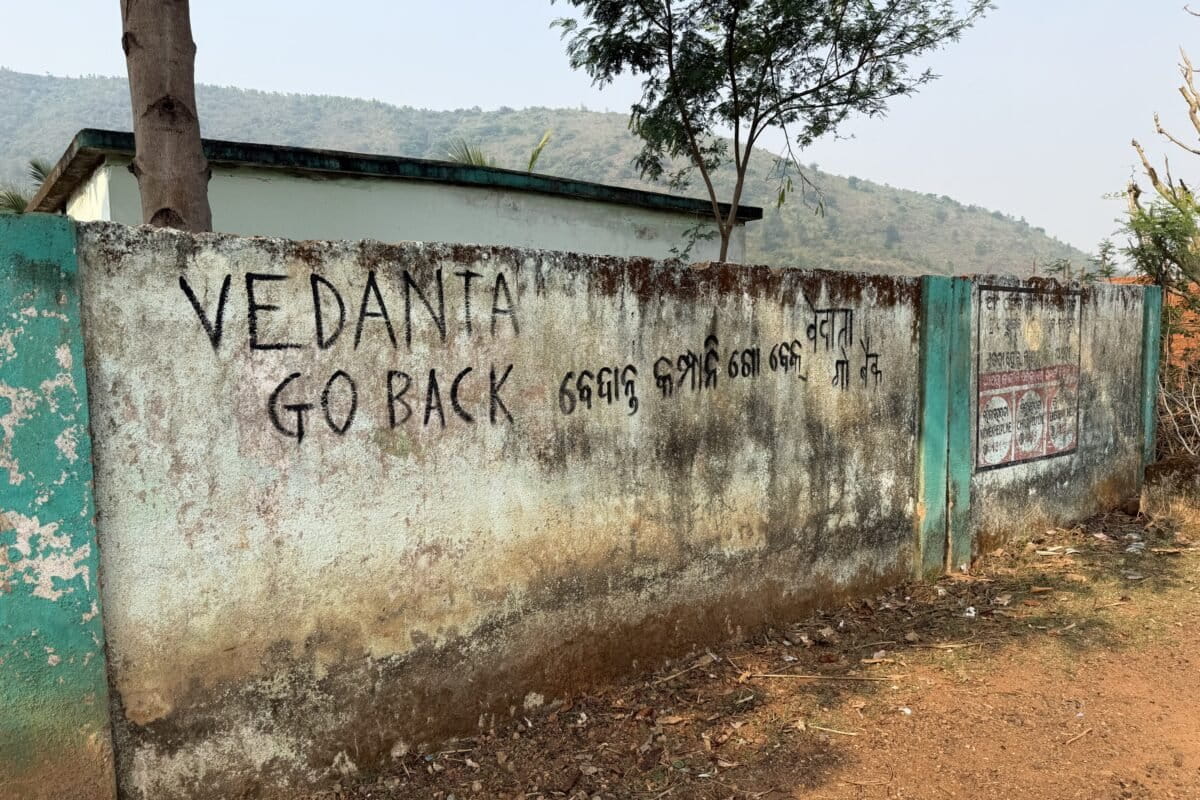
Since then, the villagers have been resisting the project.
“In the last decade, one after another, mining leases are being handed out at increasing speed,” says Prafulla Samantara, environmentalist and 2017 Goldman Environmental Prize winner. “At this rate, Odisha will be resource-less within a generation.”
What the mountain gives
It is peak summer. The surrounding region is brown and parched. But walk into Kantamal, and the paddy fields are still green. Farmers are preparing for another crop. Mango and jackfruit orchards line the flat land. Cashew plantations run down the lower slopes. Several narrow streams flow from the mountain, carrying water to fields and homes year-round.
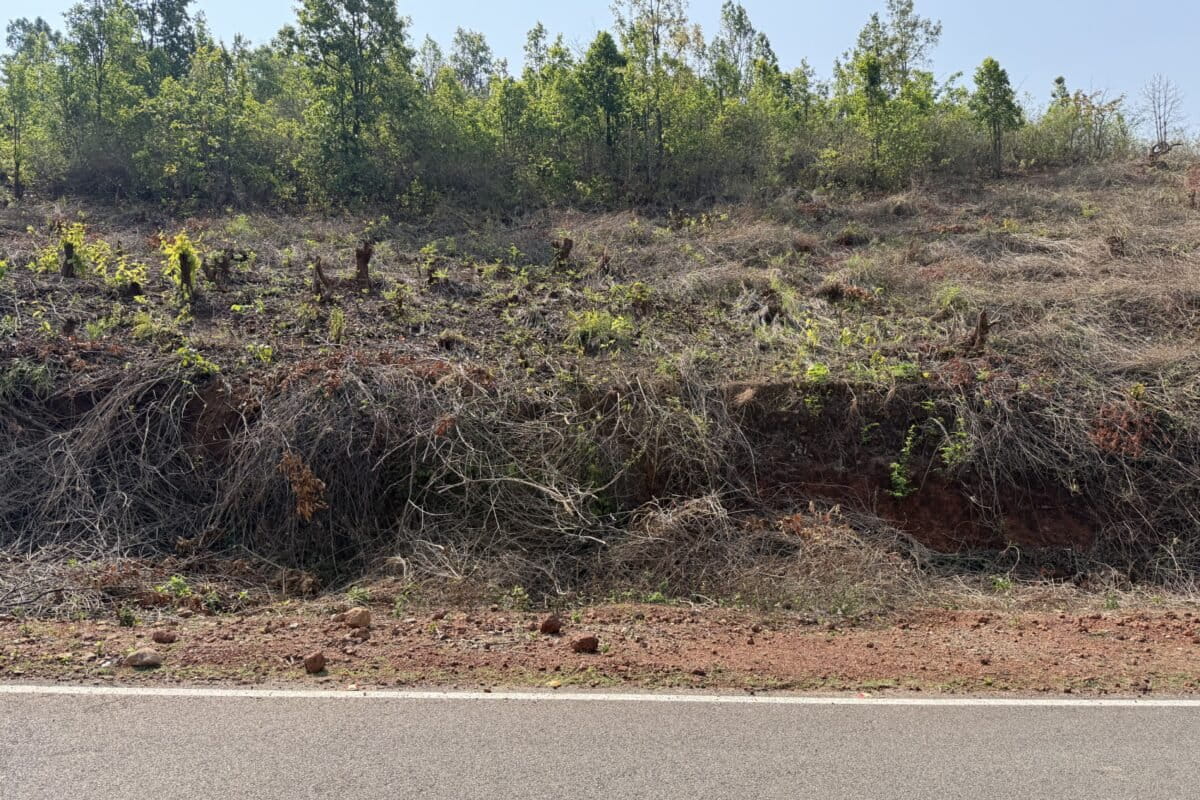
“From this mountain we get everything, rice, vegetables, sunflowers for oil,” says Majhi. “Except for salt, we buy nothing from outside.”
“The thick layer of bauxite on top of these hills acts like a natural sponge,” says Samarendra Das, one of the authors of “Out of This Earth” and who works on the impact of mining on tribal communities. “It soaks up the rain and releases it slowly throughout the year, feeding the springs and streams below. Open-cast mining rips that entire layer away. The moment the bauxite is removed, the water system collapses. The springs turn into dirty seasonal trickles. And the damage does not stop at the mining site. It affects the entire river system downstream.”
Das says that this is not a warning. It has already happened. At Panchpatmali, another bauxite plateau in the Eastern Ghats where mining is underway, all the streams have dried up. “It is the same terrain,” he claims.
“These forests and plantations, preserved and nurtured by villagers for generations, are crucial for holding together the fragile hill slopes and protecting the ecological stability of the Eastern Ghats.”
The communities here, predominantly Kondh and other Adivasi groups, as well as Dalit communities, call the mountain Tijimali. It is the home of Tijraja, their deity. Government documents call it Sijimali. “If the mountain goes,” says Majhi, “we go.”
Gram sabhas under dispute
Under India’s Constitution, Sijimali falls within the fifth schedule area, a predominantly tribal region. In these areas, the Forest Rights Act and the Panchayats (Extension to Scheduled Areas) Act, 1996 (PESA), offer legal protections that require local free, prior, and informed consent before any diversion of forest land. No mine can open without genuine gram sabha (village council) approval.
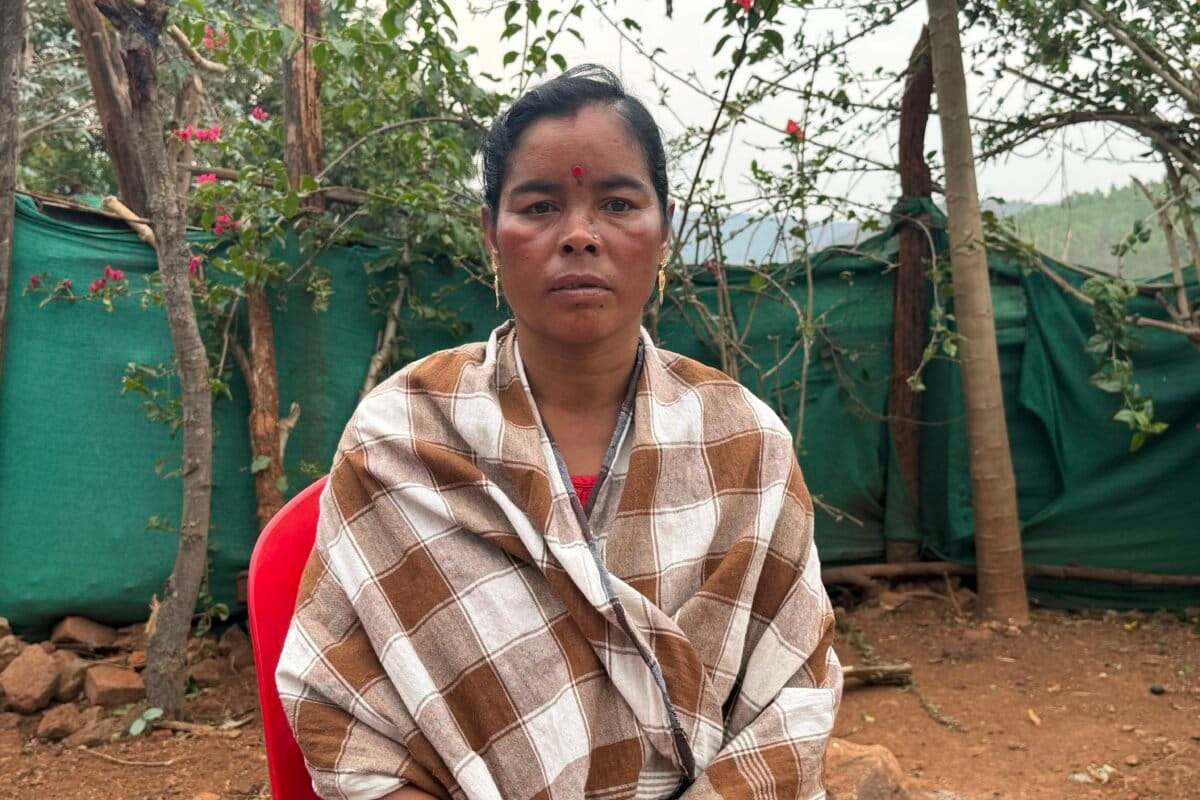
In October 2023, public hearings were held across Rayagada and Kalahandi. Villagers say people stood up one after another to oppose the mine. “We made it clear: you are not welcome here,” claims Laxman Naik, 32, a resident of Surugunja village who participated in the public hearing.
Then, the news came that the gram sabha held in December had approved the project.
Villagers allege manipulation. “Mining agents had been collecting documents for months,” says Narangi Dei Majhi, a tribal leader and a resident of Sagabari village. On December 8, 2023, “They [Police] brought men-women from outside in a bus, made them hold a banner, took photos and left. Later, we heard the gram sabha had already happened,” she claims.
When villagers filed RTI applications to obtain the gram sabha records, a striking pattern emerged. “We found signatures of people who had been dead for years. Signatures of migrants working in other states. Graduates with thumbprints. People who use thumbprints, with signatures,” says Narendra Mohanty, a lawyer and state convenor of the Campaign Against Fabricated Cases, who was part of an independent fact-finding team.
Villagers wrote to the MoEF&CC and the Ministry of Tribal Affairs (MoTA), alleging that all ten Gram Sabhas were held on the same day, at the same time, with the same officials purportedly present in ten different villages simultaneously; and demanded that forest clearance to the company be immediately stopped.
“How can eight gram sabhas happen at the same time in eight different villages?” asks Majhi.
Released in April, 2024, a study by the National Law School of India University (NLSIU), a public university, titled “Under the Surface, has also highlighted similar discrepancies. “…gram sabhas were also surprisingly held in two uninhabited villages with no population as per the Census Report 2011, in Pelanakona and Katibhata.”
Villagers later organised fresh gram sabhas in August and September 2024, unanimously rejecting the mining proposal.
Despite this resistance, the clearance process has moved ahead. In December 2025, a government committee recommended the Stage-1 clearance for 708 hectares of forest land to Vedanta Ltd.
Concern over ecological damage
According to the EIA, the Sijimali bauxite mine is a green field project (a project that is being developed from scratch.) It says the mine will bring jobs and development to the local people, while causing very little environmental damage.
But environmental experts disagree.
“EIA is done by the mining company itself, so it usually favours the company,” says Samarendra Das. He says these assessments are often based on incomplete data and limited studies.
The NLSIU study also found serious gaps in the draft EIA. According to the report, the mine could cause long-lasting and irreversible damage to forests, wildlife, and water sources.
Villagers have also raised similar concerns. “In the public hearing, we raised concerns that blasting could disturb the natural springs in the mountains. If those springs dry up, how will we irrigate our fields? What will we eat?” says Naik. “But they dismissed our concerns, saying they were not scientific.”
“We know these mountains better than anyone. In Sijimali alone, there are more than 1,000 streams,” says Naik.
“Impact assessments in India measure everything through numbers and matrices. But they do not look at how people actually experience their environment. Cultural values, spiritual relationships with land and water, none of this can be captured by a checklist. If a community’s way of life is destroyed, that is also an impact,” says Das.
“We saw this in Niyamgiri, where the Dongria Kond’s sacred mountain was protected by the Supreme Court, and it’s said to force a mine here would be cultural genocide,” says Das. “The same is true for Tijimali.”
On May 13, public hearing was held for a proposed bauxite project in the nearby Kutrumali hills; this time for Kalinga Alumina Ltd, a subsidiary of the Adani group. “The people were still living in fear after April 7,” says Prafulla Samantara. “And in that same fear, they were called for a public hearing. This is how pressure works.”
Amid all of this, the 3 km of road to the mine has been cleared. On May 5, 2026, the government granted Stage 2 — the final forest diversion clearance.
“The question is simple,” says Prafulla Samantara. “Will Gram Sabhas mean anything, or will the government keep handing these mountains to mining companies, rules be damned?”
“This is our deity. We worship here,” says Narangi Dei Majhi. “We will not sell our Maa, Mati, aur Mali, [Mother, land, and mountain]. We will fight until the end.”