Govt Changes In West Bengal And B’desh Could Impact River Treaties
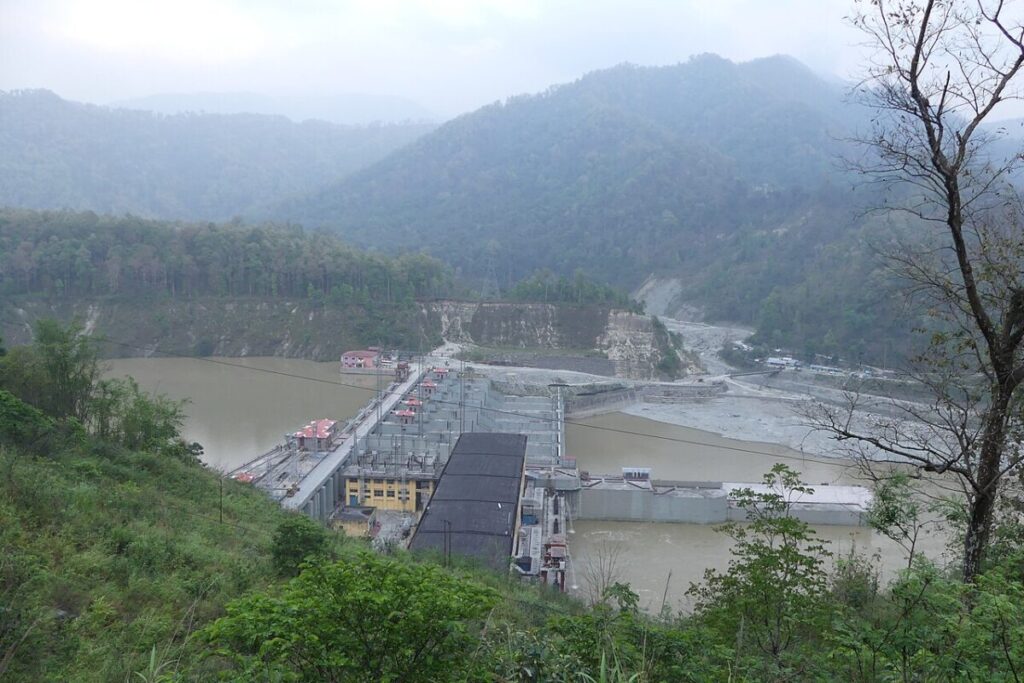
The Teesta river has long symbolised the difficulties of water-sharing between India and Bangladesh. Originating in Sikkim and flowing through West Bengal before entering Bangladesh, the river is crucial for agriculture, livelihoods and regional development in both countries (Image by A.J.T. Johnsingh via Wikimedia Commons)
The politics of shared rivers between India and Bangladesh has entered a potentially transformative phase. Two major political developments on either side of the border have brought renewed attention to the future of the Teesta and Ganges river systems, both central to bilateral relations and regional water security.
In Bangladesh, the Bangladesh Nationalist Party (BNP) returned to power following the February 2026 elections. India responded swiftly with several confidence-building measures, including the restoration of visa services and the appointment of veteran West Bengal politician Dinesh Trivedi as envoy to Dhaka. These moves signalled New Delhi’s desire to rebuild relations that had become strained after India hosted former Bangladeshi prime minister Sheikh Hasina following her ouster.
Meanwhile, India witnessed a significant political shift when the Bharatiya Janata Party (BJP) secured its first-ever electoral victory in West Bengal in May 2026. The outcome placed the state under the same political leadership as the central government, creating what the BJP describes as a “double-engine government”. The alignment gives New Delhi greater scope to coordinate policy on issues that previously became entangled in disagreements between the state and central governments.
The timing is significant because India has also launched a five-year River Basin Management (RBM) programme covering major Himalayan transboundary river basins, including the Teesta and Ganges. The initiative aims to promote basin-wide planning for water use, environmental protection, irrigation, hydropower and infrastructure development. Since these rivers flow across international borders, any major intervention inevitably affects downstream Bangladesh, making cooperation and trust essential.
Opportunities and Constraints on the Teesta
The Teesta has long symbolised the difficulties of water-sharing between India and Bangladesh. Originating in Sikkim and flowing through West Bengal before entering Bangladesh, the river is crucial for agriculture, livelihoods and regional development in both countries.
Efforts to conclude a formal water-sharing agreement have repeatedly faltered. Negotiations nearly succeeded in 2011 and again in 2017, but both attempts collapsed due to opposition from then West Bengal Chief Minister Mamata Banerjee. She argued that the river’s dry-season flow was insufficient to meet West Bengal’s needs and suggested alternative rivers as potential sources of water for Bangladesh.
The dispute reflects a deeper challenge. Water availability in the Teesta has steadily declined during the dry season because of upstream regulation, changing land use patterns and climate-related impacts. A temporary agreement reached in 1983 allocated 39 per cent of the river’s flow to India and 36 per cent to Bangladesh, leaving the remainder unassigned. However, shrinking and increasingly unpredictable flows have made such formulas difficult to sustain.
Both governments acknowledge that water scarcity lies at the heart of the deadlock. Agricultural expansion in northern Bangladesh and North Bengal has increased demand for irrigation at precisely the time of year when water availability is lowest. Previous discussions within the Joint River Commission recognised that any durable arrangement would require both sides to accept compromises, but neither has been willing to absorb significant losses.
The Teesta issue is also shaped by broader strategic concerns. India increasingly views the Eastern Himalayan region through the lens of national water security and transboundary resource management. At the same time, Bangladesh’s interest in Chinese assistance for Teesta restoration projects has added a geopolitical dimension to negotiations.
Political alignment between New Delhi and Kolkata may now create conditions for a more unified Indian position. It could facilitate cooperation on issues extending beyond water allocation, including climate adaptation, flood management and disaster preparedness. The devastating glacial lake outburst floods that affected the Teesta basin in 2023 highlighted the shared vulnerabilities facing communities in both countries.
Yet significant domestic challenges remain. The BJP has promised accelerated development in North Bengal, one of its political strongholds. The region depends heavily on irrigation infrastructure, hydropower generation and agricultural expansion, all of which rely on Teesta waters. Any agreement perceived as limiting local development could face political resistance. As a result, future negotiations may need to move beyond simple water-sharing formulas and focus instead on joint scientific assessments, risk management and cooperative basin planning.
Renewing the Ganges Partnership
The Ganges presents a different but equally important challenge. The existing India-Bangladesh Ganges Water Sharing Treaty, signed in 1996, is scheduled to expire at the end of 2026. The BNP government is expected to seek both its renewal and more favourable terms.
Bangladesh has reportedly indicated that it may request a guaranteed dry-season flow of 40,000 cusecs between February and May, up from the current benchmark of 35,000 cusecs. It is also likely to seek stronger commitments on flood forecasting, data sharing and a longer treaty duration. For Dhaka, the treaty remains a symbol of equitable river governance and a key test of the broader bilateral relationship.
Bangladesh’s concerns stem from its downstream position. It has consistently argued that the treaty lacks enforceable guarantees during periods of low flow, precisely when irrigation demand is highest. Conversely, large volumes of water released during the monsoon season can intensify flooding. Climate change is expected to amplify both extremes, increasing the urgency of cooperative management.
The recently approved Padma Barrage project illustrates this dilemma. Designed to improve water storage downstream of the Farakka Barrage, its effectiveness depends heavily on predictable upstream releases from India. Without a renewed treaty framework, the project’s ability to support dry-season water needs would remain limited.
For India, the new political alignment offers greater flexibility in responding to Bangladeshi demands. A coordinated approach between the central government and West Bengal could help address long-standing concerns while introducing new mechanisms suited to contemporary environmental realities. Such reforms could incorporate ecosystem protection, climate resilience and livelihood security alongside traditional water-allocation arrangements.
At the same time, the success of negotiations will depend on the broader diplomatic environment. Issues such as Bangladesh’s relations with China and unresolved political questions surrounding Sheikh Hasina could influence the atmosphere of talks. India has demonstrated in other river disputes that water can become a strategic instrument during periods of tension.
Nevertheless, the current political landscape presents an unusual opportunity. With most major states in the Teesta and Ganges basins now governed either by the BJP or its allies, institutional coordination within India is likely to improve. Combined with targeted investment, demand-management measures and basin-level planning under the RBM programme, this alignment could help reconcile domestic priorities with regional responsibilities.
If supported by political will and innovative governance, the coming years could mark a shift from narrow disputes over water volumes toward a broader framework of environmental cooperation, risk sharing and sustainable river management. Such a transition would benefit not only India and Bangladesh but also the millions of people whose livelihoods depend on the waters of the Teesta and Ganges.