U Khalid Film Row: When A Campus Screening Becomes A Political Test
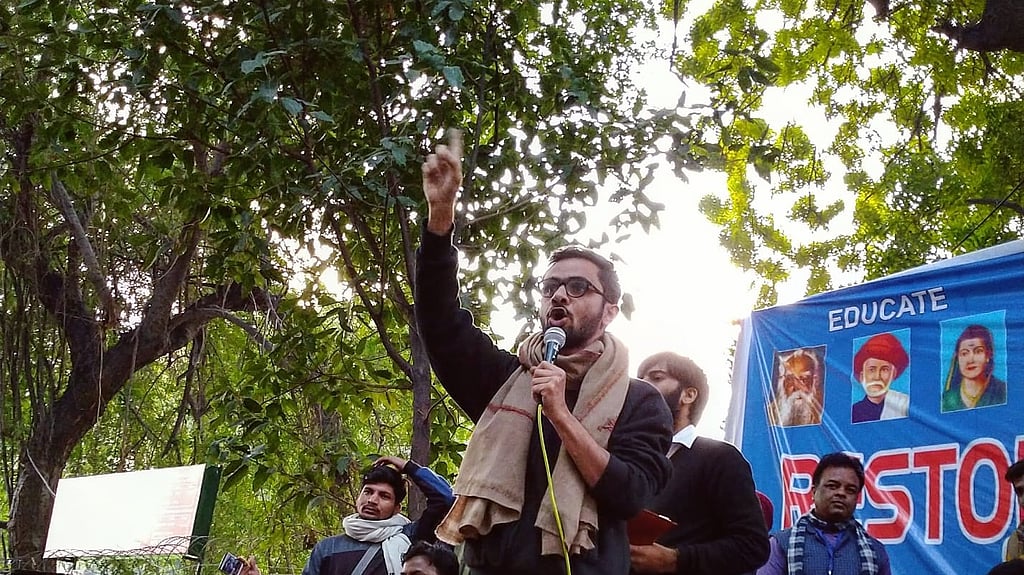
Based on jailed activist Umar Khalid, the documentary film titled 'Prisoner No. 626710 is Present', directed by Lalit Vachani, was scheduled to be screened at NLSIU, Bengaluru on September 14. However, ABVP Bengaluru sought cancellation of the programme and later urged the Centre to intervene
The controversy over a proposed screening of ‘Prisoner No. 626710 is Present’ — based on jailed activist Umar Khalid — at Bengaluru’s National Law School of India University (NLSIU) is no longer merely about a documentary. It has become another test of how India’s universities handle politically contentious subjects — and how quickly a campus programme can become a proxy battle for the country’s larger ideological divisions.
It is pertinent to mention here that on September 13, Umar Khalid completed six years in jail without trial.
The documentary, directed by Lalit Vachani, was scheduled to be screened at NLSIU on September 14. The university’s student committee later postponed the event, citing logistical and security concerns. The ABVP, which had opposed the screening, has continued to demand that it be cancelled altogether.
What followed was predictable: competing accusations, political statements and a debate that moved well beyond the film itself.
When disagreement becomes a demand for cancellation
The ABVP argues that screening a documentary about Umar Khalid risks presenting a sympathetic or glorifying account of a person facing serious allegations in connection with the 2020 Delhi riots case.
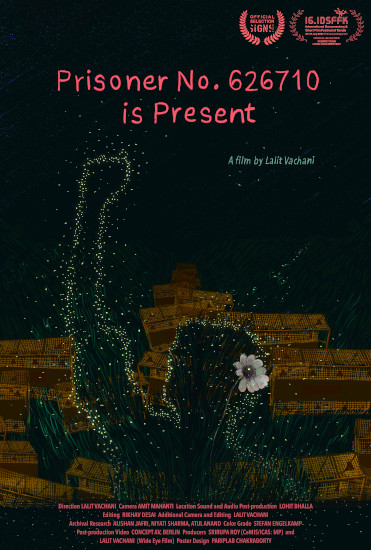 The organisation complained to the NLSIU administration and subsequently sought intervention from the Union government, including a demand for an inquiry into the university’s decision to allow the programme.
There is, however, a larger question here: should a university settle a contentious question by preventing a film from being shown, or should the campus provide space for students to watch it, question it and challenge its arguments?
That distinction matters.
A documentary is not a judicial verdict. Nor is screening one necessarily an endorsement of every claim made by its subject or director. In an academic environment, the more useful response to an argument one considers objectionable is often to interrogate it rather than prevent it from being heard.
At the same time, universities have legitimate responsibilities concerning security, public order and institutional rules. NLSIU cited those considerations when postponing the screening.
Kharge shifts the argument to the courtroom
Karnataka Home Minister Priyank Kharge has taken the debate in another direction: if Umar Khalid is accused of serious offences, why has the case not proceeded to trial?
Kharge questioned the delay and directly challenged Prime Minister Narendra Modi and Union Home Minister Amit Shah.
“Why are they (BJP government) not bringing up the trial? It’s been so many years that he’s in jail; there are apparently some charge sheets on him. Why is the trial not going on? Why are they (BJP) so afraid to conduct the trial? Mr Modi and Amit Shah, why are you so afraid of Umar Khalid? Take action,” he said.
His remarks shift attention from the politics surrounding Khalid to a fundamental principle of criminal justice: an accused person is not the same as a convicted person.
Khalid was arrested in September 2020 in connection with the case concerning the alleged larger conspiracy behind the northeast Delhi riots and was booked under the Unlawful Activities (Prevention) Act and other provisions. The trial remains pending.
That does not settle the question of guilt or innocence. It does, however, make the pace of judicial proceedings a legitimate subject of public discussion.
The dangerous politics of labels
The most revealing aspect of the controversy may be the increasingly binary language surrounding Khalid.
ABVP has opposed what it describes as the “glorification” of an individual it considers anti-national. Congress leaders, meanwhile, have challenged that characterisation. Karnataka Congress president B.K. Hariprasad went further, describing Khalid as a “nationalist”, triggering another round of political confrontation.
Kharge questioned the basis for calling Khalid “anti-national”, asking, in effect, who had given that designation and whether a court had made such a finding.
This is where political rhetoric can obscure the legal issue.
Terms such as “nationalist” and “anti-national” may be powerful political weapons, but they do not substitute for evidence tested in court. Nor should political parties be allowed to turn an unresolved criminal case into a permanent shorthand for a person’s guilt.
Universities should be places of argument
There is an uncomfortable irony in this controversy.
A law university should be one of the places where students can examine difficult questions: national security, dissent, protest, terrorism allegations, preventive detention, civil liberties and the limits of state power.
That does not mean every speaker, film or political argument must be accepted uncritically. Quite the opposite. The value of an academic institution lies in its ability to expose contested ideas to scrutiny.
The appropriate response to a controversial documentary could therefore be a debate around it — including opposing speakers, a discussion of the legal record and an examination of the allegations against Khalid.
Beyond one documentary
The Umar Khalid controversy is ultimately larger than Umar Khalid.
It is about whether political disagreement on university campuses should end with debate, rebuttal and counter-programming — or with demands that programmes be stopped.
It is also about a separate but equally important question: when an individual faces serious criminal charges, should political arguments determine the narrative around the case, or should the courtroom ultimately be allowed to do its job?
The NLSIU screening may have been postponed, but the questions it has exposed are unlikely to disappear.
If universities become places where politically inconvenient films cannot be shown, academic debate suffers. If controversial films are screened without room for scrutiny or opposing views, academic debate suffers too.
The more democratic answer lies somewhere more demanding: let the film be questioned, let the allegations be tested, let the opposing arguments be heard — and let the courts decide guilt.