IWT At A Crossroads: A 66-Year Pact Faces Its Biggest Test
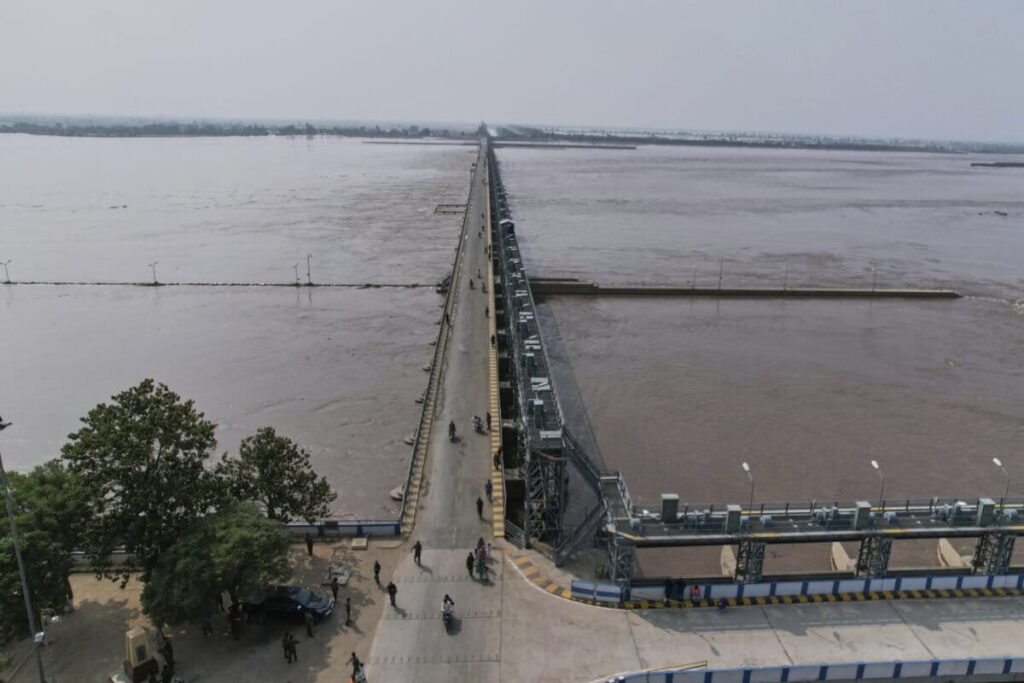
Motorcyclists drive through Trimmu Barrage on the Chenab river in Jhang district, Pakistan, which overflowed after torrential rains and water released from Indian dams in 2025 (AP Photo/Jahan Zeb)
The Indus Waters Treaty (IWT), a 66-year-old agreement that has survived wars, diplomatic crises and decades of India-Pakistan hostility, is now facing perhaps its most uncertain chapter.
On August 31, the Permanent Court of Arbitration (PCA), an intergovernmental body headquartered in The Hague, ruled that India could not unilaterally suspend or abandon the treaty. New Delhi rejected the decision almost immediately, setting the stage for a deeper legal and diplomatic deadlock over one of the world’s most politically sensitive river systems.
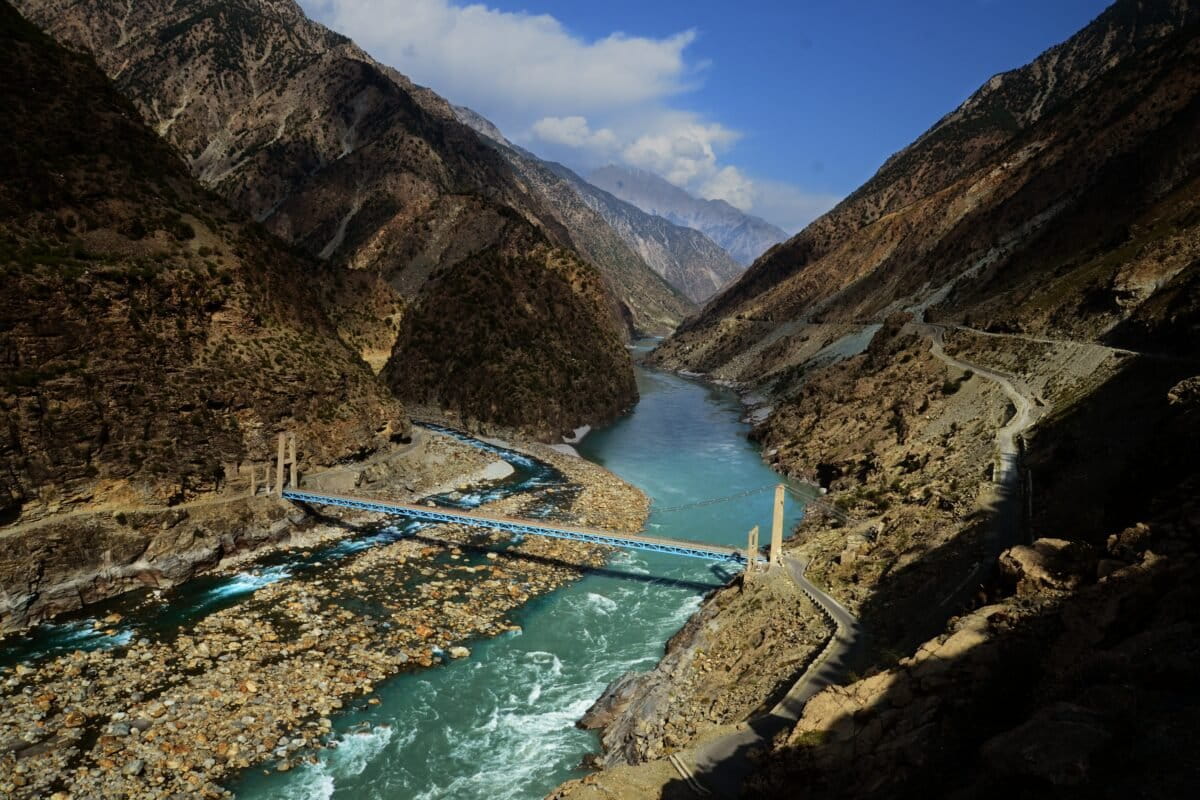
The ruling came more than a year after India placed the treaty in “abeyance” following militant attacks that New Delhi said were linked to Pakistan-based groups.
“India’s position on the Indus Waters Treaty is consistent. The IWT stands in abeyance in response to Pakistan’s continued sponsorship of cross-border terrorism,” Ministry of External Affairs spokesperson Randhir Jaiswal said in July.
But the PCA found no place in the treaty for the term “abeyance”. It concluded that none of the grounds publicly cited by India could justify suspending or terminating the agreement and said the treaty “remains fully in force, and India must observe its obligations.”
India rejects the arbitration process
New Delhi, however, has dismissed the PCA’s decision, arguing that the arbitration mechanism itself was unlawfully constituted.
In a statement issued on the day of the order, India called the tribunal an “illegally constituted body” and said it rejected the ruling as it had rejected previous pronouncements by the same process.
The dispute centres on how disagreements under the treaty should be resolved.
The IWT divides the six rivers of the Indus Basin between the two countries. India has unrestricted use of the eastern rivers — Ravi, Beas and Sutlej — while Pakistan receives the western rivers — Indus, Jhelum and Chenab. India, as the upper riparian, can use the western rivers for specified purposes, including hydropower, as long as Pakistan’s treaty rights are protected.
The latest dispute began in 2016, when Pakistan objected to the design of the 850-megawatt Ratle hydropower project on the Chenab in Jammu and Kashmir. Pakistan has argued that aspects of the project, including its pondage, violate treaty provisions. India maintains that the project conforms to the agreement.
A dispute caught in a procedural maze
The treaty lays out a step-by-step mechanism for resolving differences. Issues first go before the Permanent Indus Commission, comprising commissioners from India and Pakistan. If they fail to reach a settlement, certain technical questions can be referred to a Neutral Expert appointed through the World Bank. Other matters can proceed to arbitration.
The process became more contentious in 2022, when the World Bank facilitated the appointment of both a Neutral Expert and a chairman for an arbitration process.
Former diplomat Syed Akbaruddin said the parallel proceedings risked undermining the treaty’s dispute-resolution architecture.
“Establishing two parallel expert procedures could result in two different solutions, which undermines the process laid out in the treaty,” he said.
Climate change is rewriting the equation
Beyond the legal confrontation lies a larger and increasingly urgent problem: the Indus Basin itself is changing.
When the treaty was signed in 1960, population levels, agricultural demand, groundwater extraction and climate conditions were very different. Today, the basin supports around 300 million people and is under severe water stress.
Hydrologist Asit K. Biswas argues that the treaty’s original assumptions no longer reflect the basin’s realities.
“With an exploding water demand, bad water management that hasn’t changed for almost a century, and the impacts of climate change resulting in fluctuations in the rivers, there’s no way the Indus can provide enough water for both countries,” he said.
Groundwater extraction, expanding irrigation and changing land-use patterns are placing additional pressure on the basin. Climate projections point to increasingly unpredictable rainfall, raising the possibility of severe floods in some areas and prolonged droughts in others.
“The river flow in the Indus is going to be more erratic going forward,” Biswas said. “So there will be years of severe floods, and years, or even decades, of serious droughts.”
His argument is that the treaty must evolve from simply allocating water to managing it — including reducing consumption and addressing groundwater depletion.
Can an old treaty survive a new reality?
The treaty’s political foundations are also under strain. Its preamble envisages implementation “in a spirit of goodwill and friendship”, but relations between India and Pakistan have deteriorated sharply over the decades.
Akbaruddin says that raises a fundamental question about the treaty’s future.
“If the spirit of friendship and goodwill mentioned in the preamble is not being met, then how do we continue with the treaty? That is the question,” he said.
For now, the legal confrontation continues. The PCA has also ordered measures restricting India from concreting parts of the Ratle dam wall and power intake structure above specified levels until 90 days after the Neutral Expert’s final decision. The Neutral Expert’s proceedings are expected to conclude by July 2027.
Meanwhile, India has refused to participate in the treaty’s current dispute-resolution processes.
The immediate battle may be over arbitration, the Ratle project and India’s decision to place the treaty in abeyance. But the larger question is far bigger: can an agreement negotiated more than six decades ago continue to govern a river basin transformed by population growth, climate change, water scarcity and geopolitical conflict?
“There is really no legal solution to this problem until the countries try to improve their water management,” Biswas said. “Unless and until the two countries really seriously look into the future and see how much water the Indus can deliver on a realistic basis, and then divide the water accordingly, it’s going to be a tough job to find a solution.”
(Published under Creative Commons from Mongabay-India)