Counting India: Why Census 2027 Is So Contentious
Census 2027 could deepen existing disputes over caste, representation and federal balance, rather than resolving them, if its methodology or implementation is perceived as politically manipulated
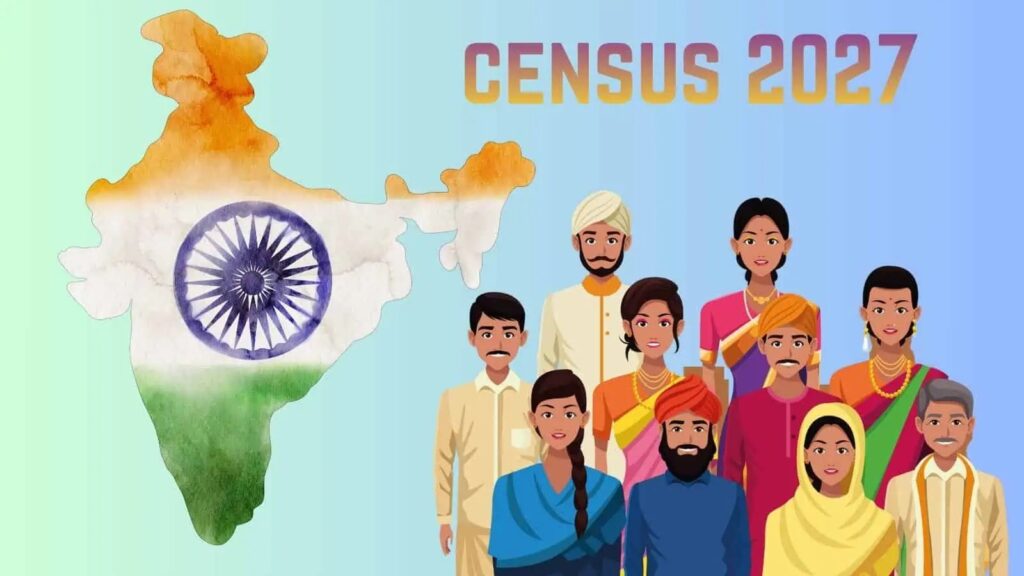
India’s Census 2027 is much more than a routine exercise in counting population. It is the country’s first census after a six-year delay, the first to be conducted digitally on a nationwide scale, and the first post-Independence census to include comprehensive caste enumeration. It is therefore closely linked to questions of social justice, political representation, federalism, privacy and the distribution of state resources.
One major controversy concerns caste enumeration. In April 2025, the Union government decided that caste would be counted as part of Census 2027. Supporters argue that India cannot design evidence-based welfare and reservation policies without knowing the actual demographic size and socio-economic condition of different communities. The demand has particular importance for Other Backward Classes (OBCs), whose population has not been comprehensively enumerated in the regular Census since 1931.
The disagreement, however, is over how caste should be recorded. The government has notified an open-ended caste question, meaning respondents can state their caste rather than simply choosing from a fixed OBC list. Critics, including Congress leaders, argue that this could reproduce the problems of the 2011 Socio-Economic and Caste Census, which reportedly produced an enormous number of caste and sub-caste entries and created difficulties in classification. They have demanded a methodology capable of producing reliable OBC figures. Tamil Nadu, meanwhile, has urged the Centre to use officially recognised caste names to improve consistency.
A second controversy involves political representation and delimitation. Census data after 2026 can become the basis for redrawing parliamentary and Assembly constituencies. Delimitation has effectively been frozen for decades to prevent states that successfully controlled population growth from losing political representation. Southern states therefore fear that a population-based redistribution of seats could reduce their relative influence, while more populous states could gain seats. Supporters of delimitation counter that democratic representation should eventually reflect the actual population of each state.
Census 2027 is also connected to women’s reservation. The 2023 constitutional amendment provides for one-third reservation for women in the Lok Sabha and state Assemblies, but its implementation is linked to delimitation. Consequently, decisions about the census and constituency boundaries could influence when and how women’s political representation expands. This creates another layer of political sensitivity because parties are effectively debating not only population figures but the future composition of legislatures.
Another concern is privacy and the possibility of the Census being confused with the National Population Register (NPR). Opposition parties have raised fears that the census questionnaire could become a route for collecting information associated with the NPR. The government maintains that the Census is a statistical exercise, whereas the NPR has a different purpose involving identification of usual residents. The controversy highlights the need for clear safeguards concerning collection, storage and use of personal information.
There are also important administrative and technological challenges. Census 2027 is intended to be India’s first fully digital census, with citizens given a self-enumeration option. Digitalisation could make processing faster, reduce paperwork and improve data management. But it also raises concerns about digital access, cybersecurity, data quality and the exclusion of people who are less comfortable with technology.
Questions have additionally been raised about inclusion and accuracy. Disability-rights groups, for example, have criticised the proposed categories for not adequately reflecting all disabilities recognised under Indian law. If important demographic groups are poorly classified or undercounted, the resulting data could distort welfare planning and resource allocation.
The delay itself is controversial. Census 2021 was postponed during the COVID-19 pandemic, leaving India without a new decennial population count for an unusually long period. This means governments have had to rely on older population estimates for planning schemes, infrastructure and public services. At the same time, the six-year delay has made Census 2027 unusually consequential because its results arrive alongside debates over delimitation and political representation.
Ultimately, the controversy is not simply about whether India should count its population. Almost everyone agrees that accurate demographic data are essential. The real debate is what should be counted, how it should be classified, who controls the data, and how the results will affect political power and public policy. A credible Census 2027 therefore requires methodological transparency, strong privacy safeguards, broad political consultation and an assurance that no community will be systematically excluded.
If conducted fairly, it could provide India with an invaluable evidence base for the next generation of policymaking. If its methodology or implementation is perceived as politically manipulated, however, the census could deepen existing disputes over caste, representation and federal balance rather than resolving them.