Miscarriage Of Justice: The 87-Day Ordeal Of Bengal’s Jalil Akhtar
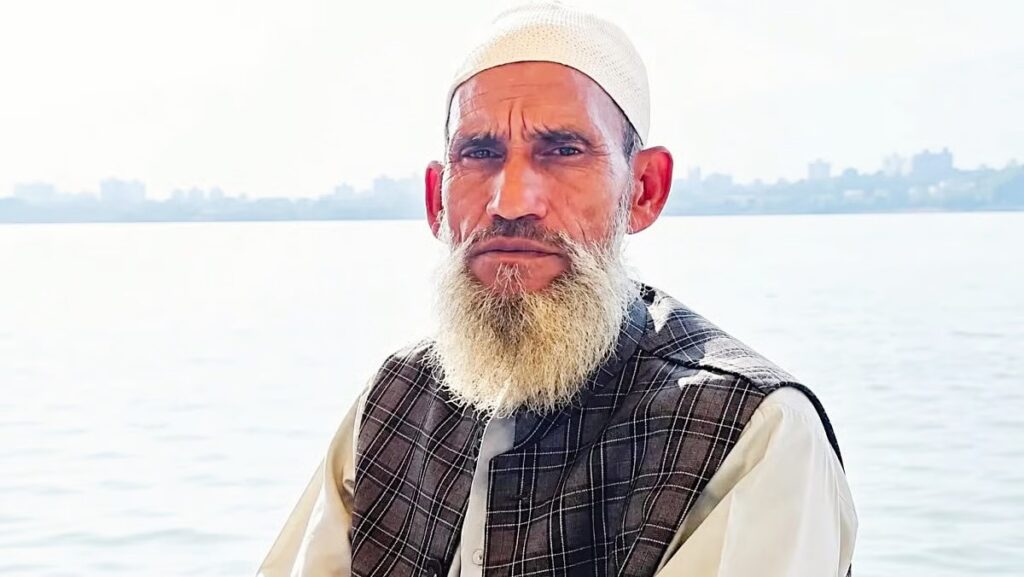
Jalil Akhtar is a daily wage agricultural labourer from Bengal, who spent 87 days in judicial custody and holding centres before being released due to lack of conclusive evidence of his foreign nationality (Image: National Herald)
In the border districts of West Bengal, where identity, documents, and suspicion often collide, the case of Jalil Akhtar stands out as a stark illustration of how administrative overreach can destroy an ordinary life. A daily-wage agricultural labourer from Bagrai (also reported as Bagroi) village in Uttar Dinajpur’s Bazargaon-2 panchayat area, Akhtar—variously described as 66 or around 70 years old—was picked up by Dalkhola police in mid-to-late June 2026 on suspicion of being an undocumented Bangladeshi national. He spent approximately 87 days in holding centres and judicial custody before an Islampur court granted him bail in mid-September 2026 after the prosecution failed to produce conclusive evidence of foreign nationality. His release raises urgent questions about due process, the reliability of citizenship verification, the human cost of border anxieties, and the absence of meaningful redress.
Akhtar was taken from his home at night while sleeping. Family members, including his wife Tofa Bibi and daughter Kulsum Khatun, learned of the detention only the next morning. Police initially held him in temporary holding centres at Nizampur and later Fulbari and Chakulia. Authorities completed biometric formalities and handed him over to the Border Security Force more than once in attempts to “push back” or deport him. Akhtar consistently maintained he was Indian and had never been to Bangladesh. The BSF could not complete deportation. Only later was a formal case registered under provisions of the Immigration and Foreigners Act, after which he was produced in court and lodged in Islampur jail.
Throughout the detention, the family submitted documents to prove his Indian identity: an Elector Photo Identity Card (EPIC), Aadhaar card, ration card, and a 1967 land deed in the name of his father, Roushon (or Roshan) Ali. Crucially, his name appeared on electoral rolls, including during the Special Intensive Revision (SIR) exercises of 2002 and 2026, and records showed continuity dating back years earlier. Police verification eventually confirmed that the EPIC details matched Election Commission records on the ERONET portal and the 2026 electoral roll; Aadhaar and ration-card authentications were also found valid. Investigating officers themselves acknowledged the genuineness of the documents in court. Yet the detention continued for nearly three months.
The Islampur Additional Chief Judicial Magistrate, while granting bail on a Rs 10,000 bond, described the situation as unfortunate. The court noted that the absence of a single conclusive document establishing citizenship by birth could not justify indefinite detention. It considered Akhtar’s age, lack of criminal antecedents, and the verified government records. The state had opposed bail, arguing that release might pose a threat to national security—an assertion the court did not accept as sufficient. Conditions of bail included remaining within the court’s jurisdiction and not tampering with evidence.
A severe personal toll
The personal toll was severe. Akhtar, a diabetes patient and landless daily-wage earner, suffered deteriorating health. Family accounts described him as barely eating, emotionally broken, and fearful of being pushed across the border into a country he did not know. His household, already living hand-to-mouth, lost its primary earner. Relatives alleged procedural irregularities, including delayed formal arrest and a police report that initially downplayed the duration of detention. Human rights groups such as Banglar Manabadhikar Suraksha Mancha (MASUM) approached the National Human Rights Commission and other authorities seeking an independent probe into the alleged illegal detention, attempted push-back, and custodial conditions.
This episode cannot be viewed in isolation. West Bengal’s northern districts share a long, porous border with Bangladesh. Concerns over illegal immigration, “push-ins,” and demographic change have intensified in recent years, leading to heightened scrutiny of residents, especially Muslims living near the border. Special Intensive Revisions of electoral rolls and stricter enforcement under foreigners’ legislation form part of a broader national conversation about citizenship documentation. In such an atmosphere, suspicion can rapidly escalate into prolonged detention even when official records exist. Akhtar’s case also highlights systemic weaknesses: the lag between detention and formal verification, the use of holding centres that function outside ordinary criminal procedure, and the practical difficulty ordinary citizens face in proving citizenship when the burden effectively shifts onto them.
A pattern of harassment
Critics see a pattern of harassment that disproportionately affects the poor and minority communities in border areas. Supporters of stricter measures argue that porous borders and genuine infiltration require proactive policing and that individual errors, while regrettable, do not invalidate the larger security imperative. Both perspectives contain elements of truth. Effective border management is a legitimate state function. At the same time, the Constitution and ordinary principles of natural justice demand that suspicion be tested promptly against available evidence and that prolonged liberty deprivation without proof be exceptional rather than routine.
The most pressing unfinished business is accountability and compensation. Akhtar walked free after 87 days, yet no clear mechanism exists to restore the lost wages, the physical and mental suffering, or the stigma of having been branded a foreigner. Police officers who acted on incomplete information face little apparent consequence. Courts can grant bail and note the absence of evidence, but they cannot by themselves repair the damage or deter future overreach.
Questions remain about whether internal inquiries will examine the decision to detain, the failed deportation attempts, and the delay in verification. Jalil Akhtar’s ordeal is a cautionary tale. In the pursuit of securing borders and verifying citizenship, the state must not lose sight of the individual whose life is upended by error or excess. Documents that survive official scrutiny should ordinarily protect a person from indefinite custody.
When they do not, the resulting injustice is not merely personal—it erodes public confidence in the fairness of institutions. Meaningful reform would include faster verification protocols, clearer guidelines limiting the use of holding centres, independent oversight of push-back practices, and a practical pathway to compensation for those wrongly deprived of liberty. Until such safeguards are strengthened, cases like Akhtar’s will continue to expose the gap between the ideal of justice and its uneven delivery on the ground.