Environmental Issues Have Been Underrepresented In WB Elections
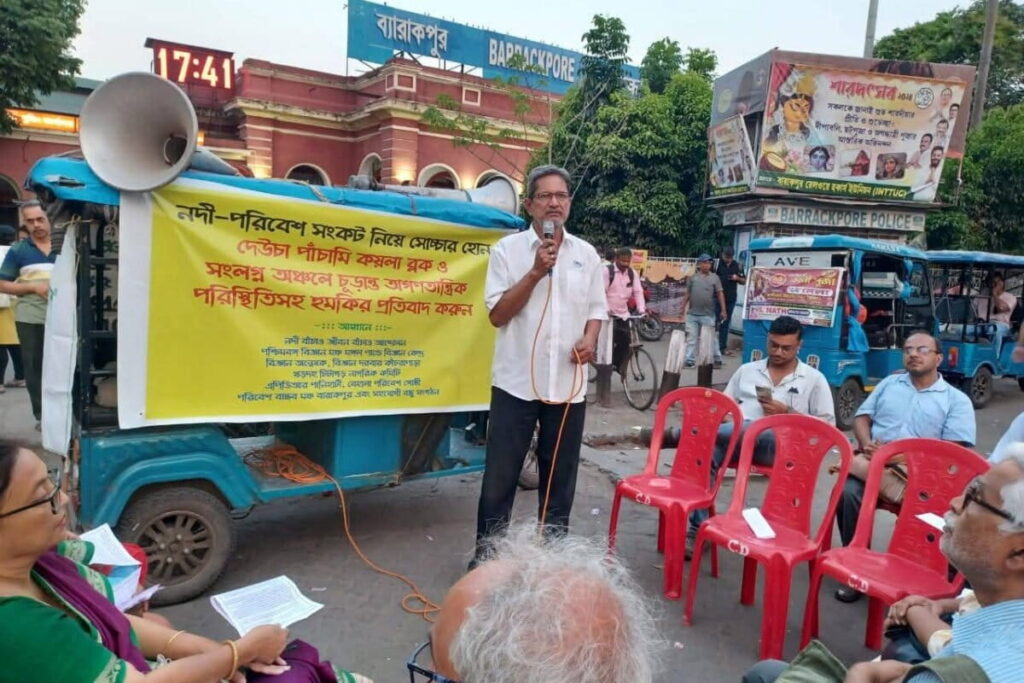
Citizens gather in Barrackpore to oppose a coal mine in Deuka Pachami in Birbhum district (Image by Sourav Prakritibadi)
- West Bengal’s 294 constituencies are voting in two phases, with counting set for May 4.
- Despite several environmental concerns, these issues receive little attention in election campaigns or manifestos.
- Jangalmahal, North West Bengal, and Sundarbans are the state’s primary environmental hotspots, with significant concerns reported from these areas.
As phased polls continue across West Bengal’s 294 assembly constituencies, the election debate has centred on issues like citizenship, while largely sidelining environmental issues.
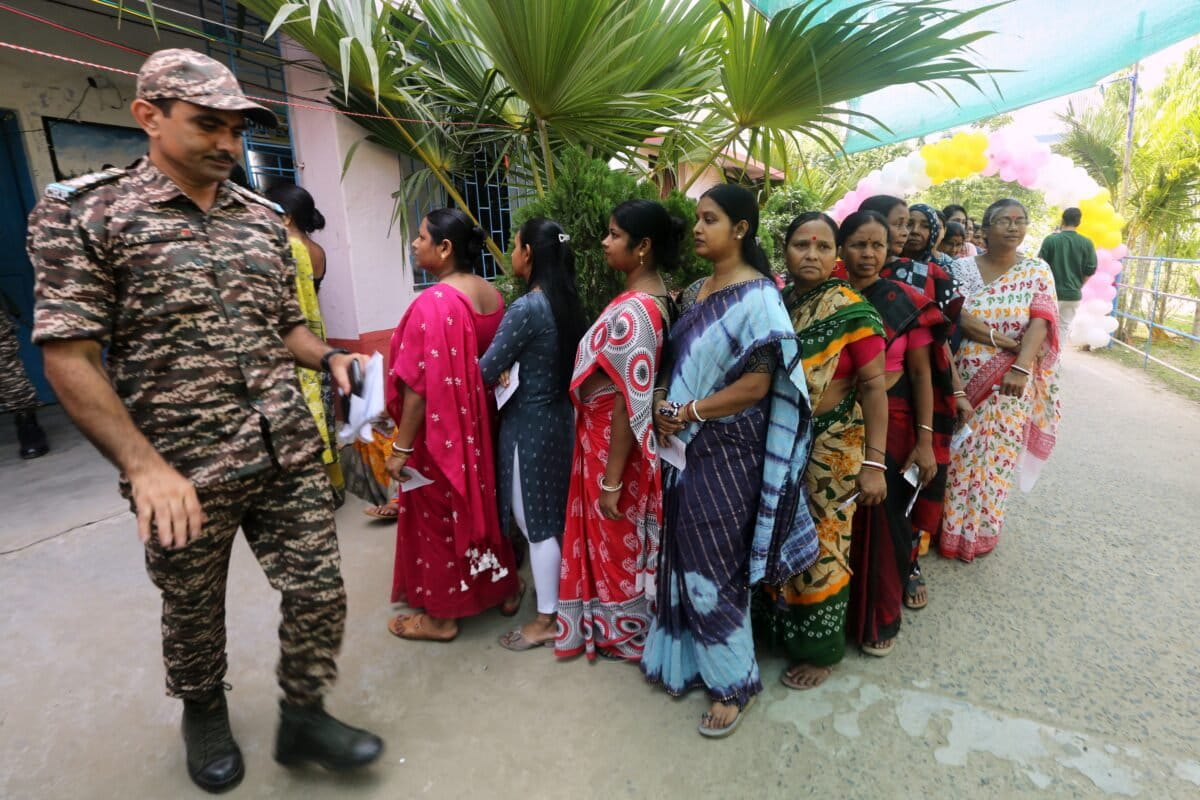
In the first phase on April 23, the state witnessed record voting. The next phase is scheduled for April 29, and voting will be counted on May 4.
Speaking about the representation of environment in elections, wildlife biologist and co-founder of The Fishing Cat Project, Tiasa Adhya said, “The ecological and environmental problems in West Bengal are the conversion of wetlands, decreasing freshwater flow in Sundarbans, indiscriminate sand mining, mining for minerals and ores, and conflict with elephants in both north and south West Bengal. These agendas have consequences for both nature and society and should come up strongly in policy manifestos. These are unprecedented times that require a change in the way we understand ‘development’ and an increase in ecological literacy that is linked to human health and well-being.”
Negative interactions between humans and wildlife are also a major concern in the state, said environmentalist and co-founder of Human and Environment Alliance League (HEAL), a non-profit based in Kolkata, Suvrajyoti Chatterjee “Negative interactions between humans and elephants cause a lot of fatalities in south West Bengal,” he told Mongabay-India. “Many places lack street lights, and the habit of open defecation among people causes fatalities. In north West Bengal districts also, deaths from elephant attacks are rising alarmingly. Those districts are also witnessing negative interaction with leopards. In Sundarbans, a lot of people die from snakebite and tiger attacks, and many of these deaths go unreported. Lack of infrastructure and unavailability of antivenom in interior islands, dependency on faith healers are responsible for a lot of the snakebite deaths.”
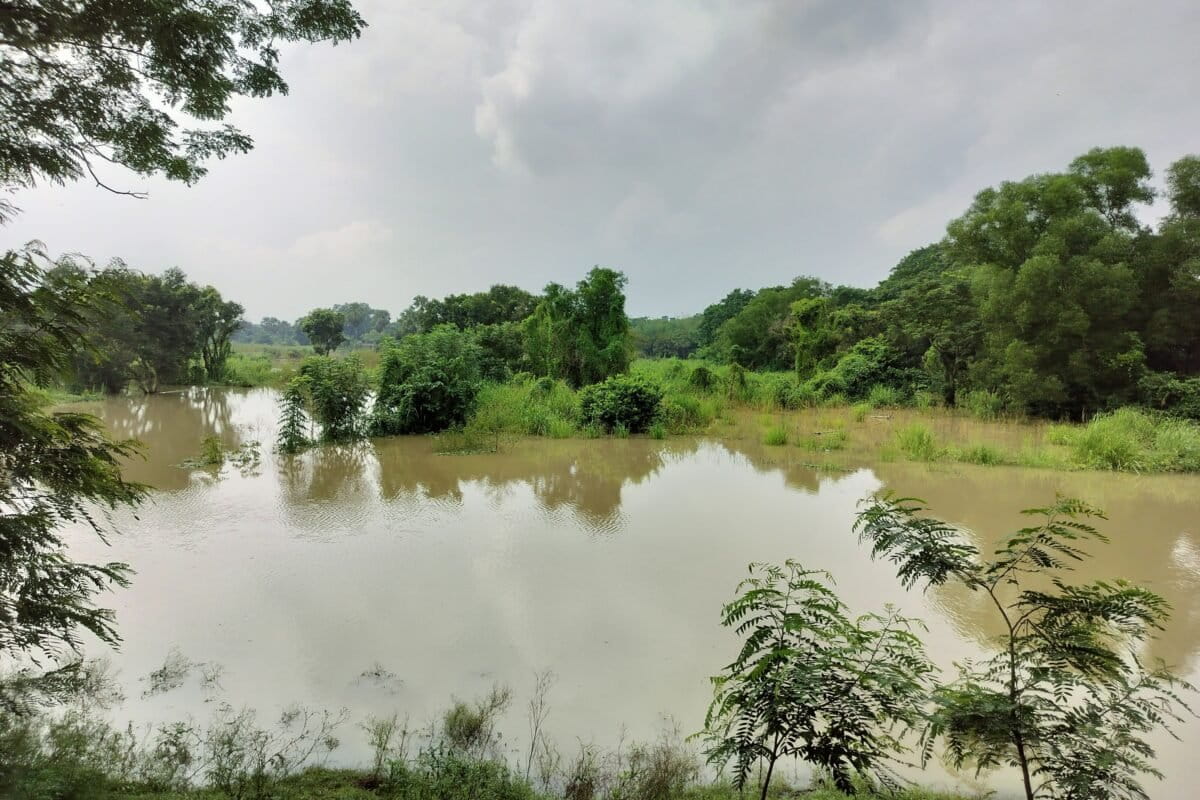
Wetland destruction is also a major concern in the state’s urban and semi-urban areas. Howrah-based animal rescuer Chitrak Pramanik said that wetlands are often filled in by construction debris by real estate developers. “These wetlands are the prime habitat of the state animals of West Bengal, i.e, fishing cats. We have to protect wetlands for conservation of fishing cats,” he told Mongabay-India.
Environmental hotspots and concerns
Among several areas with environmental issues, Jangalmahal, north West Bengal, and Sundarbans are the primary hotspots in the state.
Jangalmahal, located in southwestern West Bengal and characterised by its forest cover and substantial tribal population, represents a significant environmental hotspot. The region encompasses 46 assembly constituencies across districts such as Purulia, Bankura, Jhargram, and West Medinipur.
Robin Mahto, a local of Jhargram who works on mitigating human-elephant interactions in the area, said, “Elephants creating conflict here are often driven from neighbouring states like Odisha and Jharkhand. Human-elephant conflict has been increasing here since 2017. In the entire Jangalmahal, at least 25 people die annually because of this. While compensation of ₹500,000 in case of a human death is paid within 72 hours, compensation for house and crop damage is not regular.”
The region is also witnessing environmental degradation due to illegal mining. Environmental activist Sourav Prakritibadi, who is part of the organisation Prakriti Bachao O Adivasi Bachao Mancha (Save Nature and Save Tribals Forum), said, “Mining continues unabated in many places. In the Nituria block in Purulia district, 300 acres have been acquired by Eastern Coalfields Ltd (ECL) for a coal mine. Now, as ECL plans to expand the mine, 12 villages will be displaced. People in those villages are opposing this expansion under the umbrella of an organisation called Jomi Adhikar Mancha (Land Rights Forum). Many small hills in Purulia, such as Tilaboni, are being mined for basalt. Then a movement is underway against the coal mine in Deuka Pachami in Birbhum, which might displace 36 villages. Apart from that, sand mining is going on openly in Birbhum and on the banks of the Subarnarekha in Jhargram.”
Northern West Bengal, featuring forests, rivers, and tea gardens, is another major environmental hotspot. The area covers 54 assembly constituencies across Cooch Behar, Alipurduar, Jalpaiguri, Darjeeling, Kalimpong, North Dinajpur, South Dinajpur, and Malda districts.
Environmentalist Amir Chhetri, who lives in Panijhora, marked rapid infrastructure development as an environmental threat. He said, “There are already 13 dams on the Teesta River. A 5.3 km-long railway tunnel from Sevoke to Rongpo is under construction. In an ecologically fragile region, this increases the risk of flash floods and landslides. During the monsoon, over 150 people die from natural calamities annually, and many more are displaced.”
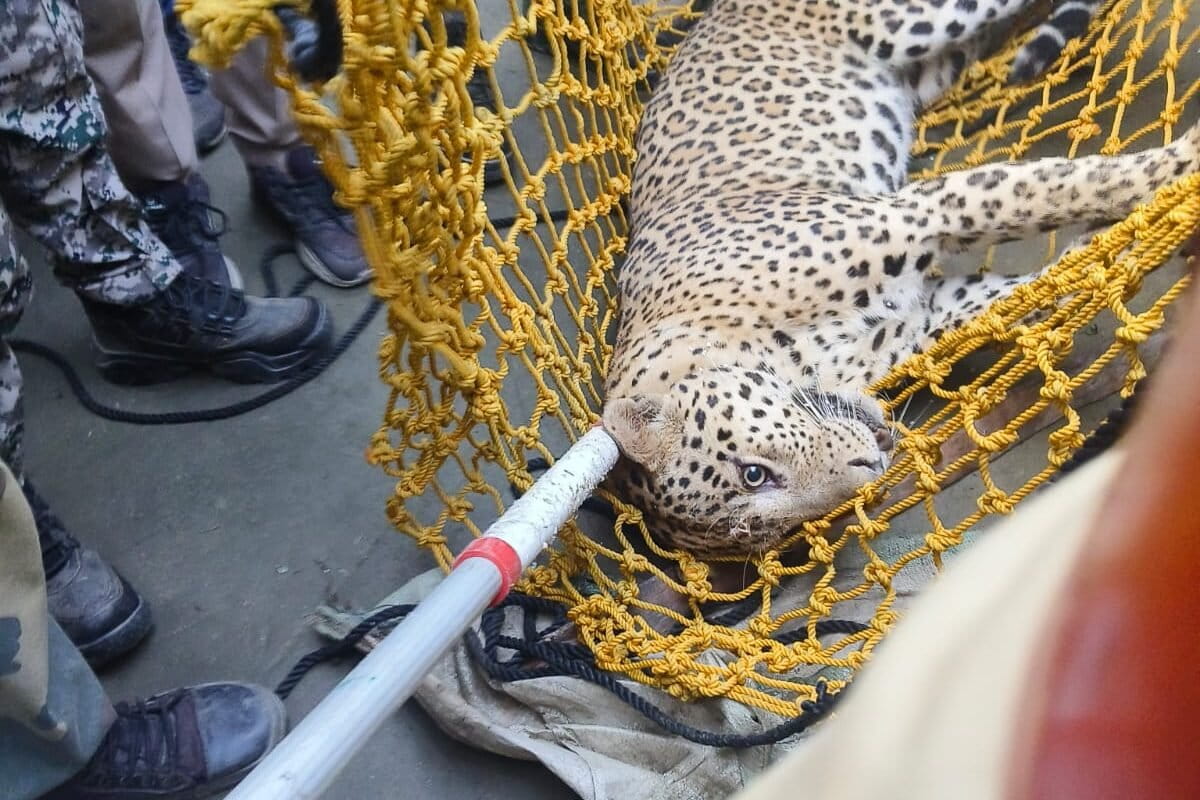
Ardhendu Banik, Assistant Secretary of HEAL, who lives in Cooch Behar, highlighting the negative interaction with wildlife here, said, “In recent times, we have seen a rise in leopard attacks, especially in the tea gardens around Jalpaiguri , Mainaguri, and Malbazar. They mostly attack children and elderly people. People living in forest villages now grow crops that attract elephants, such as corn and rice. On the other hand, animals are also dying in roadkill and collisions with trains, especially the Rajabhatkhawa line, which is fatal for elephants.”
Sundarbans, the world’s largest contiguous mangrove forest, is famous for its waterways, islands, and Royal Bengal Tigers. It includes 10 constituencies in South and North 24 Parganas.
Approximately 400,000 people in the Sundarbans depend on fishing for their livelihood, facing multiple challenges such as declining fish stocks and increasing tiger attacks.
Tapan Mandal, a fisherman from Gosaba block in South 24 Parganas and a member of Dakshin Banga Matsyajibi Forum (South Bengal Fishermen Forum), said, “Sea level rise is increasing salinity, reducing fish availability. Fishermen are only allowed to fish in the forest’s buffer zone, which shrinks their area. Since 1972, the forest department has been issuing Boat License Certificates (BLCs) to fishermen. However, there are around 45,000 fishermen with boats, while the department provides only 923 BLCs annually. So, the rest of them often have to enter illegally for their livelihood.”
Zafar Iqbal, who lives in Sonakhali in Basanti block, states that the number of fatalities from tiger attacks is rapidly increasing in Sundarbans. “Annually, around 25 people die from tiger attacks in Sundarbans, and many deaths go unreported. Fishermen and moules (those who collect honey) are the main casualties of tiger attacks. Health facilities in these islands have improved, which is a silver lining. Some 10-12 years back, a victim from a tiger or snake attack would have to be taken to Kolkata, and most patients would die on the way.”
Environment in parties’ manifestos
West Bengal is witnessing a three-way contest in this election, with the ruling Trinamool Congress (TMC) looking to come to power for the fourth time, while the Bharatiya Janata Party (BJP) is looking to form the state government for the first time. Communist Party of India (Marxist) (CPIM), which once turned the state into its veritable fortress, will be aiming for a revival in the state.
However, in this pivotal election, environmental issues remain largely absent from the manifestos of major political parties, underlining their limited prominence in the current political discourse.
BJP in its manifesto spoke about protecting the biodiversity of Sundarbans and making it an eco-friendly tourism destination. It focused on protecting the Royal Bengal Tigers and their habitat. The manifesto also mentioned a scheme called ‘Mishti’ to protect the state’s mangrove forests and develop the area into a tourism destination.
Speaking to Mongabay-India, Amitava Roy, State Vice President, BJP, said, “Wetlands are being destroyed by the builders under direct patronage of the ruling dispensation. Once our government comes to power, we will focus on this issue. Also, we will take up measures for the development of tourism and wildlife, as well as care of domestic animals like cows.”
The CPIM manifesto also spoke about the protection of jal, jangal, and jamin (water, forests, and land), which included stopping the threat of illegal mining, combating challenges of climate change, better waste management, and sustainable industrialisation.
Former MP and CPI (M) General Secretary, Alakesh Das said, “Environment has always been one of our priorities, and this election is no exception. In our manifesto, we have spoken about important issues like saving rivers and stopping illegal mining. If our government comes to power, we will also stop cutting trees and focus on creating a green belt. Also, people should be empowered to work on environmental issues. We will also stop all mining syndicates.”
TMC, in its manifesto, listed its achievements in this sector during its 15-year rule, including an increase in forest cover from 14,214 sq km to 16,962 sq km, afforestation of 140,000 hectares of land, and 150 million mangrove plantations across the state’s coastal areas.
For the next five years, the TMC manifesto promised a River Protection Masterplan for Malda and Murshidabad districts, rehabilitation of wetlands through survey and restoration of feeder streams, and prevention of waste dumping in wetlands, setting up a biodiversity gene park and mangrove conservation centre.
Bagnan MLA Arunava Sen, who is the TMC district president in Howrah (Rural), addressed environmental pollution during campaigning, including the use of plastics and the putting up of nails in trees. Speaking to Mongabay-India, he further said, “There are many wetlands in my constituency which are the habitat of fishing cats, and so I am trying to protect them. Also, awareness has been raised about Shikar Utsav or hunting festivals. If I come to power in the next term, I will try to create a wildlife hotspot where animals like fishing cats, jungle cats, civets, and golden jackals will thrive.”