India Signals Shift In Climate Priorities Amid Global Uncertainty
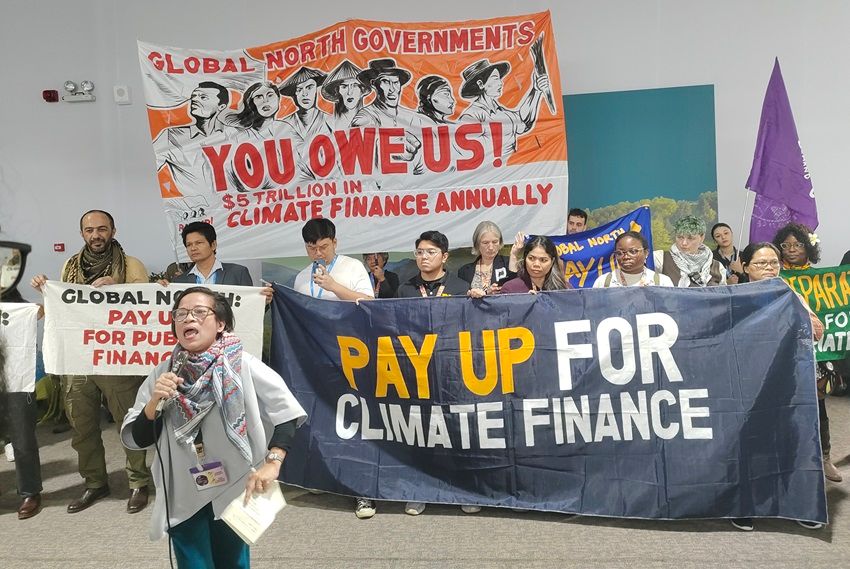
Activists protest at COP29, where countries negotiated a new climate finance goal. The outcome was seen as inadequate by many developing countries, with India among those raising strong objections (Image by Kundan Pandey/Mongabay)
- India has withdrawn its bid to host COP33 scheduled in 2028.
- In the absence of an official explanation, experts link the move to changing climate and geopolitical dynamics.
- With the Global Stocktake due in 2028, hosting the COP would have brought added pressure to push stronger climate ambition.
India has withdrawn its bid to host the UN climate conference, COP33 scheduled for 2028, a move that reflects shifting priorities in global climate negotiations and geopolitics.
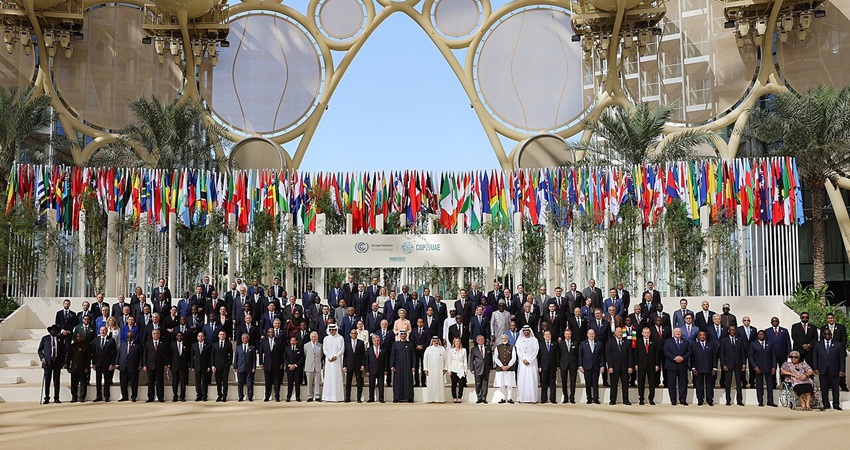
Rajat Agrawal, Joint Secretary at the Ministry of Environment, Forest and Climate Change (MoEFCC), informed the Asia-Pacific group of the United Nations Framework Convention on Climate Change (UNFCCC) about India’s decision on April 2. A ministry spokesperson, Virat Majboor, confirmed to Mongabay-India that the decision had been communicated to the UNFCCC secretariat, but said no further information was available.
At COP28 in Dubai in 2023, Prime Minister Narendra Modi had announced India’s interest in hosting the climate conference scheduled in 2028. India had earlier hosted COP 8 in New Delhi in 2002.
The COP presidency and the responsibility for hosting the annual climate conference rotate among the five United Nations regional groups — the African Group, Asia-Pacific Group, Eastern European Group, Latin American and Caribbean Group, and Western European and Others Group.
After Brazil hosted COP30 in 2025, Australia and Türkiye will jointly host COP31, followed by Ethiopia hosting COP32 for the African Group. This would be followed by the Asia-Pacific Group’s turn to host COP33, for which India had put forward its bid.
The process of selecting a host remains “opaque” and takes place within regional groups, Joanna Depledge, a research fellow at the Centre for Environment, Energy and Natural Resource Governance (CEENRG) at the University of Cambridge, said. India’s bid was still under consideration within the Asia-Pacific Group and had not been finalised.
“It is not a good sign,” Depledge said, referring to the withdrawal. She pointed to Brazil’s withdrawal from hosting COP25 after the election of President Jair Bolsonaro, widely interpreted as a signal of reduced interest in climate action, which did follow.
In India’s case, however, the move is likely to be seen differently, she said, linking it to the country’s dissatisfaction with developments at COP29 in Azerbaijan, particularly over the decision on a new climate finance goal.
Ravi Shankar Prasad, former chief negotiator for climate change (2013-2021) and distinguished fellow at CEEW, said the Prime Minister had earlier indicated India’s interest in hosting the climate negotiations, and added that several geopolitical changes have since emerged, including challenges around climate finance, energy security, and critical minerals. CEEW is a New Delhi-based think tank.
Evolving reality
The global climate landscape has undergone significant shifts in the two and a half years since India announced that it would host COP33. At the time of the announcement, in December 2023, the United States remained part of the Paris Agreement.
By November 2024, it had become clear that Donald Trump was likely to return to power in the United States. He has indicated plans to withdraw from the Paris Agreement, the first global treaty to set specific climate goals, including limiting temperature rise to well below 2°C and pursuing efforts to keep it to 1.5°C. In January 2025, he issued an executive order in this regard.
At the same time (November 2024), countries were negotiating a new climate finance goal at COP29 in Baku. After long and tough negotiations, developed countries agreed to mobilise $300 billion annually by 2035 under the New Collective Quantified Goal (NCQG). The outcome was seen as inadequate by many developing countries, with India among those raising strong objections.
Earlier, the Prime Minister, while announcing India’s interest in hosting COP33, had also emphasised the need to scale up climate finance commitments from billions to several trillions, which shows India has realised the importance of climate finance in setting up ambitious climate goals.
R. R. Rashmi, India’s former principal negotiator under the UN climate process at several COPs and a distinguished fellow at TERI, said that global climate finance has remained inadequate, and countries have to factor this in and work within these constraints. TERI is a New Delhi- based think tank.
Regarding the changing reality, he said the focus has largely been on mitigation, but as climate impacts become more visible, attention is shifting towards resilience. He said public budgets are increasingly being directed towards supporting vulnerable communities, while mitigation is expected to be driven by private capital.
Another major development has been rising concerns over energy security. The Iran-Israel conflict is the latest geopolitical episode to strain global energy supply, highlighting vulnerabilities in supply chains. Earlier, the Russia-Ukraine war and restrictions on critical mineral exports by China had already exposed these risks, particularly for large energy consumers such as India.
These developments are also reflected in India’s domestic policy discourse. The latest Economic Survey, which was tabled in the Parliament in January, questioned the prevailing narrative by saying, “…deterministic or catastrophic policy narratives often compresses nuance and downplays uncertainty.” It argued that “development is, in itself, a form of adaptation,” adding that growth and resilience should be seen as complementary to climate action.
Similar views are emerging globally. Writing ahead of COP30, U.S.-based billionaire and philanthropist Bill Gates noted that excessive focus on near-term emissions targets could divert attention from practical solutions to improve resilience in a warming world.
Against this backdrop, Karthik Nachiappan, a Research Fellow at the Institute of South Asian Studies at the National University of Singapore, linked India’s withdrawal from hosting the COP to a broader shift. He said India’s climate diplomacy is moving from symbolic leadership, such as hosting summits, towards a more instrumental leadership focused on finance, technology, and industrial policy. This includes prioritising forums such as the G20, multilateral development bank reforms, and partnerships across the Global South, making COP hosting less central.
Increasing expectations on ambition
The year 2028, when COP33 will take place, is significant because it coincides with the second Global Stocktake (GST), a process under Article 14 of the Paris Agreement that assesses collective progress towards its long-term goals. The first GST was concluded in 2023 at COP28 in Dubai.
The GST assesses emissions trends, policies, finance, and adaptation efforts, and evaluates whether current actions are sufficient to meet the Paris Agreement’s temperature goals of limiting warming to below 2°C and pursuing efforts to keep it to 1.5°C. Current assessments, including the latest emissions gap report by the United Nations Environment Programme (UNEP), show that global efforts remain insufficient.
The outcome of the 2028 GST is expected to trigger calls for more ambitious climate action, placing greater expectations on the COP presidency to push mitigation efforts. This comes even as India has emphasised adaptation and resilience in its domestic policy discourse, including in the Economic Survey.
The call for increasing ambition is getting visible even now at other forums. It is the Intergovernmental Panel on Climate Change, as its seventh assessment report is expected towards the end of this decade. However, there is a push by developed countries, the Alliance of Small Island States (AOSIS), and several Least Developed Countries (LDCs), to advance these reports to embed their findings in GST. Countries, including India, have expressed their concerns about compressing timelines and early release of these reports.
Amid this, the withdrawal of the United States from the Paris Agreement, given its share of around 12% in global emissions, creates a gap difficult for others to fill, increasing pressure on the host country to address the widening emissions gap.
Experts say these dynamics make it difficult for developing countries to bridge the emissions gap. R. R. Rashmi said developed countries were expected to lead mitigation efforts, but are not acting in line with their capacities, shifting the burden onto developing countries.
He added that while global efforts to address climate change have been inadequate, the impacts cannot be ignored. The resulting pressure on developing countries, already dealing with climate impacts, underscores the importance of climate justice.
Prasad said, “Developed countries were expected to play a leading role in mitigation, but they are not acting in line with their responsibilities and capacities. This points to a harsh reality: the world is likely to overshoot its warming targets. The challenge now is how to respond to that, and developing countries are already grappling with this question.”
Increasing scrutiny of the COP host/presidency
In recent COPs, host countries’ domestic energy policies, especially those related to fossil fuels, have come under scrutiny. From the United Arab Emirates’ oil expansion during COP28 to Azerbaijan’s gas strategy ahead of COP29 and the United Kingdom’s North Sea projects during COP26, questions have been raised about the alignment between climate leadership and fossil fuel policies.
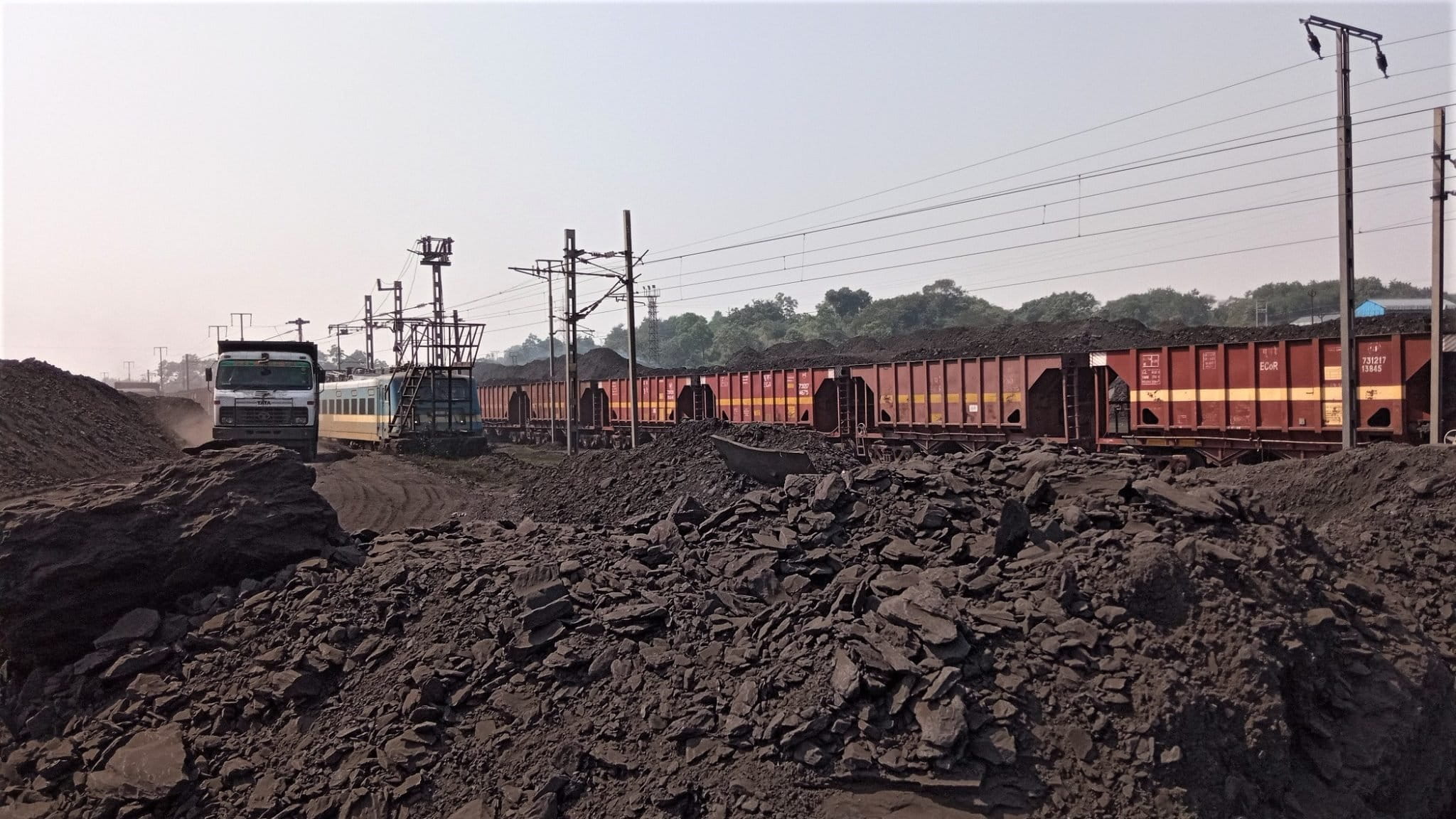
India faces a similar dilemma. Coal remains important to its energy needs, even as global climate efforts increasingly focus on phasing down fossil fuels. When Prime Minister Narendra Modi announced India’s interest in hosting the COP, he also emphasised the need for technology transfer and strengthening clean energy supply chains.
However, it remains uncertain how much traction such demands from developing countries will receive, even as coal continues to come under scrutiny in climate negotiations.
While India’s per capita emissions remain low, its overall share of around 7-8% makes it one of the world’s largest emitters, placing its climate and energy policies under increasing global scrutiny.
Nachiappan said hosting a COP brings visibility but also pressure to raise climate ambition and defend domestic choices. He said withdrawing from the bid allows India to avoid that exposure and preserve flexibility. He added that the move reflects a broader shift in climate politics, away from large multilateral moments towards negotiations and discussion on finance, technology, and sectoral cooperation.
Joanna Depledge said the prospect of intense scrutiny could deter potential hosts. However, she added that COPs will remain highly relevant, even as climate action becomes more dispersed across smaller initiatives and groupings.