Centre Pushing ‘Fake Narrative’ On Bengal Poll Turnout: TMC’s O’Brien
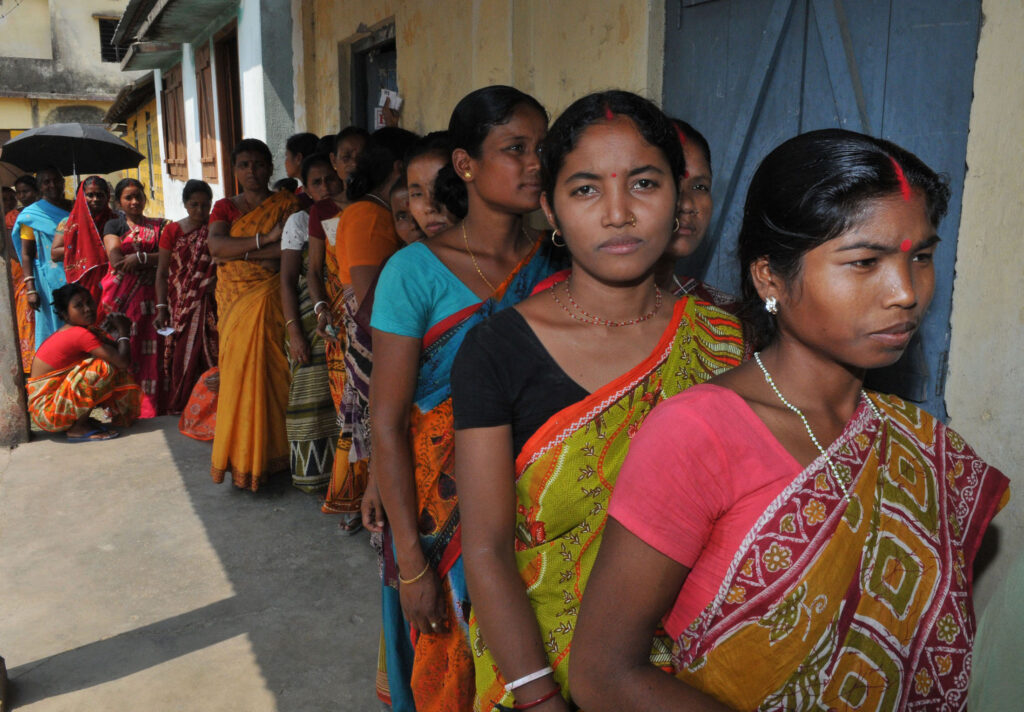
TMC leader Derek O’Brien pointed out that while the turnout percentage in 2026 appeared significantly higher, the actual number of votes cast had slightly declined when compared with the previous election cycle (Representative Image: Government Open Data License – India)
Senior leader of the All India Trinamool Congress, Derek O’Brien, on Friday accused Union Home Minister Amit Shah of attempting to build what he termed a “fake narrative” around the high voter turnout recorded in the first phase of the West Bengal Assembly elections 2026.
In a detailed post on X, O’Brien challenged the interpretation of turnout figures being presented by the Centre, arguing that the headline percentage increase masked a more nuanced reality. “There is an attempt to mislead people by highlighting percentages without explaining the underlying numbers,” he said. “This is nothing but a fake narrative designed to create a perception.”
O’Brien pointed out that while the turnout percentage in 2026 appeared significantly higher, the actual number of votes cast had, in fact, slightly declined when compared with the previous election cycle. “In 2021, the 152 constituencies that voted in the first phase had approximately 3.67 crore electors,” he explained. “Out of these, around 3.10 crore people voted, which translated into a turnout of roughly 84 per cent.”
He contrasted this with the current election data. “After the Special Intensive Revision of electoral rolls, the electorate in 2026 has come down to about 3.33 crore,” O’Brien said. “Out of this, around 3.09 crore votes have been cast, leading to a turnout of nearly 92.7 per cent.”
According to him, the comparison reveals a different story than what is being projected. “If you look at the absolute numbers, the total votes cast in 2026 are actually lower by more than 83,000 compared to 2021,” he stated. “So where is this so-called surge? The increase in percentage is simply because the denominator—the total number of voters—has reduced.”
He emphasized that such distinctions are crucial in interpreting electoral data accurately. “Percentages can be deceptive if you don’t examine the base figures,” O’Brien said. “This is basic arithmetic, yet it is being conveniently ignored.”
War of Words Intensifies Ahead of Results
O’Brien’s remarks came shortly after Shah, speaking at a press conference in Kolkata, hailed the turnout as evidence of strong public sentiment. “The people of West Bengal have broken all records,” Shah said. “A turnout exceeding 92 per cent clearly shows that voters are enthusiastic and eager for change.”
Rejecting this assertion, O’Brien argued that the narrative of “record-breaking participation” was politically motivated. “You cannot claim a wave based on selective interpretation of data,” he said. “The facts, when presented honestly, do not support that conclusion.”
The Trinamool Congress leader also broadened his attack to include Prime Minister Narendra Modi, issuing a direct political challenge. “If the Trinamool Congress, under the leadership of Mamata Banerjee, returns to power, will the Prime Minister take responsibility?” he asked. “I challenge him to resign if the people of Bengal once again place their trust in us.”
The Mamata Banerjee-led party has consistently maintained that it retains strong grassroots support, despite the BJP’s aggressive campaign in the state. O’Brien’s comments reflect the broader strategy of countering the BJP’s narrative with data-driven arguments while also raising the political stakes.
On the other hand, Shah expressed confidence in his party’s prospects. “The Bharatiya Janata Party will secure a clear majority,” he said. “We are confident of winning more than 110 out of the 152 seats that went to polls in the first phase.”
The exchange underscores the increasingly sharp rhetoric as the election progresses, with both sides seeking to frame voter turnout as a sign of momentum in their favor. While the BJP interprets the high percentage as evidence of a desire for change, the Trinamool Congress insists that the numbers have been misrepresented.
Meanwhile, the electoral process in the state is far from over. The remaining 142 constituencies are scheduled to go to the polls on 29 April, setting the stage for a crucial second phase. The final results, which will determine whether the incumbent government retains power or faces an upset, are set to be declared on May 4.
As the political battle intensifies, the debate over turnout figures highlights how data itself has become a contested space. “Numbers don’t lie, but they can be spun,” O’Brien said. “It is important for people to look beyond headlines and understand what the data actually shows.”