‘Women’s Quota Is Anti-Women, Anti-Caste Census & Anti-Federal’
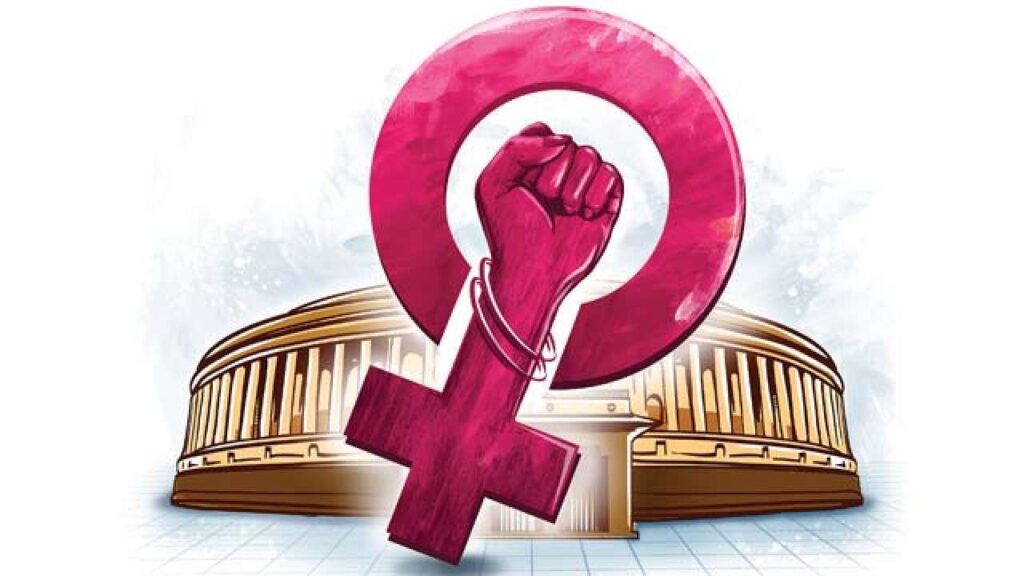
Assam Congress MP and Lok Sabha deputy leader Gaurav Gogoi questioned the government’s commitment to women’s reservation, arguing that its sincerity would ultimately be judged by how quickly it is implemented. “If you are serious, implement it now on the existing strength of the House,” he said
Assam Congress MP and Lok Sabha deputy leader Gaurav Gogoi launched a sharp attack on the Modi government while opening the debate on three key Bills in the Lok Sabha on Thursday, describing them as “anti-women, anti-caste census, anti-Constitution and anti-federal structure.”
Framing his intervention around what he called a gap between intent and execution, Gogoi questioned the government’s commitment to women’s reservation, arguing that its sincerity would ultimately be judged by how quickly it is implemented. “If you are serious, implement it now on the existing strength of the House,” he said, opposing the decision to link the quota to a future delimitation exercise.
The debate comes at a crucial juncture, as the Centre moves to operationalise the women’s reservation framework through a set of legislative measures, including constitutional amendments and changes to delimitation laws. While the government has defended the package as a comprehensive reform, the Opposition has argued that it delays actual representation for women.
Gogoi alleged that tying reservation to delimitation opens the door to manipulation of electoral boundaries. Drawing parallels with earlier exercises, he said, “This opens the door to gerrymandering,” pointing to past experiences in regions such as Jammu and Kashmir, and Assam, where he claimed political balances had been altered. Extending a similar approach nationwide under the banner of women’s empowerment, he added, would be “shameful.”
“Delimitation Through the Backdoor”
Accusing the ruling party of prioritising optics over outcomes, Gogoi said the legislative package reflects “politics of symbolism” rather than a genuine attempt to ensure representation. He argued that the real objective behind the Bills is not reservation itself, but a broader restructuring of electoral boundaries.
“Delimitation — not reservation — is the operative objective, and it is being advanced through the backdoor,” he said, warning that such an approach could have far-reaching consequences for India’s democratic framework.
A key concern he flagged was the absence of updated social data, particularly a caste census, in the context of redrawing constituencies. Without such data, he suggested, any exercise in delimitation risks distorting representation rather than correcting it. “Redesigning constituencies without updated social data could further skew representation,” he implied, linking the issue to broader debates on social justice and equity.
Reiterating his party’s support for women’s reservation, Gogoi emphasised that the reform should be straightforward and time-bound. “It should be implemented on the current strength of 543 seats in the Lok Sabha,” he asserted, calling for the quota to be delinked from the delimitation process altogether.
He also recalled the passage of the women’s reservation law in 2023, noting that similar assurances had been made at the time by Prime Minister Narendra Modi and Home Minister Amit Shah. However, he argued that these commitments had not translated into tangible action. “Assurances were given earlier, but there has been no follow-through,” he suggested, questioning the government’s consistency on the issue.
Heated Debate and Government’s Defence
The discussion unfolded as the government introduced the Constitution (131st Amendment) Bill, aimed at modifying the existing framework for women’s reservation. This was accompanied by the Delimitation Bill and the Union Territories Laws (Amendment) Bill, which seek to operationalise the revised provisions in regions such as Delhi, Puducherry, and Jammu and Kashmir.
The debate quickly turned contentious, with sharp exchanges between treasury and Opposition benches. After a heated 40-minute discussion, the Opposition demanded a division of votes. The Constitution Amendment Bill was eventually introduced with 251 members voting in favour and 185 against, reflecting a deeply polarised House.
Responding to the criticism, Union minister Arjun Ram Meghwal defended the government’s approach, arguing that the proposed framework seeks to balance expansion with inclusion. “Increasing the Lok Sabha’s strength to 815 seats will allow 33 per cent reservation — 272 seats — for women without reducing existing representation,” he said.
Meghwal also emphasised that safeguards for historically marginalised communities would remain intact. “Sub-quotas for women from Scheduled Castes and Scheduled Tribes will continue,” he added, presenting the reforms as an effort to ensure both gender and social equity.
However, the broader political disagreement remains unresolved. At its core lies a fundamental question: should women’s reservation be implemented immediately within the current parliamentary structure, as the Opposition demands, or should it be embedded within a larger redrawing of India’s electoral map, as the government proposes?
For Gogoi and his party, the answer is clear. “If the intent is genuine, there is no need to delay,” his remarks suggest, positioning immediacy as the true test of political will. For the government, however, the emphasis remains on structural reform, even if it involves a more complex and time-consuming process.
As the Bills move forward, this divide is likely to persist, shaping not only the fate of women’s reservation but also the broader contours of India’s electoral democracy.