How Prepared Is India For A Quick Response To Climate Disasters?
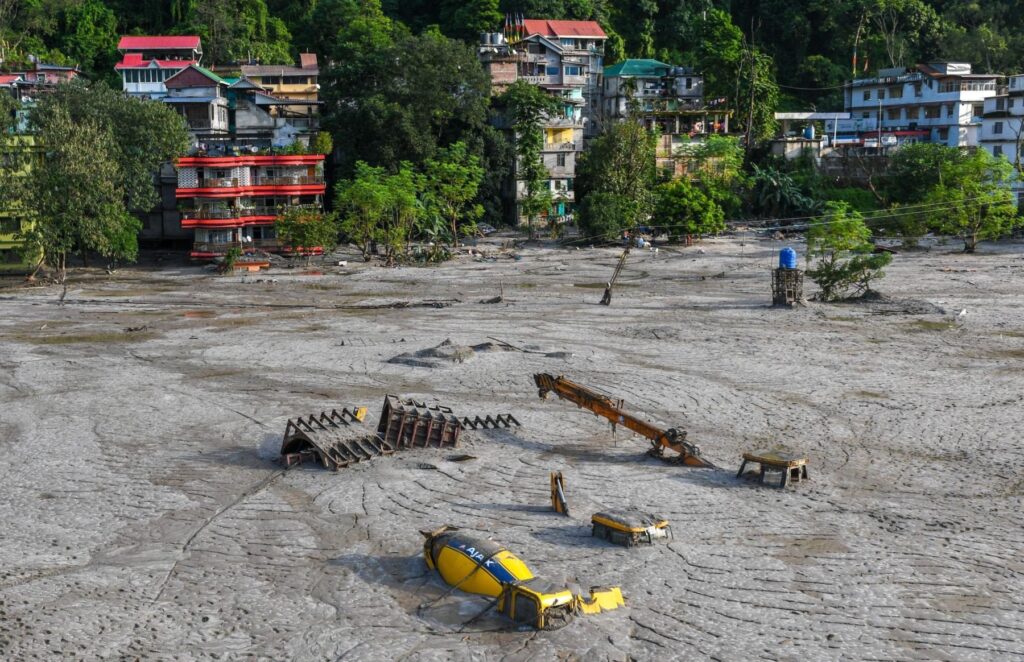
Construction vehicles were covered in debris during flash floods caused by the South Lhonak glacial lake outburst flood in northeast India in October 2023 (Representational Image: Sipa US / Alamy Live News)
Climate change is no longer a distant environmental concern; it is an immediate threat to lives, livelihoods and infrastructure. Across South Asia, extreme rainfall, flash floods, landslides, heatwaves and glacial lake outburst floods are becoming more frequent and destructive. India, with its vast and varied geography, is particularly vulnerable. Yet the central question is not simply whether the country has disaster management institutions or policies, but whether these can translate warnings into swift, coordinated action on the ground.
India has built a substantial disaster management framework over the years. The Disaster Management Act, 2005, established the National Disaster Management Authority (NDMA), State Disaster Management Authorities and district-level bodies. The National Disaster Management Plan and early warning systems have strengthened preparedness in several regions.
The National Disaster Response Force (NDRF) has also developed significant capacity in search, rescue and relief operations. However, the existence of institutions and protocols does not automatically guarantee effective preparedness. The real test is whether information reaches vulnerable communities in time, evacuation is orderly, local administrations are equipped, and relief arrives before a crisis becomes a catastrophe.
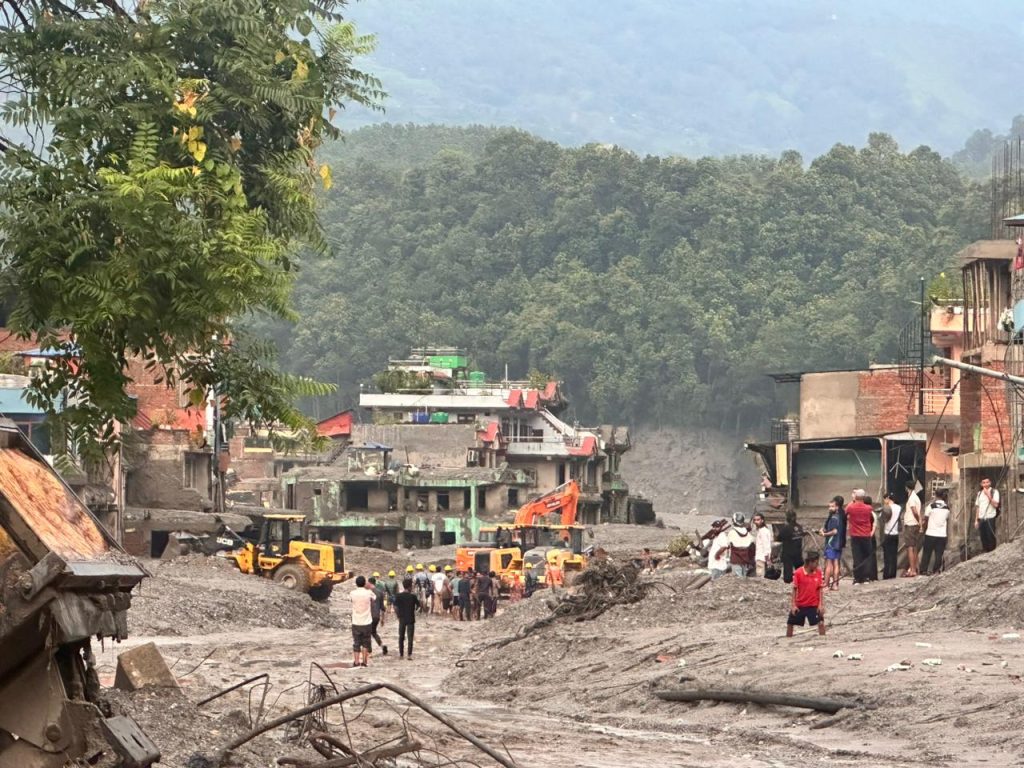
The recent floods in Nepal offer a particularly sobering warning. The devastating flash flood that struck the Bhotekoshi–Trishuli valley on August 26, 2026, followed another major flood in the same river system in July 2025.
Initial reports indicated hundreds of deaths and widespread destruction of settlements, roads, bridges, hydropower projects and other infrastructure. The tragedy exposed the dangers of a rapidly warming Himalayan region, where glacier retreat, permafrost degradation and unstable mountain slopes are increasing the risk of sudden, destructive events.
The policy exists; implementation remains the challenge
Nepal’s experience is relevant to India not merely because the two countries share the Himalayan ecosystem, but because disasters in transboundary river basins do not respect political boundaries. A cloudburst, landslide or glacial lake outburst in Nepal can trigger flooding downstream in Bihar, Uttar Pradesh and other parts of India. Disaster preparedness, therefore, cannot be confined to administrative boundaries or activated only after a warning has been issued.
India does have a formal framework. The Disaster Management Act, 2005, and the National Disaster Management Plan (NDMP), first introduced in 2016 and revised in 2019, provide for prevention, mitigation, preparedness, response and recovery. The plan assigns responsibilities to central ministries, state governments, district administrations and local bodies. India has also invested in multi-hazard early warning systems, flood forecasting, satellite-based monitoring and specialised response forces.

Yet, the gap between policy and practice remains significant. A warning is useful only if it reaches people who are at risk, in a language they understand, with enough time and clear instructions to act. The Nepal disaster illustrates this problem starkly. In some Himalayan valleys, the interval between the detection of a flood wave and its arrival downstream may be as little as five to 30 minutes. Conventional warning systems and manual communication may simply be too slow. Automated sensors, real-time monitoring and direct community alerts are essential in such locations.
India’s own vulnerabilities make this lesson urgent. The Himalayan states face flash floods, landslides and glacial lake outburst floods, while the plains experience riverine flooding and urban inundation. Coastal regions face cyclones and storm surges, and several parts of the country are increasingly exposed to heatwaves and drought. A uniform response protocol cannot adequately address such diverse risks. National coordination must be supported by district-specific plans based on local geography, population density, infrastructure and vulnerability.
The need to strengthen implementation has also been recognised at the parliamentary level. A Parliamentary Standing Committee on Home Affairs, in its report submitted in August 2026, recommended revising India’s disaster management framework to account for more frequent extreme weather events and rapid urbanisation. It also called for updated state and district plans, more frequent mock drills and stronger specialised response forces.
These recommendations should not remain on paper. Disaster management plans must be regularly reviewed, publicly accessible and tested through realistic exercises. District administrations should know in advance which roads are likely to be cut off, where evacuation shelters are located, which hospitals can handle mass casualties and how essential supplies will reach isolated communities. Local governments must have clearly defined responsibilities and adequate funds, equipment and trained personnel.
From disaster response to climate resilience
The most important lesson from Nepal is that preparedness must begin well before extreme weather strikes. Governments cannot prevent every cloudburst or landslide, but they can reduce the number of lives lost by identifying high-risk settlements, restricting construction in vulnerable zones and ensuring that evacuation arrangements are operational. Development projects in fragile mountain regions must also undergo rigorous environmental and disaster-risk assessments. Roads, dams, tunnels and hydropower infrastructure that disregard the carrying capacity of the landscape can magnify the consequences of extreme weather.
India must also strengthen cooperation with Nepal and Bhutan on river monitoring, rainfall data, flood forecasting and the exchange of emergency information. Existing bilateral mechanisms for flood forecasting and water management provide a foundation, but they need to deliver timely, actionable information at the local level.

Equally important is the need to invest in community preparedness. Residents of flood-prone villages should receive regular alerts and evacuation instructions. Schools, hospitals, panchayats and local volunteer groups should participate in mock drills. Particular attention must be paid to children, older people, persons with disabilities and those who may be unable to evacuate without assistance. Reliable mobile alerts should be supplemented by sirens, community radio and other communication systems in areas where networks are unreliable.
Finally, disaster response must not end with rescue operations. Compensation, temporary shelter, healthcare, restoration of livelihoods and the rebuilding of damaged infrastructure require a coordinated recovery plan. Reconstruction should follow the principle of building back better, rather than restoring the same vulnerabilities that existed before the disaster.
India does not need to begin from scratch. It already has laws, institutions, scientific capabilities and response forces. What it needs is a more coherent, climate-sensitive system that connects forecasting with local action, assigns accountability and ensures resources are available before emergencies unfold. The floods in Nepal should serve as a warning, not merely another tragedy to be discussed after the damage is done. In an era of intensifying climate risks, preparedness cannot be an administrative formality or a seasonal exercise. It must be a continuous commitment to protecting lives.