Supporting Infrastructure Is The Missing Link In India’s Ethanol Push
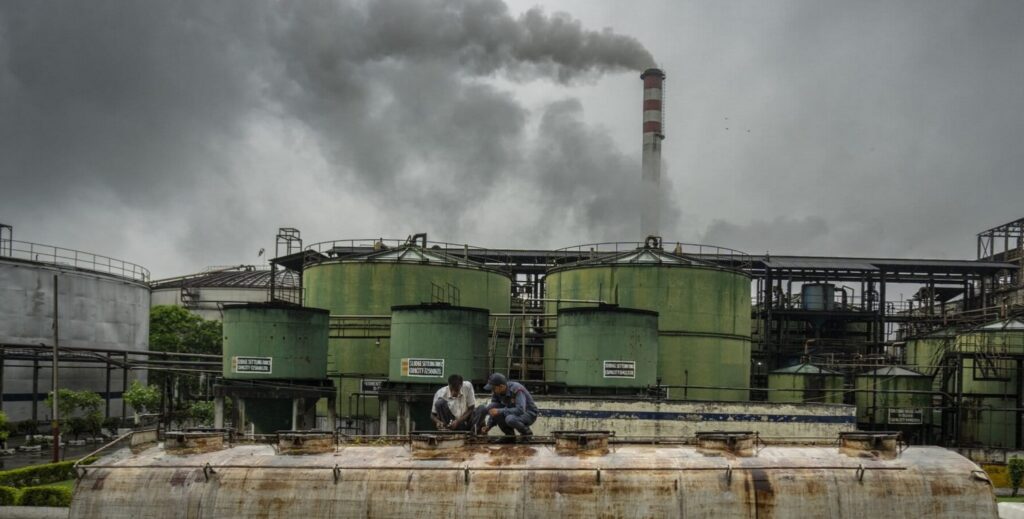
A security personnel watches as a worker seals the lid of a tanker filled with ethanol at a factory, in Meerut, Uttar Pradesh (AP Photo/Altaf Qadri)
- Lessons from Brazil, a mature ethanol economy, suggest that ethanol blending is not only selling blended fuel, but building a seamless ecosystem to win consumer trust and satisfaction.
- In Brazil, industry groups say the country’s current challenge is not ethanol production alone, but moving ethanol from producing regions to distant markets at stable prices while expanding storage and logistics infrastructure.
- Similarly, India’s ethanol ambitions will depend as much on logistics, infrastructure and quality control as on production and blending targets.
At a petrol pump in Bhopal’s Katara Hills, a 40-year-old attendant laughs when asked whether customers discuss ethanol-blended petrol. “People come and joke, ‘ganne ka juice bhardo’ (Fill sugarcane juice),” he says, referring to E20 petrol, a blend of 20% ethanol and 80% petrol.
The humour reflects a wider public conversation around India’s rapid ethanol expansion. Online posts have questioned the colour and quality of E20, its compatibility with older vehicles and its effect on mileage, even as government agencies and automobile manufacturers have challenged many of these claims. The debate has shifted attention to what happens before fuel reaches the pump: how ethanol is transported, stored, blended and tested.
Brazil, often cited as the global model for high ethanol blending, offers an important lesson for India. The country’s success was built not simply by producing more ethanol but by creating an integrated supply chain that consumers could trust.
Building the system behind the pump
Brazil’s default petrol now contains 32% ethanol (E30), but industry representatives say production was never the hardest part. According to Sindicom, Brazil’s national union of fuel and lubricant distribution companies, the real challenge was building procurement systems, storage terminals, pipelines, transport networks and quality-control mechanisms that ensured ethanol reached consumers reliably and at stable prices.
Sindicom describes Brazil’s ethanol programme as evolving in three stages. Between 1975 and 2000, under the Proálcool programme, the government subsidised credit while state-owned Petrobras procured ethanol from mills and blended it with petrol, helping establish storage terminals and quality-control systems. Market reforms after 2003 shifted procurement to commercial contracts between distributors and producers, while the RenovaBio policy introduced in 2018 tied fuel distributors to emissions-reduction targets through tradable decarbonisation credits.
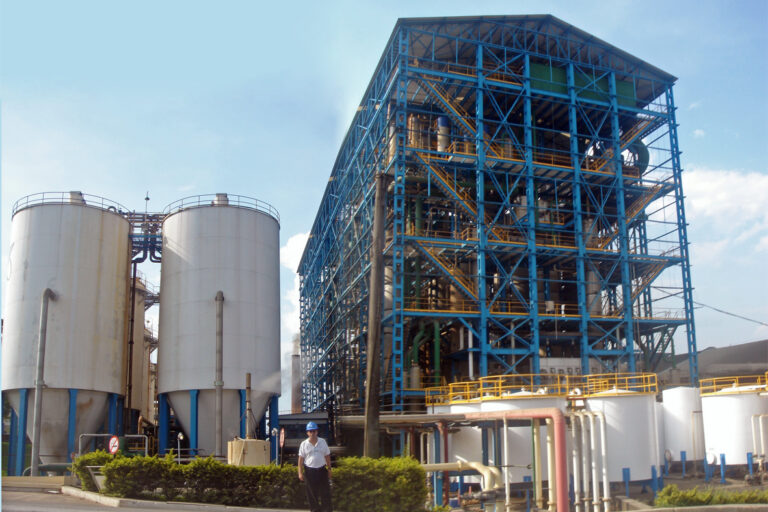
For India, the lesson is that ethanol blending is not merely about selling blended fuel but about building an ecosystem that inspires consumer confidence.
That ecosystem is still evolving in Brazil. According to Sindicom, one of the country’s biggest operational challenges is transporting ethanol from roughly 360 production plants—mainly concentrated in the Centre-West and Centre-South—to more than 5,500 municipalities.
The BRASILCOM Federation, representing Brazilian fuel distributors, says the challenge today is logistics rather than production. “The problem has shifted from ‘is there enough ethanol?’ to ‘can we get it where it needs to be, when it needs to be there, and store it until then?’” it said.
Brazil’s geography complicates distribution. Sugarcane ethanol is largely produced in São Paulo and Minas Gerais, while maize ethanol comes mainly from Mato Grosso and Goiás, far from deficit regions in the North, Northeast and South. According to BRASILCOM, transport costs can account for 20% to 40% of ethanol’s delivered price. “The ethanol is often in the wrong place at the wrong time and requires expensive, scarce infrastructure to reach consumers at a stable price,” it said.
Sindicom echoed the concern over Brazil’s transition to E30, noting that while production capacity can meet higher demand, “the great challenge is logistical, not agricultural.”
The warning is particularly relevant for India, where ethanol production and fuel consumption are also unevenly distributed. Industry leaders argue that the next phase of India’s ethanol programme will depend less on expanding production than on improving utilisation and logistics.
Athar Shahab, Managing Director of Zuari Industries Limited, called India’s achievement of E20 “a remarkable public policy success,” but said the focus must now shift. “The question today is no longer whether India can produce enough ethanol. The question is whether the ecosystem can scale further in a manner that is economically efficient, environmentally responsible and fair to all stakeholders,” he said.
According to Shahab, blending higher volumes will require investments in storage tanks, transportation networks, dedicated handling systems and depot-level blending infrastructure. “A litre of ethanol produced but not lifted by an oil company contributes neither to energy security nor to decarbonisation,” he said, adding that predictable procurement and pricing are essential for sustaining investments.
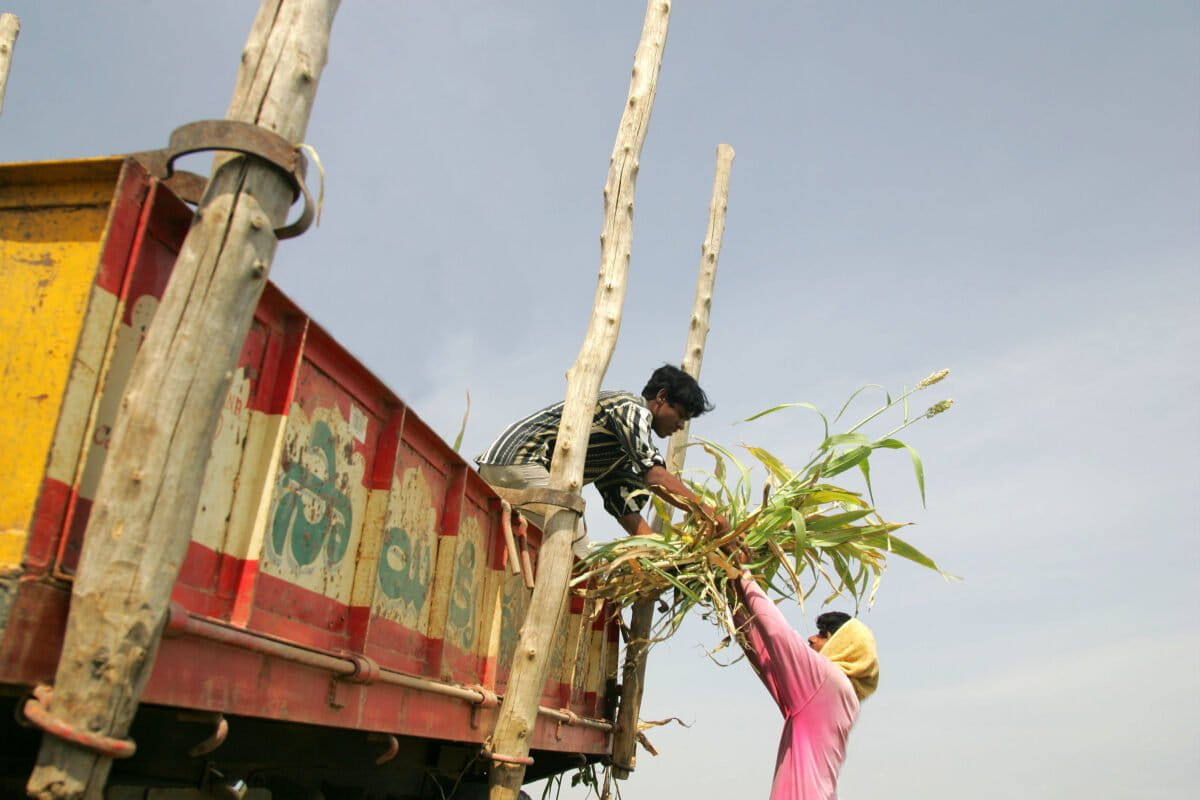
Grain-based ethanol producers face their own challenges. Akshay Modi, Managing Director of Modi Biotech Pvt. Ltd., said maize procurement remains complex because ethanol producers compete with starch and animal-feed industries. While India has sufficient grain availability, he noted that storage quality remains critical. “Too much moisture in maize is detrimental for storage and processing. Farming practices need to improve such that farmers dry the maize immediately after harvesting to prevent pests, fungus and toxin development,” he said.
Brazil’s experience also underscores the importance of quality assurance. Sindicom said distributors routinely conduct laboratory tests to check alcohol content, pH, electrical conductivity and contaminants before fuel leaves terminals. It warned that adulteration with methanol, water and solvents requires strong regulatory oversight, making quality control central to consumer trust.
Brazil’s ethanol history also offers a cautionary tale. The ethanol shortage of 1989–90, triggered when lower oil prices discouraged production, damaged public confidence for years. “The main lesson is direct: build the infrastructure before expanding the mandate, not after,” Sindicom said.
Brazilian bioenergy expert Luiz Augusto Horta Nogueira argued that ethanol also strengthens energy security. “Every litre of fuel that you are replacing by ethanol doesn’t need to be imported if ethanol is locally produced,” he said, pointing to India’s dependence on crude imports through the Strait of Hormuz.
Brazil’s experience suggests that ethanol blending is not defined by ambitious targets alone. As Sindicom observed, the country’s leadership was built over decades through “consistent policies, technological innovation, regulatory maturity and private logistics capacity.” Ultimately, it is the distributor, the organisation said, “who transforms the blending mandate into safe, regular and quality supply for the final consumer.”