How Community-Based Warnings Saved Lives During Nepal Floods
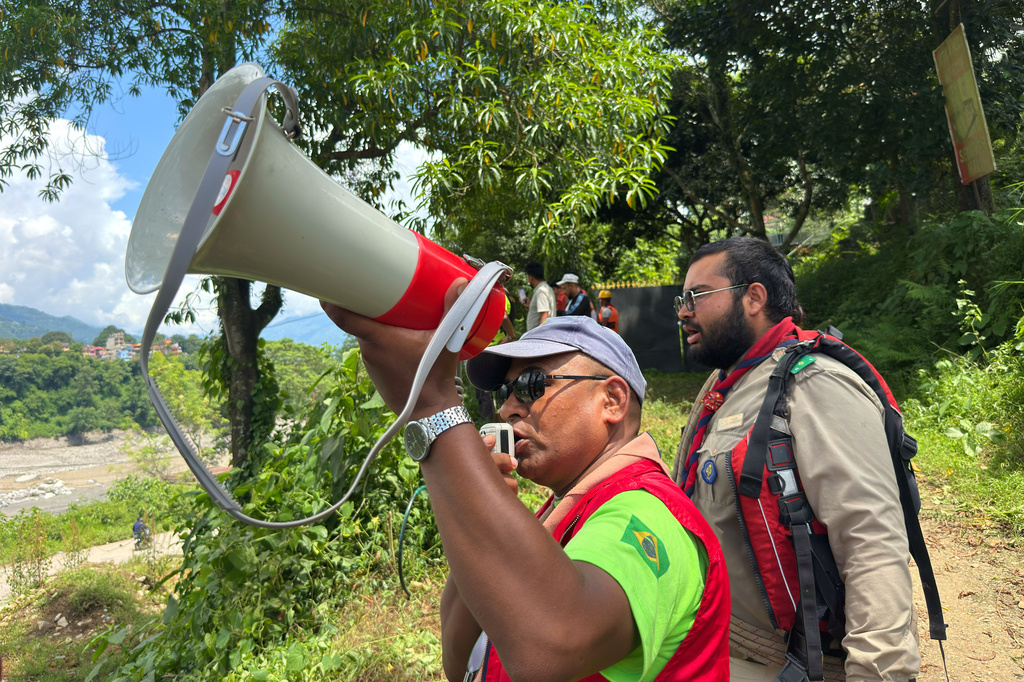
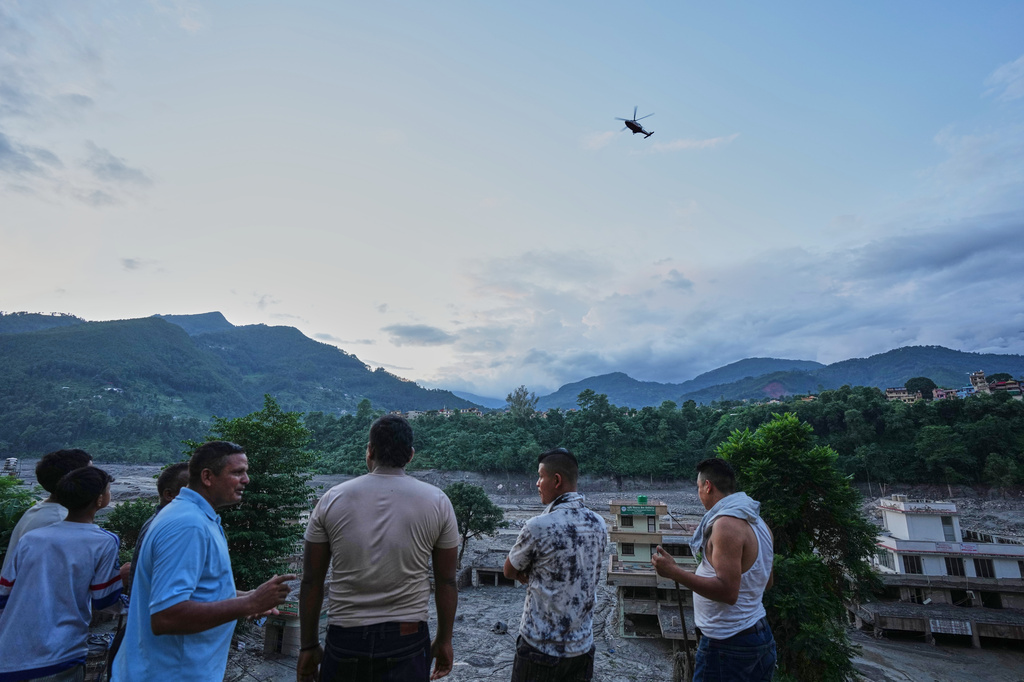
Volunteers warn residents of the possibility of floods in Nepal’s Nuwakot district two days after the August 26 floods (AP Photo/Rajesh Kumar Singh)
During Nepal’s devastating August 2026 floods, an important lesson emerged: community-based warnings were often faster and more effective than the country’s official flood-alert system. While the Department of Hydrology and Meteorology (DHM) was able to forecast and communicate warnings, its SMS system delivered generic messages too late in some places, only in Nepali, and without precise information about the severity, location or action required.
The experience has exposed a deeper institutional problem. DHM has the authority to forecast floods and issue warnings, but it does not have the legal power to order evacuations. Nor does Nepal’s law require a forecast to automatically trigger an evacuation. As a result, the crucial decision—whether people should leave immediately—is often left to individuals.
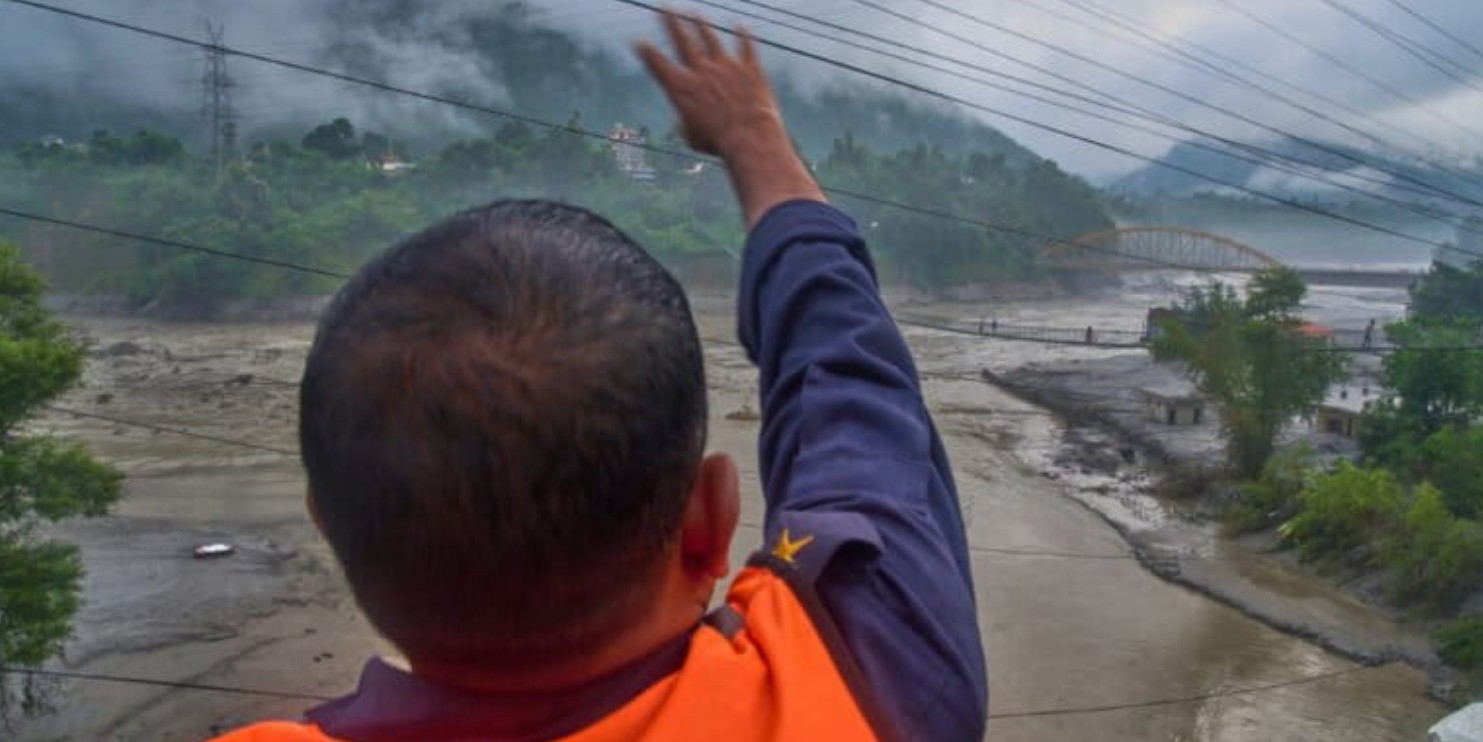
The consequences were stark on August 26. At 9:10 a.m., Rajendra Dawadi, head teacher of Tribhuvan Trishuli Secondary School, received several urgent phone calls warning that a flood was moving downstream toward the school.
He immediately ordered approximately 900 students to evacuate to higher ground. Ten minutes later, floodwaters struck the school, burying the compound under debris. Only part of the roof remained visible after the waters receded.
That day, two warning systems were operating: one based on government sensors and SMS alerts, and another built on personal and community relationships. The latter proved more reliable for Dawadi and many other residents.
The scale of the disaster was enormous. According to the National Disaster Risk Reduction and Management Authority, by September 3, 1,252 people had died, 4,216 were missing and around 1.6 million people had been affected across five districts.
When official warnings failed to communicate urgency
The Bhotekoshi-Trishuli flood originated near Gyirong in China before moving rapidly through Syabru Besi, Bidur and other settlements and eventually toward the plains of Chitwan. In areas close to the border, the disaster unfolded within approximately seven minutes, disabling sensors almost immediately.
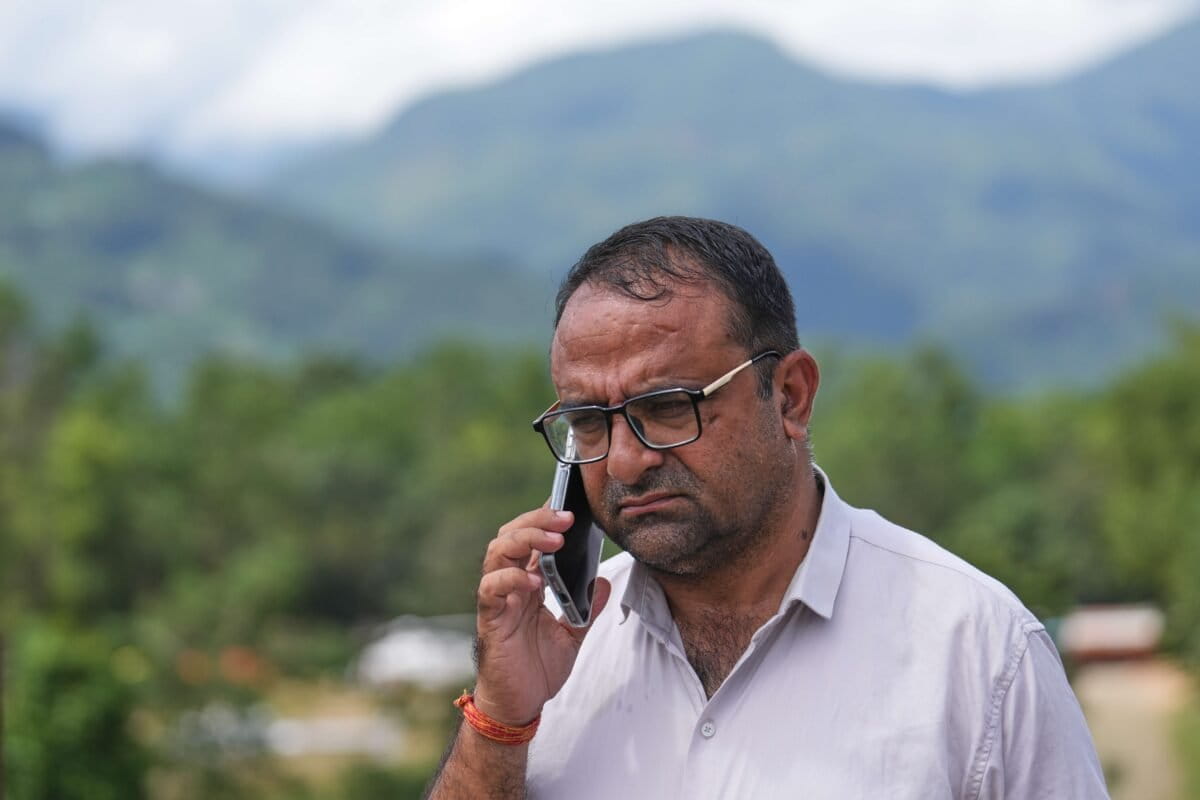
Further downstream, people received official SMS messages and loudspeaker announcements. However, these warnings often failed to communicate that the event was exceptional and extremely dangerous. In Nuwakot, resident Chandra Bhatta recalled, “The SMS and the flood came together.”
An official message sent at 9:35 a.m. warned residents along the Trishuli River to remain in safe locations and maintain high alert.
But the message resembled routine monsoon advisories. It did not explain how much time residents had, identify specific vulnerable locations, indicate the scale of the flood or provide clear evacuation instructions.
Researcher Chandani Bhandari said such warnings “failed to communicate individual vulnerability.” She noted that people often receive general warnings but assume they personally will remain safe: “Malai ta kei hunna,” or “Nothing will happen to me.”
The language was another limitation. Alerts were issued only in Nepali, creating difficulties for foreign visitors, particularly along a major trekking corridor.
A problem documented before
Nepal’s current warning system relies largely on river sensors that trigger alerts when water crosses predetermined danger thresholds. According to DHM official Binod Parajuli, the system and its message templates were designed mainly around the gradual flooding normally associated with the monsoon.
But extreme events require more than detecting rising water. Parajuli acknowledged the institutional limitation: “Even if we had known, we don’t have the authority to order evacuation.”
This gap is not new. A 2022 study examining a deadly 2021 rainfall disaster found that DHM had forecast the event accurately, yet 120 people died because warnings were not translated into specific instructions. Researchers called for “legally binding directives and standard operating procedures” that would automatically connect forecasts to emergency action. That recommendation remains largely unimplemented.
Community warnings as an alternative
Nepal has a long history of community-based early-warning systems. In 2002, an early system on the East Rapti River in Chitwan relied on a volunteer who watched river levels from an elevated platform and sent someone from house to house when the water rose.
The strength of this model was trust. A known person telling villagers that a flood was coming could communicate urgency more effectively than an anonymous automated message.
Researchers argue that such systems should not be treated merely as backups. Dinanath Bhandari, who has worked on community flood-warning networks, says relationships between upstream and downstream communities have consistently proved effective because warnings are trusted and acted upon.
Technology exists, but implementation lags
There are technological solutions available. A recent GSMA/ITU study examined cell-broadcast technology for Nepal. Unlike SMS, cell broadcast can send alerts to every mobile phone within a defined geographical area, without relying on individual subscriber databases. Messages can reach large numbers of people within seconds and can be delivered in multiple languages.
The proposed system was estimated to cost $1.75–3 million, but it had not been implemented when the floods struck.
Technology alone, however, cannot solve the problem. Bhandari argues that warnings must include “exact locations, severity, context and actionable instructions.” People also need to know where evacuation shelters are and how urgently they must respond.
The August floods demonstrated that the most effective warning may still be a trusted human voice. The evacuation of 900 students succeeded because people acted on urgent information from their social networks rather than waiting for an official order.
As Bhandari concluded, “We need societal linkages and community participation for any emergency communication to succeed.” Nepal’s challenge now is to combine technology with these trusted community networks—and create laws and procedures that turn accurate forecasts into timely action.
(Published under Creative Commons from Mongabay India)