BJP Is Trying To Rig Polls: Mamata
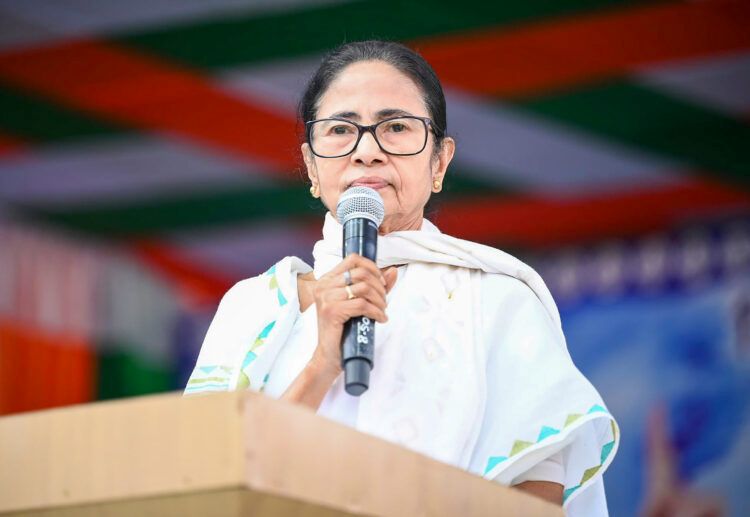
West Bengal Chief Minister Mamata Banerjee has alleged that TMC workers are facing “atrocities” at the hands of police and central forces, and claimed that outsiders are interfering in the polling process
West Bengal Chief Minister Mamata Banerjee on Wednesday launched a sharp attack on the Bharatiya Janata Party (BJP), accusing it of attempting to “rig” the ongoing assembly elections by misusing central forces and influencing election observers. Touring several polling booths in her Bhabanipur constituency early in the morning—well before her usual voting schedule—Banerjee claimed that the very foundations of democratic conduct were under strain.
“BJP wants to rig this election,” Banerjee told reporters, raising pointed questions about the role of polling authorities and security personnel. “Elections in West Bengal are usually peaceful. Is there goonda raj here?” she asked, suggesting that the current environment was far from the norm.
Her remarks came as voting progressed across 142 constituencies in south Bengal under heavy security deployment. The phase is widely seen as decisive, covering regions traditionally considered strongholds of the ruling Trinamool Congress (TMC). However, Banerjee alleged that the BJP was attempting to erode that advantage through systematic interference.
According to her, TMC workers were facing “atrocities” at the hands of police and central forces. She further alleged that “outsiders” had been brought in to influence the electoral process. “Several observers have come from outside and are acting as per BJP’s directions. Can voting take place like this?” she said, expressing concern over what she described as a breakdown of neutrality.
Banerjee also claimed that her party’s grassroots operations were being deliberately disrupted. “They are picking up our boys… We are ready to die,” she declared, in a statement that underscored the intensity of the political confrontation. She alleged that TMC flags had been removed from certain areas and that local leaders, including councillors, were being prevented from moving freely.
Highlighting the seriousness of the situation, Banerjee said she and party leader Abhishek Banerjee had monitored developments throughout the night. She called for immediate intervention from the Election Commission, insisting that corrective steps were necessary to ensure free and fair polling. “Can voting take place like this?” she repeated, framing the issue as one of institutional accountability rather than mere political rivalry.
BJP Denial and Opposition Confidence
The BJP, however, rejected the allegations outright, dismissing them as an attempt by the TMC to deflect attention from growing public dissatisfaction. “The TMC is trying to create confusion after sensing public anger,” the party said, portraying Banerjee’s remarks as politically motivated rather than evidence-based.
Leader of the Opposition Suvendu Adhikari, who is contesting against Banerjee in Bhabanipur, struck a confident tone. Casting the election as a decisive moment, he predicted a clear victory. “Doesn’t matter — she will lose,” he said after offering prayers at temples in the Khidirpur area, signaling his belief that the electorate was ready for change.
Despite the BJP’s assertions, the scale and specificity of Banerjee’s allegations raise broader questions about the conduct of the election machinery. Critics argue that the repeated complaints about central forces and external observers cannot be dismissed outright, particularly in a high-stakes contest where institutional neutrality is crucial. The presence of heavy security, while intended to ensure order, has itself become a point of contention, with the TMC suggesting that it is being selectively used to its disadvantage.
Abhishek Banerjee also echoed concerns about the role of poll observers, accusing them of “highhandedness.” Yet, he remained optimistic about the outcome. “These things will not matter — we will win with a higher number of seats than in 2021,” he said after casting his vote, projecting confidence despite the tense atmosphere.
Meanwhile, the high turnout seen in the first phase—an unprecedented 93.19 percent—has added to the significance of the current round, suggesting strong voter engagement despite the charged political climate.
This phase is particularly crucial because it encompasses urban and semi-urban constituencies, including Kolkata, Howrah, Hooghly, Nadia, North and South 24-Parganas, and Purba Bardhaman. For the TMC, it represents a test of its enduring influence in its traditional base. For the BJP, it is an opportunity to make inroads and challenge that dominance.
Yet, the shadow of controversy looms large. Banerjee’s repeated assertions that democratic norms have been “severely compromised” highlight a deeper concern about the integrity of the electoral process. While the BJP has sought to frame these claims as political rhetoric, the persistence of such allegations underscores the polarized nature of the contest.
As voting continues, the focus remains not just on the eventual results but on the credibility of the process itself. With counting scheduled for May 4, the outcome will likely shape not only the political future of West Bengal but also the broader debate on electoral fairness in a highly competitive democracy.