Extreme Sea Level Events Could Happen Every Year
The IPCC's report titled "Climate Change 2021: The Physical Science Basis" said every region in the world is witnessing irreversible changes in climate due to human influence
Extreme sea level events that previously occurred once in 100 years could happen every year by the end of this century, the latest IPCC report on climate change said on Monday with scientists warning that sea level rise, floods, heavy rainfall and glacier melting are some of the irreversible effects.
The Intergovernmental Panel on Climate Change’s (IPCC) Sixth Assessment Report (AR6) “Climate Change 2021: The Physical Science Basis” said every region in the world is witnessing irreversible changes in climate due to human influence.
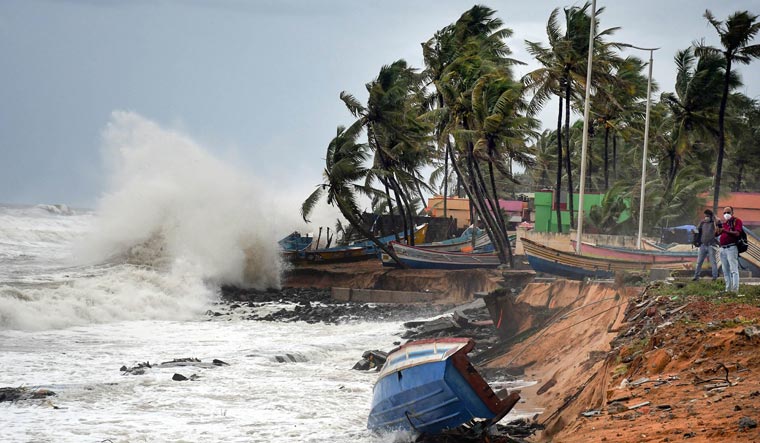
“Coastal areas will see continued sea level rise throughout the 21st century, contributing to more frequent and severe coastal flooding in low-lying areas and coastal erosion with extreme sea level events that previously occurred once in 100 years could happen every year by the end of this century,” said the IPCC Working Group I report, which is the first installment of the AR6, to be completed in 2022.
The report, approved by 195 member governments of the IPCC through virtual sessions held over two weeks since July 26, projected that in the coming decades climate changes will increase in all regions.
It said that for 1.5 degrees Celsius of global warming, there will be increasing heatwaves, longer warm seasons and shorter cold seasons. At 2 degrees Celsius of global warming, heat extremes would more often reach critical tolerance thresholds for agriculture and health.
“But it is not just about temperature. Climate change is bringing multiple different changes in different regions – which will all increase with further warming. These include changes to wet and dryness, to winds, snow and ice, coastal areas and oceans,” it said.
“For example, climate change is affecting rainfall patterns. In high latitudes, precipitation is likely to increase, while it is projected to decrease over large parts of the subtropics. Changes to monsoon precipitation are expected, which will vary by region,” it said.
The report, however, gave hope that it is still possible from a physical science point of view, to limit global warming to 1.5 degrees which means these changes could be slowed and stopped from getting worse.
“If we reduce emissions globally to net zero by 2040 there is still a two-thirds chance to reach 1.5 degrees and if we globally achieve net zero emissions by the middle of the century, there is still a one-third chance to achieve that,” said Dr Friederike Otto, Associate Director of the Environmental Change Institute at the University of Oxford and one of the authors of the IPCC report.
“To limit global warming, strong, rapid and sustained reductions in CO2, methane and other greenhouse gases are necessary. This would not only reduce the consequences of climate change, but also improve air quality and have a lot of other co-benefits,” Otto said.
The report said while benefits for air quality would come quickly, it could take 20-30 years to see global temperatures stabilise.
It found that further warming of the earth will amplify permafrost thawing, and the loss of seasonal snow cover, melting of glaciers and ice sheets, and loss of summer Arctic Sea ice.
“Changes to the ocean, including warming, more frequent marine heatwaves, ocean acidification, and reduced oxygen levels have been clearly linked to human influence. These changes affect both ocean ecosystems and the people that rely on them, and they will continue throughout at least the rest of this century,” it said.
For cities, some aspects of climate change may be amplified, including heat (since urban areas are usually warmer than their surroundings), flooding from heavy precipitation events and sea level rise in coastal cities, the report said.
The report provides new estimates of the chances of crossing the global warming level of 1.5 degrees Celsius in the next decades, and finds that unless there are immediate, rapid and large-scale reductions in greenhouse gas emissions, limiting warming to close to 1.5 degrees Celsius or even 2 degrees Celsius will be beyond reach.
“This report is a reality check,” said IPCC Working Group I Co-Chair Valérie Masson-Delmotte, adding, “We now have a much clearer picture of the past, present and future climate, which is essential for understanding where we are headed, what can be done, and how we can prepare.”
According to the report, many characteristics of climate change directly depend on the level of global warming, but what people experience is often very different to the global average.
“Climate change is already affecting every region on earth, in multiple ways. The changes we experience will increase with additional warming,” said IPCC Working Group I Co-Chair Panmao Zhai.
For the first time, the sixth assessment report provides a more detailed regional assessment of climate change, including a focus on useful information that can inform risk assessment, adaptation, and other decision-making, and a new framework that helps translate physical changes in climate into what they mean for society and ecosystems.
The report showed that human actions still have the potential to determine the future course of climate, saying that the evidence is clear that carbon dioxide is the main driver of climate change, even as other greenhouse gases and air pollutants also affect the climate.