Why Balaghat’s Children Are Dying Of More Than Disease
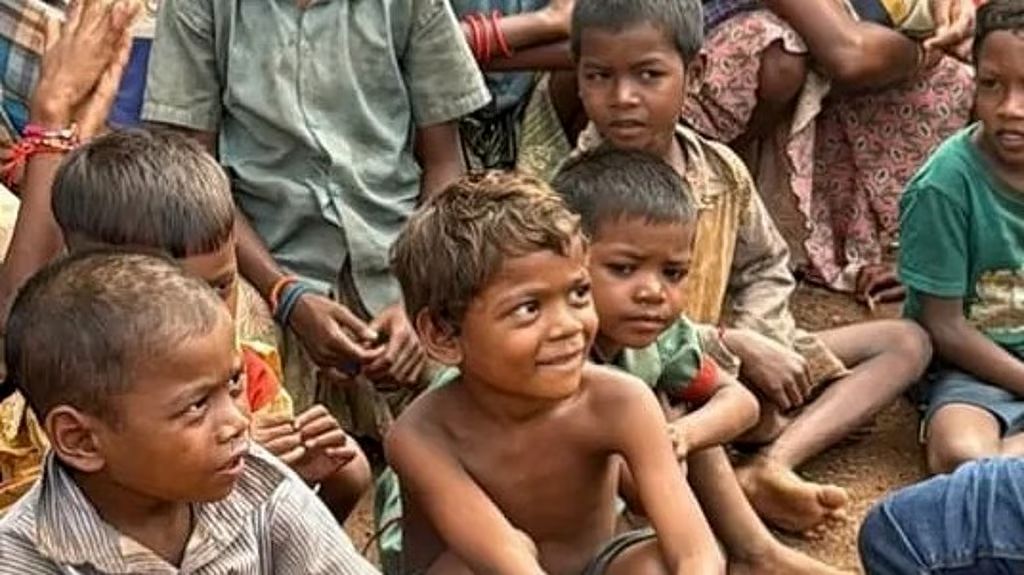
Since May 2026, more than 30 children have died in the remote tribal belt of MP's Balaghat district; most of them were from the Baiga community. The precise cause of death has not been established in every case (Image: abhijeetdipke/Instagram)
In the remote tribal belt of Madhya Pradesh’s Balaghat district, the deaths of more than 30 children have exposed a public-health crisis in which infection appears to have collided with malnutrition, poverty, difficult terrain and delayed access to treatment.
The children, most of them from the Baiga community, died in villages around Birsa block over several months. Officials have linked deaths to measles and malaria, while acknowledging that the precise cause was not established in every case. An ICMR-National Institute of Tribal Health Research investigation found measles in six of 10 samples tested.
A cluster of deaths in remote villages
At least 32 child deaths have been recorded since May in a cluster of remote Balaghat villages and victims ranged from infants to an 18-year-old, with most belonging to the Baiga community, classified among India’s Particularly Vulnerable Tribal Groups.
Families described recurring symptoms including high fever, rashes, weakness, dehydration and, in some cases, seizures. Some children also had skin and other infections.
Health officials believe measles and malaria account for many of the cases, sometimes occurring alongside one another. But investigators have cautioned that not every fever and rash can automatically be attributed to measles.
That uncertainty is important. The available evidence points towards multiple interacting health problems rather than one clearly established cause for every death.
When illness meets malnutrition
Malnutrition appears to have been an important underlying vulnerability.
Health screenings in the affected area identified thousands of children suffering from severe acute malnutrition, with hundreds requiring treatment at Nutrition Rehabilitation Centres. Diarrhoea and severe pneumonia have also been reported among children screened during the response.
Measles can be particularly dangerous for malnourished children because it weakens the immune system and increases the risk of complications such as pneumonia, diarrhoea and dehydration. Malaria can further compound those risks.
This means the central question is not simply what infection killed an individual child, but why relatively common illnesses became so dangerous in these communities.
Distance can determine who gets treatment
For families in these villages, reaching healthcare can itself be a major challenge.
The BBC found homes accessible only by narrow, muddy tracks. During the monsoon, travel becomes even more difficult. The nearest 100-bed state hospital in Birsa is about 70 kilometres from some settlements.
For families without vehicles, reaching medical care can mean a motorcycle ride, a makeshift stretcher or losing a day’s wages. One mother, Koushila Markam, whose three-year-old daughter Bamita died, told the BBC: “If I was able to take her to hospital she might have lived.”
That account captures one of the most consequential dimensions of the crisis: treatment that exists on paper may remain inaccessible in practice.
Tradition, trust and delayed treatment
The BBC’s reporting also found that cultural beliefs influenced how some families responded to illness.
Some Baiga families associate certain illnesses with the arrival of a disease goddess, or Mata. Families may perform rituals involving neem leaves and water before seeking medical treatment. In some cases, faith healers advised families against taking sick children to hospitals.
But attributing the deaths to cultural practices alone would miss the larger picture. Poverty, distance, lack of transport, limited health access and inadequate nutrition all shaped families’ choices.
In one case, officials had to persuade a family to allow a seriously ill child to be examined. In another village, five severely ill children were taken to hospital after officials entered homes; all recovered.
The government response
Authorities have since expanded surveillance, testing, vaccination and treatment in the affected villages. The measles-rubella vaccine has been offered to children irrespective of their previous vaccination status, while health teams have continued screening and monitoring communities.
The state government has also expanded medical teams and health screening in remote areas.
The response has reduced the immediate outbreak: officials said by late September that the last reported child death had occurred more than two weeks earlier, while attendance at medical camps had fallen sharply.
Yet the episode has also raised questions about whether preventive healthcare, nutrition programmes and basic services are reaching remote tribal settlements consistently.
Beyond the immediate outbreak
The Balaghat deaths are therefore not only a story about measles or malaria. They expose the consequences of several vulnerabilities converging in the same place.
The tragedy also comes amid wider concerns about the delivery of nutrition support in Madhya Pradesh. A 2024 Comptroller and Auditor General audit identified irregularities in the distribution of take-home rations intended for young children, pregnant women and lactating mothers.
The immediate outbreak may have subsided, but the deeper test is whether the state can ensure that children in remote tribal villages receive timely vaccination, adequate nutrition, reliable transport and accessible healthcare before illness becomes fatal.
For families who have buried their children, that distinction comes too late. For those who remain, it may determine whether Balaghat becomes a closed chapter—or a warning that was finally acted upon.