Activist Sonam Wangchuk Claims He May Be Killed In An Encounter!
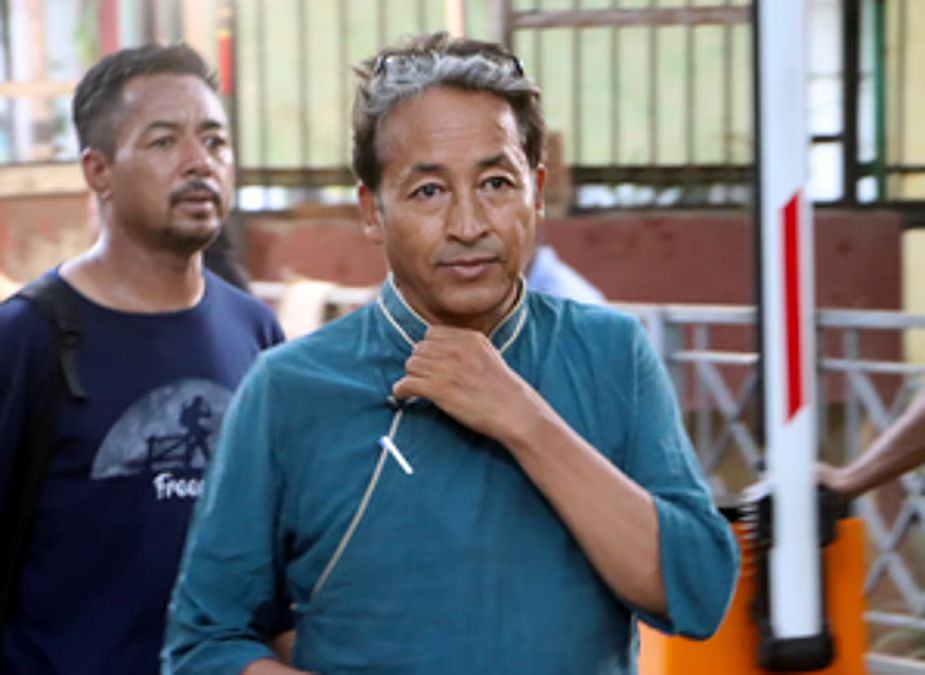
Sonam Wangchuk said on September 24 that he had received warnings about his safety and referred to the possibility of being 'encountered'. He made the remarks while addressing a gathering marking the first anniversary of the violence in Leh, in which four protesters were killed
The claim by climate activist Sonam Wangchuk that he fears he could be killed in an “encounter” is not merely a personal warning. Coming a year after the deadly violence in Leh, it raises a larger question about the state of democratic dissent in Ladakh and the credibility of institutions meant to protect citizens who challenge those in power.
Wangchuk made the remarks on September 24, 2026, while addressing a gathering marking the first anniversary of the violence in Leh, in which four protesters were killed. He said he had received warnings about his safety and referred to the possibility of being “encountered”.
The allegation is Wangchuk’s, and it should be treated as such. There is no publicly established evidence that authorities are planning to kill him. But precisely because the allegation is so grave, it cannot simply be dismissed. In a constitutional democracy, a credible allegation that a prominent activist fears extrajudicial killing warrants scrutiny, transparency and due process.
From protest to a question of trust
Wangchuk’s concerns emerge from a deeply contested political situation in Ladakh.
The September 2025 protests centred on demands including statehood and constitutional safeguards under the Sixth Schedule. The violence that followed left four people dead. A judicial inquiry was subsequently ordered into the circumstances surrounding the violence, the police action and the deaths. Wangchuk is now demanding that its findings be made public.
That demand is significant. When lives are lost during public protests, an inquiry cannot remain merely an administrative exercise whose conclusions disappear into official files. The public has a legitimate interest in knowing what happened, what led to the use of force, whether procedures were followed and whether anyone bears responsibility.
Transparency does not prejudge the outcome of an investigation. It strengthens its legitimacy.
The shadow of detention
Wangchuk’s fear also comes against the background of his own detention.
He was detained under the National Security Act on September 26, 2025, following the violence in Leh. The Union government revoked his detention on March 14, 2026, saying the decision was intended to foster “peace, stability, and mutual trust” and facilitate dialogue with stakeholders in Ladakh.
That sequence matters because democratic dissent becomes particularly fragile when detention, protest and political disagreement begin to overlap.
The government has a legitimate responsibility to maintain public order. Protesters, equally, have a legitimate right to express grievances peacefully. The dividing line must be governed by law rather than political convenience.
An allegation that demands an institutional response
The phrase “encounter” carries an especially serious meaning in India because it evokes the possibility of a killing outside the ordinary judicial process.
That is why the appropriate response to Wangchuk’s statement is neither automatic acceptance nor casual dismissal.
If there is a genuine threat to his life, the authorities should establish what protection is available to him and investigate any credible threat. If there is no such threat, the government has an interest in establishing that clearly and transparently.
Silence leaves room for suspicion on all sides.
The principle should be simple: no citizen, however controversial his politics, should have reason to believe that disagreement with the government could cost him his life.
Ladakh needs dialogue, not deeper alienation
The larger issue is bigger than Sonam Wangchuk.
Ladakh’s demands for political and constitutional safeguards have persisted, while negotiations between representatives of the region and the Centre have continued without a decisive settlement. Earlier this month, Wangchuk and other Ladakhi representatives said talks with the Union Home Ministry had produced no substantive movement on their core demands.
The Centre has repeatedly said that the issues should be addressed through dialogue. That is precisely why maintaining confidence in dialogue is so important.
A democracy cannot demand that citizens place their faith in negotiations while leaving major questions about deaths during protests unanswered. Nor can activists demand accountability while disregarding the state’s responsibility to maintain public order.
Both sides have obligations.
The real test is institutional
The most important question raised by Wangchuk’s statement is not whether one activist’s fears will become reality. It is whether India’s institutions are strong enough to ensure that such a fear never becomes plausible.
The answer lies in transparent inquiries, accountable policing, judicial oversight, protection for peaceful dissent and meaningful political dialogue.
The Centre has already revoked Wangchuk’s detention and publicly expressed its commitment to engagement with Ladakh. The next step should be to demonstrate that commitment through transparency and sustained dialogue.
Ladakh’s crisis should not become a contest of competing narratives in which one side accuses the other and the public is left guessing.
A democracy is ultimately judged not by how it treats those who agree with it, but by how securely those who disagree can speak.
Wangchuk’s “encounter” warning should therefore be treated as a moment for institutional seriousness. The government should ensure his safety, clarify the facts surrounding any alleged threats and make the inquiry into last year’s violence public when legally possible.
Because once citizens begin to fear that dissent itself can become a death sentence, the damage extends far beyond one individual. It reaches the most basic promise of democracy: that the state may disagree with its citizens, but it must protect their right to live, speak and dissent under the law.