For Hijra Women, Rising Heat Comes With Dangerous Trade-Offs
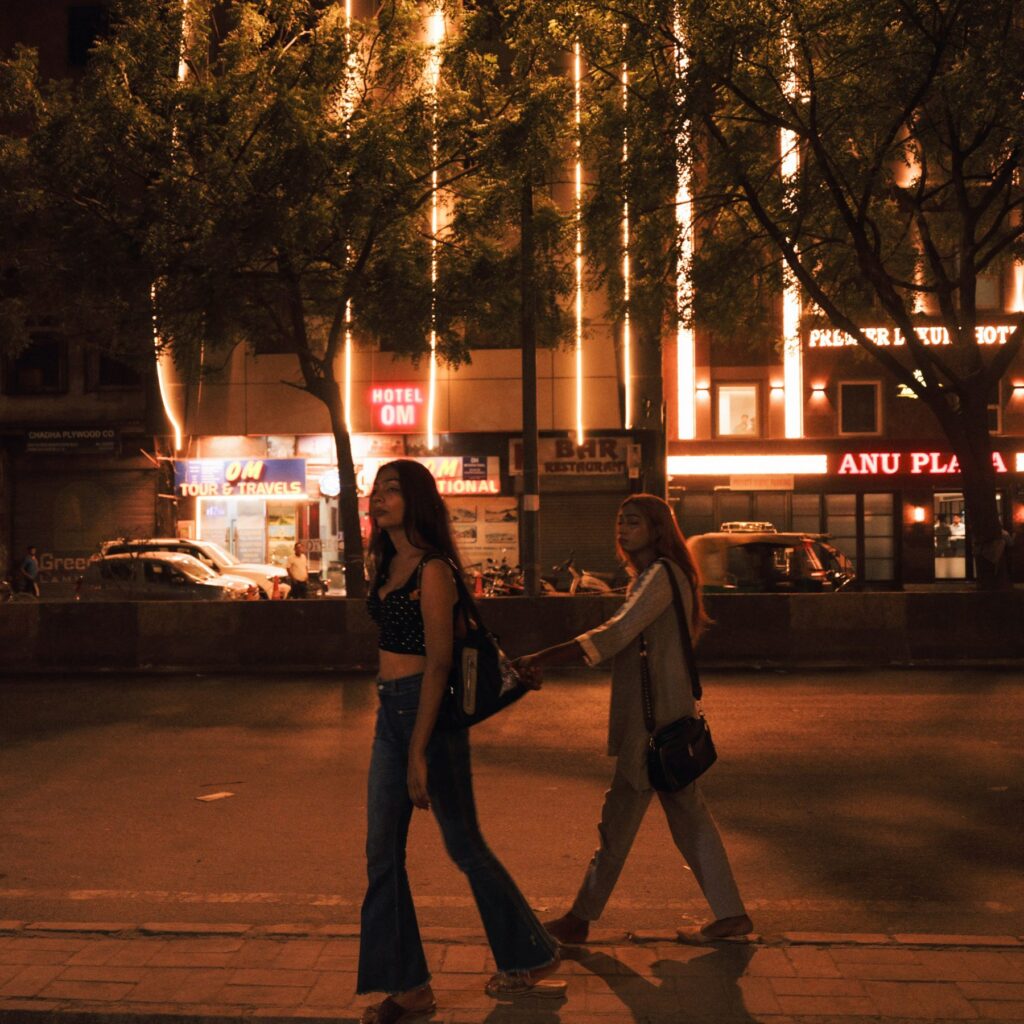
Working alone at a cruising spot is always risky. Leena says it is her fellow trans sisters in the area who come to her aid when things go wrong (Image: Gorkey Patwal)
It is three in the afternoon at a traffic signal in New Delhi on a hot summer day.
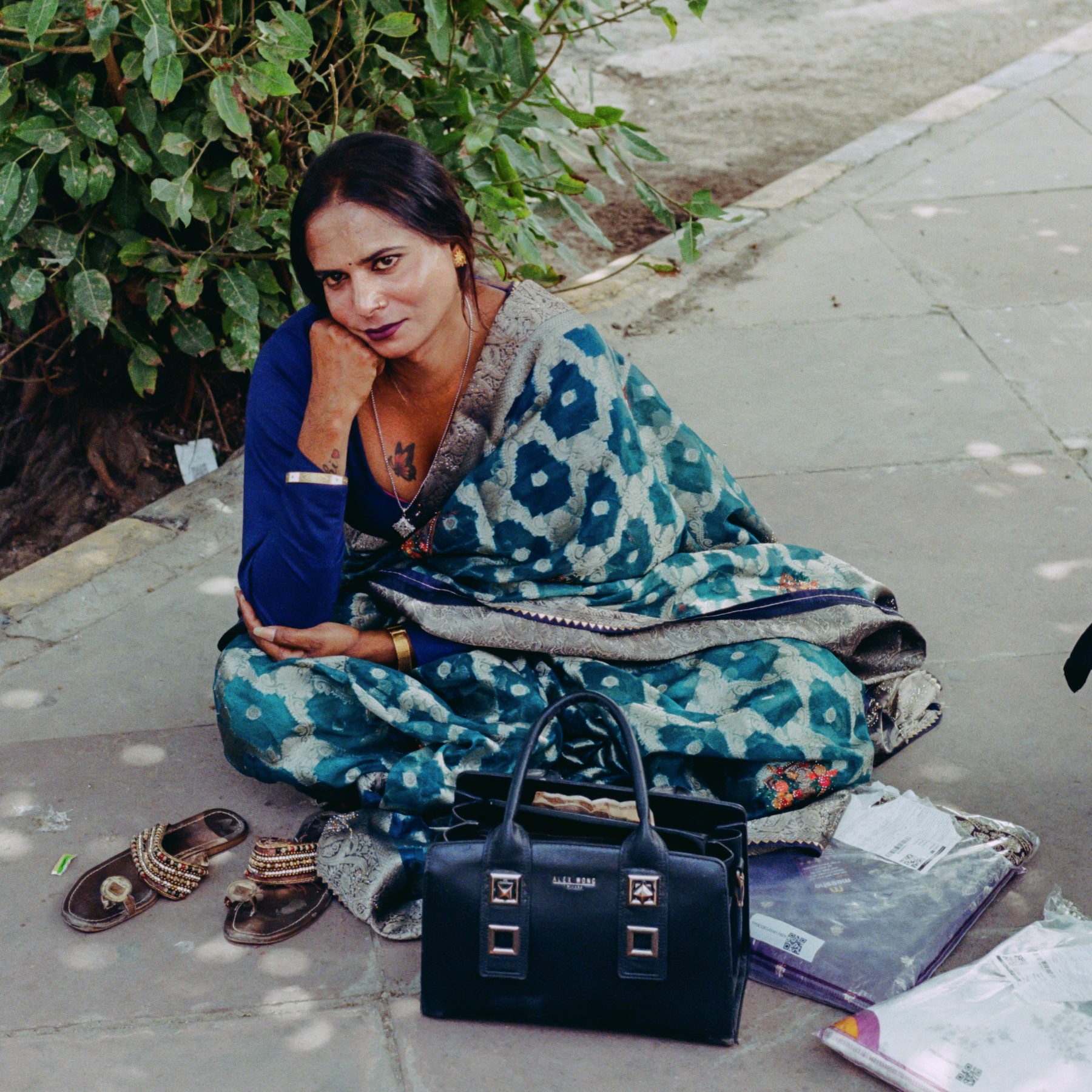
Every time the light turns red, 27-year-old Fiza* walks into the middle of the road, clapping her hands in the Hijra community’s distinctive rhythm before offering motorists blessings in exchange for cash. When the light turns green, she retreats to a scraggly bush nearby. The area offers no shade, no drinking water and no place to sit.
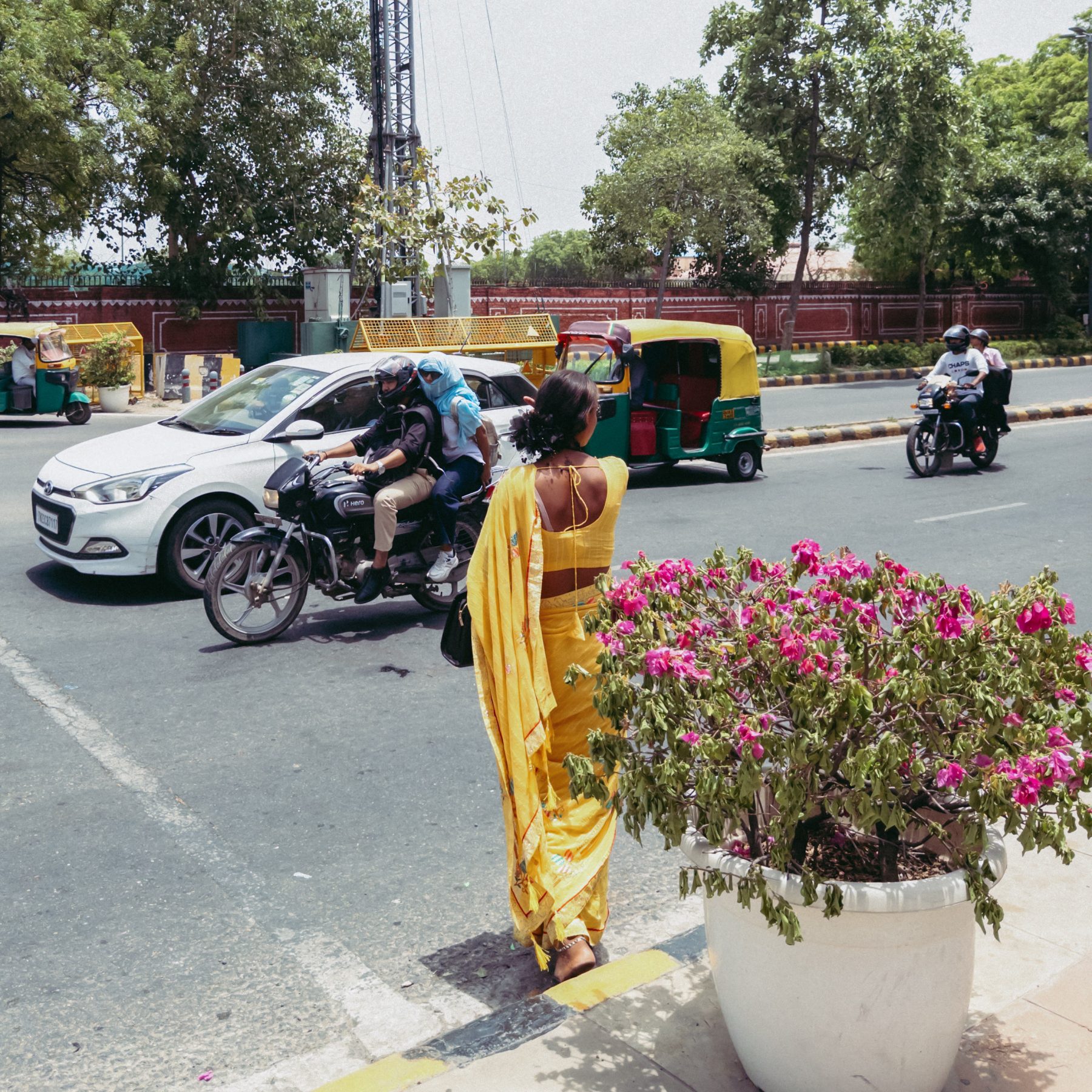
“If we keep standing out there for too long, we’ll faint,” she says.
She adjusts the heavily embroidered pallu (draped end) of her sari, its silvery threads flashing in the afternoon sun. “Begging is also a performance,” she says. “People believe we possess the power to bless, so appearance matters,” she says. “We have to look the part. The sari has to shine to catch people’s attention.”
Hijras are a distinct South Asian community that includes transgender and intersex people, with a long tradition of bestowing blessings at life’s new beginnings, particularly births and marriages. For generations, begging at traffic intersections has remained one of their most visible sources of income in India, as community members continue to be excluded from formal employment.
A 2017 Kerala Development Society survey submitted to the National Human Rights Commission found that 92% of 900 trans people interviewed were “highly deprived of the right to participate in any form of economic activities”. About 96% said they were denied employment or faced stigma forcing them to leave work shortly after they were employed. Denial of most employment and livelihood opportunities has relegated them to sex work and panhandling.
Hijra women’s work often requires them to spend long hours exposed to the elements. But as summers grow longer and hotter, and heat spills into dry months, their work becomes increasingly untenable. This year, El Niño has been associated with below-normal rainfall in India, prolonging heat. “When El Niño delays the monsoon or makes rainfall erratic and deficient, the relief it normally provides from extreme heat is weakened or postponed,” says Moetasim Ashfaq, a computational Earth system scientist at Oak Ridge National Laboratory in the US. “If the rainfall deficit persists, dry and hot extremes may persist along with it.”
Dialogue Earth spoke to 26 Hijra women across Indian cities including Delhi, Jalandhar, Ludhiana and Chennai, and learnt that rising heat is directly impacting their livelihood, safety and health.
For trans women already pushed to the margins of employment, housing and healthcare, heat can have cascading effects. It reduces their ability to work outdoors, pushing some towards riskier forms of work; makes medical interventions like hormone therapy and gender-affirming surgery harder to tolerate and recover from, and leaves those in poorly ventilated homes with little relief from extreme temperatures.
Hijra women’s heavy, embellished outfits make the heat harder to endure.
By the end of the day, the high temperatures often leave Fiza with pounding headaches, dizzy spells and, at times, diarrhoea. “There are days when my blood pressure drops and I feel like I’m going to collapse,” she says. “But if I don’t stand at the [traffic] signal, I don’t earn.”
Climate change is transforming not just livelihoods, but the intimate, social and economic transitions that shape trans women’s lives, experts told Dialogue Earth.
A dangerous trade-off
“I never wanted this to become my full-time work,” says 23-year-old sex worker Leena*. Like Fiza, she used to offer blessings at a traffic light. But increasing heat forced her to leave the intersection earlier each day, impacting her income. For the past two years, Leena has been doing sex work full time, earning most of her income after dark from strangers she meets at a cruising spot.
It’s a little after 11 pm, and Leena stands beneath a flyover. The capital’s daytime traffic has given way to a handful of vehicles and men who linger longer than they need to. She knows which glances to return and which to ignore.
These nights are unpredictable and often violent, but they spare Leena the relentless heat of the day. “Of course it’s risky,” she says. “We’re meeting random men. Men are risky in general, aren’t they?”
On her phone, she scrolls through a gallery of images until she stops at one of herself, her clothes soaked in blood. A deep gash runs from her upper lip down towards her groin. “I was almost unconscious,” she says, tracing the faint scar on her face, visible beneath a layer of cakey foundation. “My trans sisters found me and took me to the hospital.”
“You never know what’s going on inside a client’s mind. Sometimes they take us to hotels not just for sex, but to beat us,” she says. “Maybe they think it’s easier to do this to us because we’re trans.”
Sex work occupies a legal grey zone in India. While selling sexual services is not in itself illegal, soliciting in public places, brothel-keeping and living off income from sex work are criminalised. This leaves sex workers vulnerable to extortion and police harassment while being offered limited protection when they experience violence.
Additionally, India’s rape law does not adequately recognise sexual violence against transgender survivors, with weaker legal protections and fewer avenues for recourse. Trans women engaged in sex work also face a disproportionately high burden of HIV and other sexually transmitted diseases.
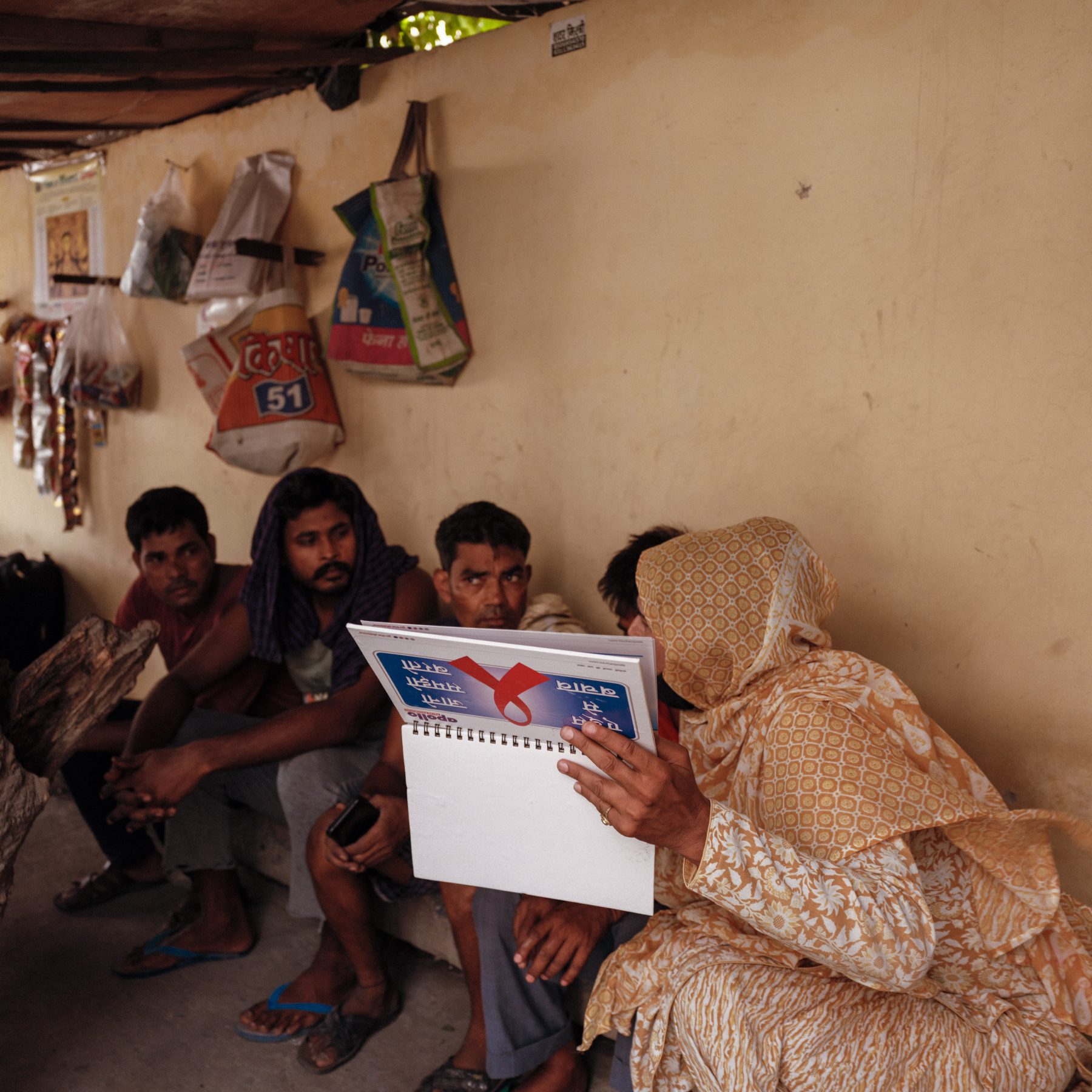
Stigma, misgendering and discrimination in hospitals can also limit their access to timely healthcare, reducing access to HIV testing, treatment and other healthcare services, even when they need them. Some Hijra women have joined initiatives that bring HIV awareness and prevention information to truckers and other groups that sexually engage with trans sex workers.
Transitioning through heat
Fiza started hormone therapy earlier this year. Although this was an important milestone for her, the heat has only become harder to bear.
“I think when I take hormone medicines it makes me feel hotter. Not hotter as a woman, hotter in the sun,” she says, laughing. On the days she can’t access medicines from the government pharmacy, she doesn’t experience the heat in quite the same way, she notes.

While research on heat tolerance among trans people remains limited, a 2026 study published in Communications Medicine found that trans women undergoing hormone therapy became more sensitive to temperature changes. In a 2024 ethnographic study in Rio de Janeiro, three trans women repeatedly described changes in how they experienced heat after transitioning. “I find that I sweat much more [now] than before my transition,” one was quoted as saying. “The hormones seem to increase body heat.”
Mohini* works alongside Fiza. The 22-year-old underwent gender-affirming surgery last summer, in which surgeons constructed external female genitalia. She says recovering from the procedure has made working through the heat even harder.
“My body doesn’t work the way it used to,” Mohini says. “Earlier, I could keep going the whole day. Now it’s as if I’m functioning at half my strength. I get exhausted very quickly. I still feel like my body is recovering.”
“Recovery [from gender affirming surgery] doesn’t end when a patient leaves the operating theatre,” says Charu Dutt Arora, a consultant physician who works with transgender communities. “For many people, it takes months before the body regains its strength and adjusts to the changes of medical transition,” explains Arora, who is also head of home healthcare services provider AmeriHealth. “When that recovery coincides with prolonged periods of extreme heat, especially for those who have no option but to work outdoors, it places an additional burden on the body and can make recovery much harder.”
Despite the discomfort in heat, a change in Indian law means neither Mohini nor Fiza see transition as a choice that could have been postponed.
In May, the latest amendment to the Transgender Persons (Protection of Rights) Act entered into force. It made gender-affirming surgery the basis for obtaining legal recognition as male or female, replacing the earlier emphasis on self-identification. This has made trans people more vulnerable to police questioning.
“Without the surgery, I don’t know if I would have survived as the person I was,” Mohini says. “I finally feel more complete. [But] what option did I really have?”
Fiza says the heat is “something I’ll somehow survive. But I don’t want to keep living with the fear that anyone can question whether I’m really a woman.”
Safety over health
Last month, a Hijra woman from Fiza’s gharana – the traditional guru-disciple kinship system within the community – was blessing shoppers at one of the city’s busiest markets when a passerby handed her a INR 500 (USD 5.30) note. Moments later, several police officers stopped her, accusing her of coercing the man into paying.
“She kept asking them to check the CCTV footage,” Fiza says. “But they wouldn’t listen.”
According to Fiza, officers took the woman to the police station, stripped her naked to verify her gender and, after discovering she hadn’t undergone surgery, beat her through the night while accusing her of impersonating a woman to extort money. She was released the following morning.
“This happens to us all the time,” Fiza says. “The consequences are worse when they know you haven’t undergone surgery. They feel they can do anything to you. If you’ve had the surgery, they’ll often just take some money and let you go.”
Harshit Anand, a lawyer working on transgender rights cases, says the amended law does not authorise police to demand identity certificates during street encounters. Nor does it make it an offence to be transgender without one or to not have undergone surgery. But by tying legal recognition to medical transition, the amendment fundamentally changes how trans identities are verified in practice, he notes.
“Earlier, a transgender person’s identity rested on self-identification. Now, the state’s certification has become the ultimate proof of who you are,” Anand says. “That creates a regime of suspicion. Even where the law doesn’t expressly require someone to produce a certificate, its absence can become a pretext for increased surveillance, harassment and police intrusion.”
For Fiza, her gharana sister’s traumatic encounter with the police has made her decision to transition urgent.
Last month, she signed up for the mandatory psychological assessment that precedes gender-affirming surgery. “I know the surgery will make life harder in this heat,” she says. “But living without it feels even more dangerous.”
Silicone, foundation and heat
“Every passing summer, I feel like I’m becoming less of the woman I’m fighting so hard to become,” says 26-year-old Doll.
More than the dizziness or exhaustion, she worries about what long hours under the sun are doing to her appearance. Her complexion has darkened, meaning the foundation she wears no longer matches her skin tone, she says.
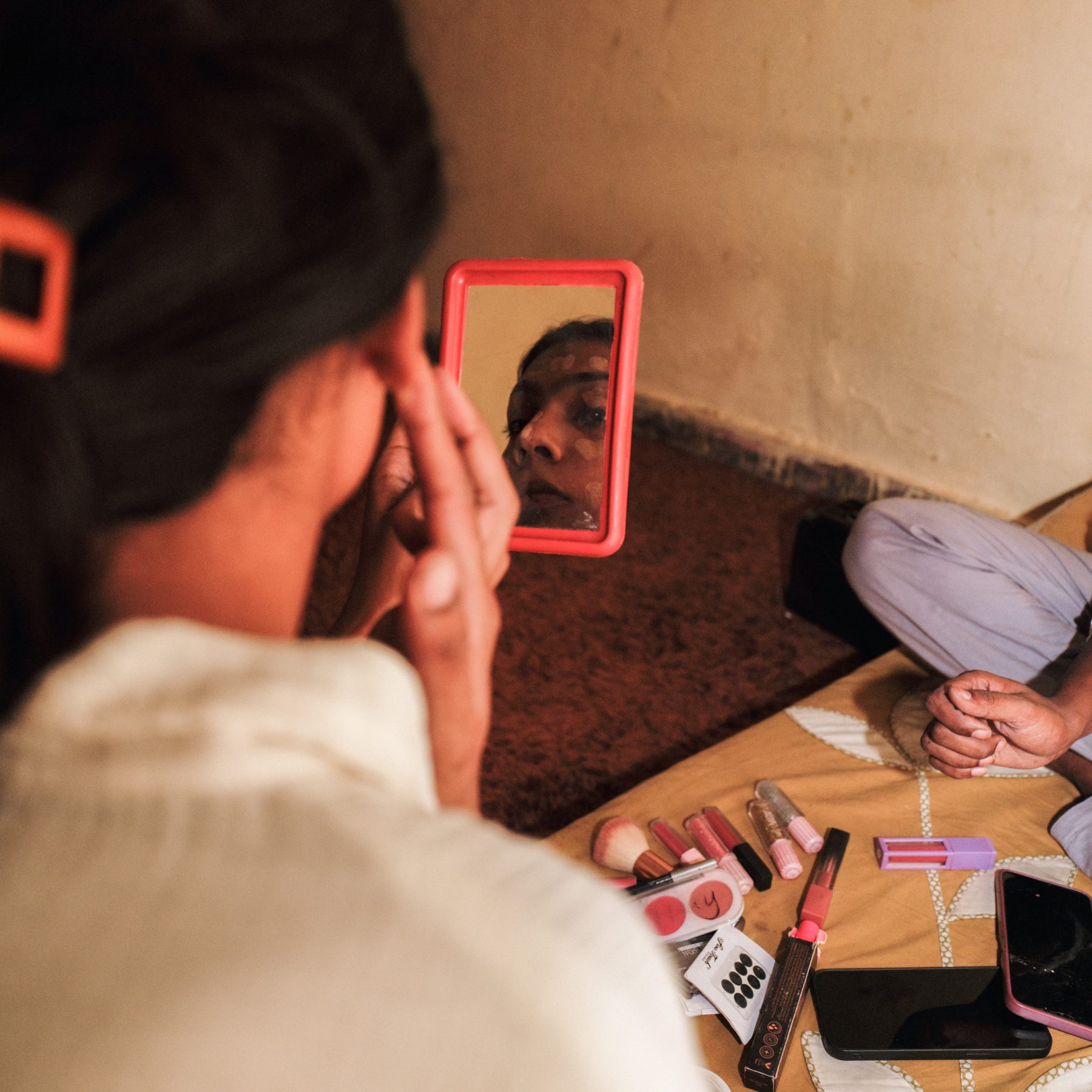
“I feel like I’m losing my beauty every day,” she says.
Transgender people experience higher levels of body-related distress than cisgender populations, says Ahammed Fazariya, a psychologist and rights-based mental health practitioner.
“When someone has worked hard to affirm their gender, any change that makes them feel they’re moving away from how they see themselves can be deeply distressing, even when those changes are driven by environmental factors such as heat,” he adds.
Multiple trans women who spoke to Dialogue Earth described achieving their “dream body” as a deeply significant milestone.
“It is crucial not to reduce these experiences to ‘body image concerns’ alone,” Fazariya says. “They are shaped by the intersections of gender dysphoria, minority stress, social dysphoria and structural inequities, and are better understood as responses to chronic discrimination than as something inherent to transgender bodies.”
Repeated marginalisation, he adds, can shape how trans people experience and inhabit their bodies. “Hence the question is not simply whether transgender people like or dislike their appearance, but whether they are able to inhabit their bodies with dignity and recognition.”
Home and belonging
For Leena, leaving the traffic signal and taking on sex work also meant leaving her gharana. The gharana assigns where they can beg in exchange for a fixed share of their monthly earnings.
Her guru, a Hindu from a dominant caste who she had been living with, disapproved of sex work, considering it degrading. When she discovered that Leena had begun meeting clients, she asked her to move out.
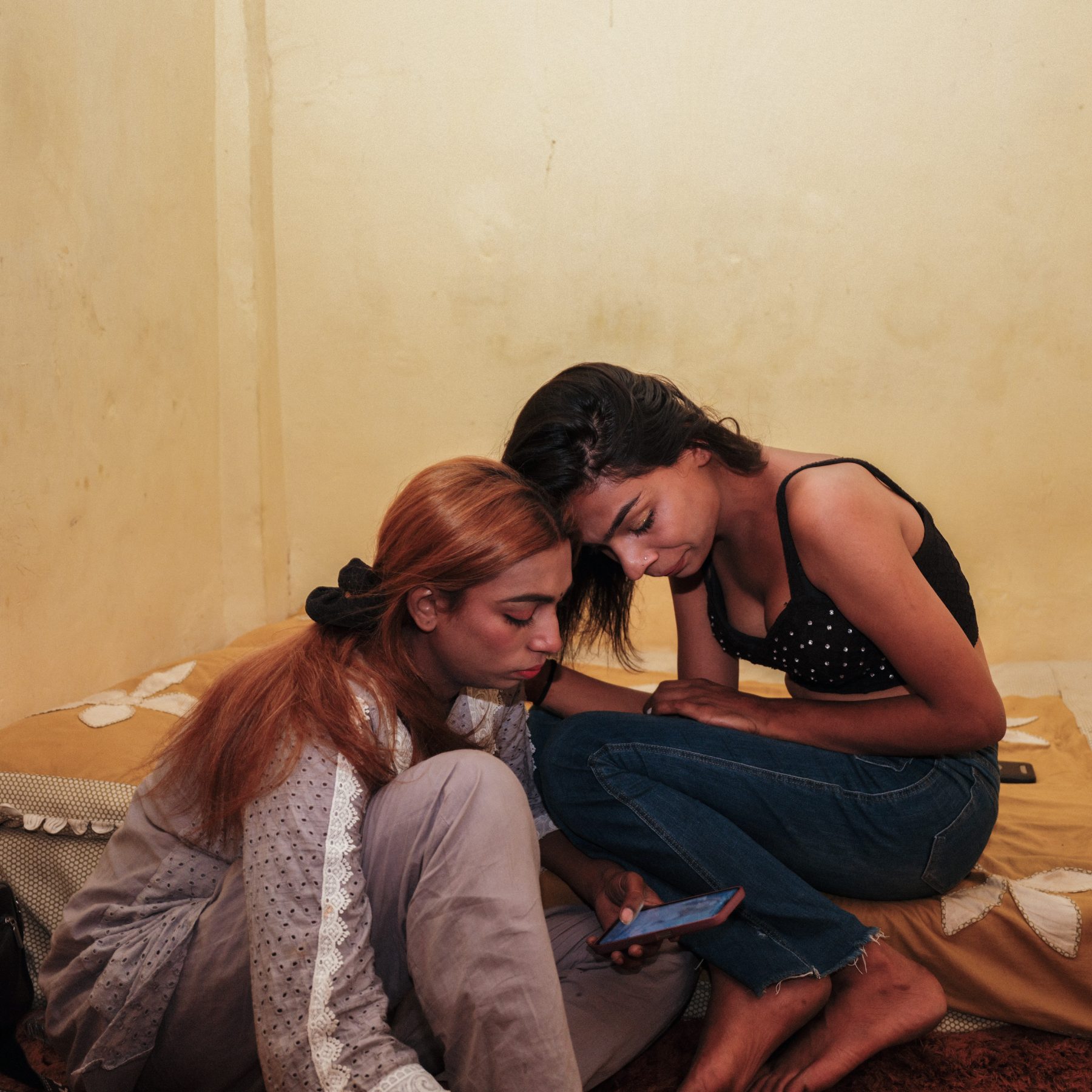
Leaving also meant entering one of the city’s most exclusionary markets: housing. Although Leena could now afford to pay between INR 8,000-9,000 (USD 85-95) a month in rent, finding a landlord willing to rent to a trans woman proved difficult.
Her experience reflects a broader pattern of widespread housing discrimination against trans people, who are often denied rental accommodation outright, charged higher rents or pushed into overcrowded settlements with inadequate access to water, sanitation and ventilation.
Leena now shares a modest room in one of Delhi’s dense inner-city neighbourhoods with her best friend Pari*. The rented room opens into a tight lane and traps the day’s heat long after sunset.
“Sometimes the room feels hotter than outside,” says Pari, who is also a trans woman. The kitchen and bedroom occupy the same space, so cooking only makes the room more stifling.
The heat, they say, also finds its way into everyday life. Small disagreements quickly turn into arguments. Still, leaving has never been part of the conversation.
“She’s my closest friend. If we don’t hold on to each other, who will?” Pari says. “We don’t have families of our own to fall back on. Neither can we reproduce our own.”
*The women’s names have been changed to protect their identities.
(Published under Creative Commons from Dialogue Earth)