Delhi HC Rejects Bail Pleas Again As Khalid, Imam Remain Behind Bars
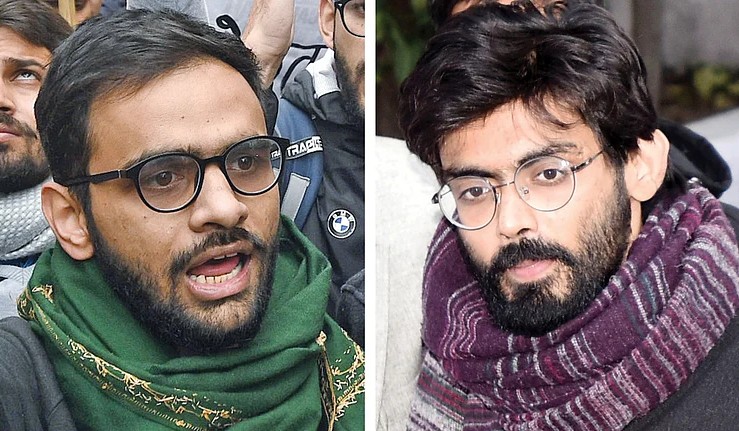
The Delhi Court haas said it cannot modify Supreme Court's conditions on when Umar Khalid (left) and Sharjeel Imam can seek fresh bail
The Delhi High Court has rejected the latest bail pleas of activists Umar Khalid and Sharjeel Imam in the case concerning the alleged larger conspiracy behind the February 2020 north-east Delhi riots, leaving both men in custody under the stringent Unlawful Activities (Prevention) Act (UAPA).
The ruling comes despite arguments from their lawyers that both have spent years in prison without the trial reaching the stage of framing charges.
A bench of Justices Prathiba M Singh and Dinesh Bhatt dismissed their appeals against a July 4 trial court order, holding that it could not override conditions imposed by the Supreme Court in January.
“We would be modifying this order if we allow bail, which we cannot do,” the bench said.
The immediate legal question may have been settled, but the decision again draws attention to a larger concern surrounding prolonged pre-trial detention under India’s anti-terror legislation.
Supreme Court order now determines the timeline
The Supreme Court’s January 5 order allowed Khalid and Imam to seek bail after the examination of protected witnesses was completed or after one year from the order, whichever came earlier.
The High Court said the trial court had correctly followed those directions when it rejected the latest applications.
“In view of the above discussion and the overall facts of the case,” the court said, “this court cannot find fault with the decision of the trial court.”
For the accused, however, the consequences are significant. Khalid has been in custody since September 2020 and Imam since August 2020. Their lawyers argued that the passage of time itself had materially changed the circumstances surrounding their detention.
The defence also pointed to subsequent bail and interim-bail orders involving other accused in the same case, arguing that continued incarceration required fresh consideration.
Prosecution calls them “masterminds”
The Delhi Police opposed the applications.
Additional Solicitor General S V Raju, representing the prosecution, described Khalid and Imam as the “masterminds” of the alleged conspiracy. The prosecution has maintained that their alleged roles were different from those attributed to co-accused who have received relief from the courts.
Those are prosecution allegations and have not been established through a final trial verdict.
The Supreme Court has previously stressed that observations made while deciding bail should not determine the eventual outcome of the criminal proceedings.
That distinction is particularly important in a case in which the accused have spent years in custody without a final determination of guilt.
The bigger question: how long can UAPA detention continue?
The case raises broader questions about the relationship between national-security legislation and the constitutional protection against punishment before conviction.
UAPA cases impose a particularly restrictive framework for bail. Critics of the law have argued that lengthy investigations and trials can result in accused persons spending substantial periods in prison before their guilt is judicially determined.
Khalid and Imam’s lawyers have made precisely this concern central to their arguments, pointing to the duration of custody and the slow progress of the proceedings.
The prosecution, meanwhile, has argued that the seriousness of the allegations and the roles it attributes to the two accused justify continued detention under the applicable legal framework.
The competing positions highlight a difficult feature of UAPA proceedings: bail can become a critical battleground long before the underlying allegations are tested at trial.
Other accused have received court relief
The legal landscape has also shifted since the Supreme Court’s January ruling.
On May 22, the Supreme Court granted six months’ interim bail to co-accused Abdul Khalid Saifi and Tasleem Ahmad. It also referred broader questions concerning prolonged incarceration of UAPA undertrials and the stringent statutory requirements for bail to a larger bench.
The government has maintained that relief granted to other accused cannot automatically be extended to Khalid and Imam because the prosecution attributes different roles to them.
That argument has so far found acceptance in the courts considering the latest applications.
A case rooted in the 2020 Delhi violence
The prosecution case concerns allegations of a wider conspiracy behind the February 2020 violence in north-east Delhi, which occurred amid protests against the Citizenship (Amendment) Act and the proposed National Register of Citizens.
The violence left 53 people dead and more than 700 injured.
Khalid and Imam have been charged under UAPA in connection with allegations that they played a central role in the alleged conspiracy. Both remain accused, not convicted.
The distinction is central to the continuing debate over their incarceration.
What happens next?
The High Court has suggested that the matter could be listed for consideration after the second week of January, while lawyers for the accused had sought a decision at the present stage.
For now, the January Supreme Court conditions remain in force.
The latest ruling therefore does not resolve the underlying allegations against Khalid and Imam. Instead, it reinforces the procedural barrier governing when their next bail plea can be considered.
Meanwhile, the central tension in the case remains unresolved: the state continues to pursue serious conspiracy allegations under a stringent anti-terror law, while the accused remain imprisoned years after their arrests and before the trial has reached the stage of framing charges.
That gap between accusation, prolonged incarceration and eventual adjudication is likely to remain at the heart of scrutiny surrounding the case.