Opposition Urges Wangchuk To End Hunger Strike As Health Worsens
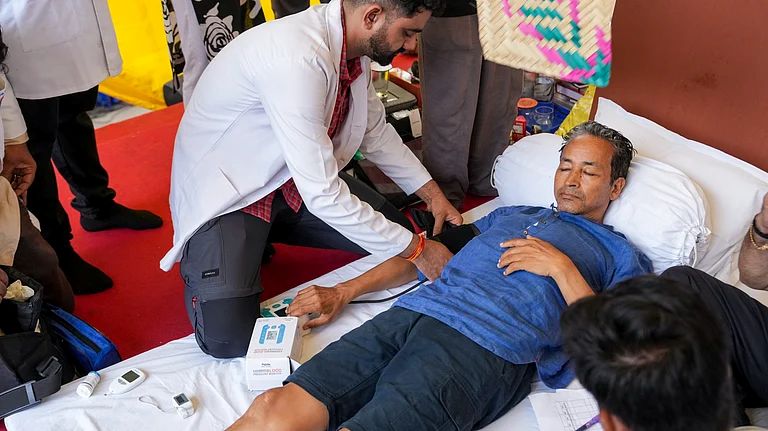
With the hunger strike by activist Sonam Wangchuk entering its 17th day on July 14 and his health worsening, there are growing calls for him to end the fast. Meanwhile, the CJP has called for a march to Parliament on July 20, when the monsoon session begins
As climate activist Sonam Wangchuk’s indefinite hunger strike entered its 17th day on Tuesday, concern over his deteriorating health prompted leaders from across the Opposition to urge him to call off the fast while reaffirming support for the movement demanding accountability in India’s education system.
Wangchuk, along with six student leaders associated with the All India Students’ Association (AISA), has been on an indefinite hunger strike at Delhi’s Jantar Mantar since June 28. The protesters are demanding the resignation of Union Education Minister Dharmendra Pradhan, alleging repeated examination paper leaks, systemic corruption in the education sector and institutional failures that have affected millions of students.
The protesters have also sought sweeping reforms, including the dismantling of the National Testing Agency (NTA), which has faced criticism following a series of examination controversies.
According to a health bulletin issued by the Cockroach Janta Party (CJP), Wangchuk has lost nearly nine kilograms since beginning his fast. The party said his blood pressure and blood sugar levels have become unstable, raising serious concerns over his condition. Of the six student leaders participating in the hunger strike, three have already been hospitalised after their health deteriorated.
CJP chief spokesperson Saurav Das appealed to political leaders to support what he described as a movement representing the aspirations of India’s youth rather than viewing it through a partisan lens. “We again sincerely appeal to the leaders to set aside their politics and lend their voice to the young. This movement is about an entire generation demanding accountability for examination paper leaks, recruitment failures, and justice and compensation for the families of students who lost their lives at the hands of this corrupt, broken education system,” Das said in a post on X.
He added, “History will remember who stood with the youth when they called for justice. We only appeal that all of us stand on the right side of history.”
Several Opposition leaders have since visited the protest site, including representatives from the Trinamool Congress (TMC), Aam Aadmi Party (AAP), Samajwadi Party (SP) and Left parties.
AAP founder and former Delhi Chief Minister Arvind Kejriwal appealed directly to Wangchuk to end the fast, saying his contribution to the country was too important to risk through prolonged hunger. “Sonam Wangchuk is on hunger strike for several days and his health is deteriorating. He is an asset to the country and I appeal to him to end his hunger strike. There are other ways to continue the struggle,” Kejriwal said while addressing reporters in Delhi.
Kejriwal also announced that he would visit the protest site on July 16 to express solidarity with the movement.
Government yet to respond as Parliament march planned
While urging Wangchuk to end his fast, Opposition leaders continued to back the protesters’ core demands. Kejriwal reiterated that the AAP supports the agitation led by the CJP and argued that Education Minister Dharmendra Pradhan should resign, taking responsibility for repeated examination controversies.
He also called for comprehensive reforms aimed at preventing future paper leaks and ensuring that students do not continue to suffer because of systemic failures.
Samajwadi Party president Akhilesh Yadav echoed similar concerns while urging Wangchuk to prioritise his health. “We humbly request and earnestly appeal to Shri Sonam Wangchuk ji to break his fast. His life is invaluable because it represents commitment to humanity, the environment and democracy,” Yadav wrote in a post on X.
Launching a sharp attack on the BJP-led government, Yadav argued that expecting an “insensitive” government to change its position through a fast-unto-death would serve little purpose. He nevertheless expressed solidarity with the broader movement against examination irregularities, recruitment delays and what he described as the erosion of democratic institutions.
Earlier, Shiv Sena (UBT) chief Uddhav Thackeray had also extended his support to the protesters and appealed to Wangchuk to end the hunger strike, saying his life was too valuable to be placed at risk.
The protest has increasingly become a rallying point for Opposition parties seeking to corner the Centre over repeated examination paper leaks, delays in public recruitment and allegations of institutional failure within the education system.
Despite growing political pressure and mounting concern over the health of the protesters, the Union government has so far given no indication that it is prepared to engage with the demonstrators or consider their principal demand for the resignation of Union Education Minister Dharmendra Pradhan.
Meanwhile, the health situation at the protest site continues to worsen. With Wangchuk’s condition becoming increasingly fragile and several student leaders already hospitalised, supporters fear the movement could face fresh challenges in sustaining itself.
The organisers have announced a march to Parliament on July 20, coinciding with the commencement of the Monsoon Session, in an effort to intensify pressure on the government.
However, uncertainty surrounds whether the protest can continue until then, given the declining health of the hunger strikers. Supporters have also expressed concern that authorities could remove the protesters from the site before the planned mobilisation.
As the standoff enters its third week, the movement has evolved beyond a protest against examination paper leaks into a wider campaign demanding accountability, transparency and structural reforms in India’s education system. Whether the Centre responds to those demands—or continues to maintain silence—could determine the next phase of one of the country’s most closely watched student-led agitations.