Turning Climate Action Into An Opportunity For Indian Farmers
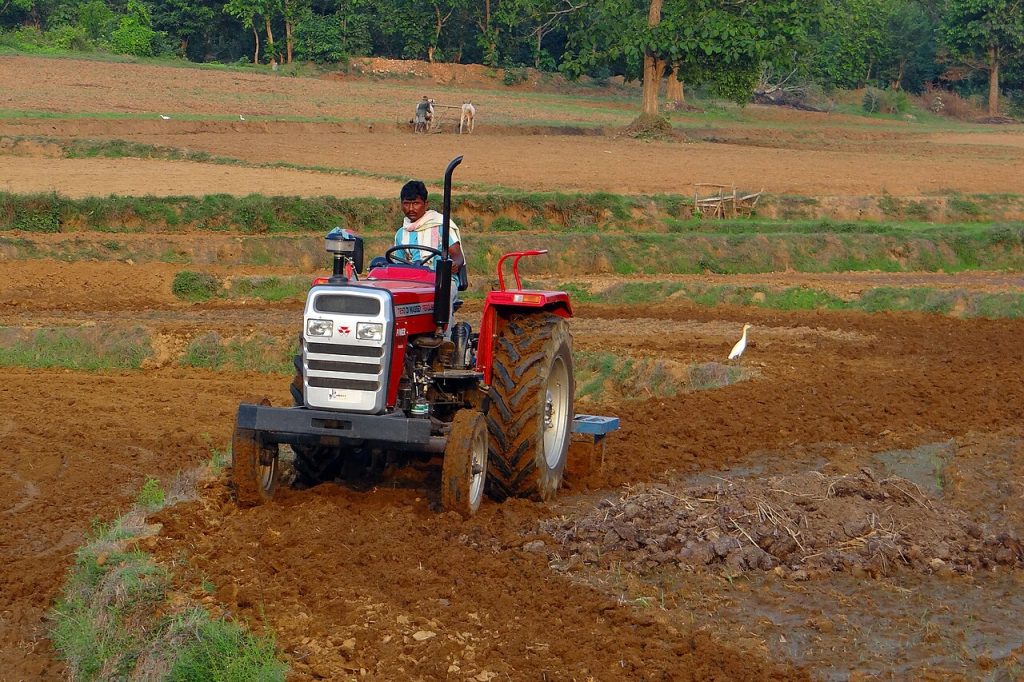
Integrating agriculture into high-integrity carbon credits from activities such as methane reduction, improved soil management and fertiliser management can help mobilise climate finance (Image: Fowler and Fowler)
The global economy is moving towards cleaner production and net-zero emissions. Industries such as energy, manufacturing and transport are increasingly being brought under carbon markets and other climate policies. Agriculture, however, has largely remained outside conventional compliance carbon markets, despite being a major source of greenhouse gas (GHG) emissions.
Agriculture contributes about 13% of global GHG emissions, while agriculture, forestry and other land use (AFOLU) together account for around 25% of global human-caused emissions. For developing countries that depend heavily on farming, reducing agricultural emissions is not only a climate priority but also an opportunity to improve rural incomes and strengthen livelihoods.
A new opportunity for Indian agriculture
Agriculture supports a large part of the population in countries such as India, Bangladesh, Kenya, Pakistan, Uganda and Ethiopia. A shift towards low-emission and climate-resilient farming can therefore deliver benefits beyond reducing emissions.
Carbon markets could provide an additional source of finance for this transition. Activities such as reducing methane from livestock and rice cultivation, improving soil health, using fertilisers more efficiently, managing manure and expanding agroforestry can generate measurable climate benefits. Where these benefits meet carbon-market standards, they can potentially be converted into carbon credits and create an additional revenue stream for farmers.
India’s carbon market takes shape
India launched the Indian Carbon Market (ICM) through the Carbon Credit Trading Scheme (CCTS) in 2023. The market is overseen by the National Steering Committee for Indian Carbon Market and managed by the Bureau of Energy Efficiency (BEE).
The CCTS has two broad mechanisms: compliance and offset. The compliance mechanism initially focused on energy-intensive industries and now covers sectors including aluminium, cement, fertiliser, pulp and paper, and petrochemicals, with scope for further expansion.
Agriculture was not part of the initial compliance mechanism. However, the CCTS Offset Mechanism has opened a route for agricultural projects to participate in the carbon market. BEE has approved a methodology covering methane recovery from livestock and manure management at households and small farms. This is an important first step towards wider agricultural participation in India’s carbon market.
Learning from global experience
International examples show that government policy can help farmers adopt practices that reduce emissions while improving productivity and resilience.
Brazil’s ABC Plan supported low-carbon farming practices across about 54 million hectares and was associated with an estimated reduction of 193.7 million tonnes of carbon dioxide equivalent. In Kenya, soil-carbon projects have helped small farmers adopt improved land-management practices while generating carbon revenue.
These experiences highlight the importance of four elements: financial support, technical assistance, reliable measurement and credible carbon accounting. India can adapt these lessons to its own farming conditions.
Organic farming offers a starting point
India already has a large organic-farming ecosystem. In 2023, the country had about 4.48 million hectares under organic agriculture and ranked first globally in the number of organic producers. Data for 2024-25 under the National Programme for Organic Production indicate around 2.25 million hectares of certified organic land and another 1.71 million hectares under conversion.
This creates an important opportunity, but organic certification alone cannot create a carbon credit. A carbon credit must represent a real, measurable and verifiable climate benefit. Any agricultural carbon project therefore needs a clear baseline, proof that the activity is additional and a strong system for measurement, reporting and verification (MRV).
Aggregating small farmers
Scale will be one of India’s biggest challenges. Most Indian farmers operate small holdings, making individual monitoring, verification and certification costly. Farmer Producer Organisations (FPOs), cooperatives and other farmer groups can help overcome this problem.
By bringing thousands of farmers into larger projects, these organisations can reduce transaction costs, simplify monitoring and improve access to carbon markets. They can also help ensure that carbon revenues are distributed transparently among participating farmers.
Building a credible framework
India can expand agricultural participation in the ICM through four key measures.
First, it should develop standardised methodologies for areas such as soil-carbon improvement, efficient fertiliser use, rice-methane reduction, agroforestry, livestock and manure management.
Second, digital MRV should combine farm records, soil testing, remote sensing and digital tools. This can make monitoring cheaper while maintaining the credibility of carbon credits.
Third, FPOs and cooperatives should be supported to aggregate farmers into commercially viable carbon projects.
Finally, carbon finance should be combined with existing agricultural schemes, climate funds and other sources of finance. This blended approach can help farmers meet the initial costs of adopting sustainable practices.
From projects to a carbon ecosystem
India does not need to bring its entire agricultural sector into the carbon market immediately. A better approach would be to begin with organised and traceable farmer groups, including organic and transitioning farms, and gradually develop methodologies that can be scaled across regions.
The goal should not simply be to generate the largest possible number of carbon credits. The priority should be high-integrity credits backed by real emission reductions, transparent revenue sharing and strong safeguards against double counting.
India’s agricultural sector is both a climate challenge and a major carbon-market opportunity. The CCTS Offset Mechanism has provided a starting point. The next step is to expand this foundation through better methodologies, affordable MRV, farmer aggregation and blended finance. Done carefully, India’s agricultural carbon market can support the country’s climate goals while creating new opportunities for farmers and strengthening rural economies.
(Published under Creative Commons from 360info.org)