PM CARES Fund: Huge Corpus And Questions Over Transparency
An audit statement reveals only 0.01% of PM CARES funds were used in 2024-25, while ₹324 crore in refunds raises questions
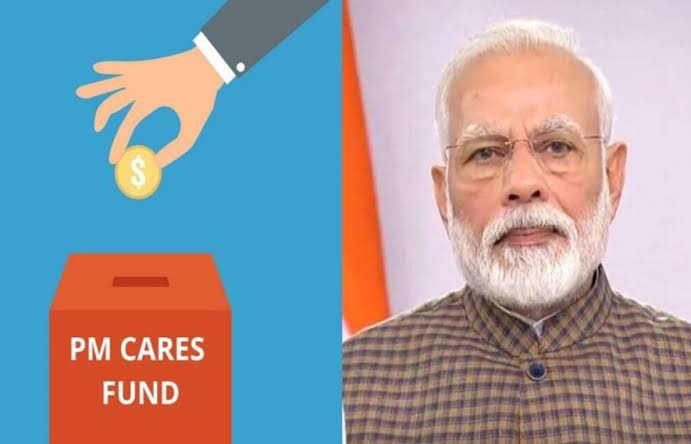
The PM CARES (Prime Minister’s Citizen Assistance and Relief in Emergency Situations) Fund has once again come under scrutiny after its latest audited accounts showed that the fund had accumulated ₹8,452 crore by March 2025, while only about ₹87.85 lakh was spent during 2024-25. The accounts for 2023-24 and 2024-25 were uploaded on 18 August, making this the first financial disclosure since the report for 2022-23. The audit statement shows that ₹6,641 crore of the corpus was kept in fixed deposits, generating substantial interest.
The figures have raised questions about how an emergency relief fund is being managed. Activist Anjali Bhardwaj pointed out that only around 0.01% of the available corpus was used during the year. She asked why such a large amount was being kept unused. She also questioned the return of ₹324 crore by implementing agencies, noting that the accounts do not explain clearly what the money was meant for or why it was refunded.
The latest figures also show that the fund received more than ₹1,200 crore through donations and interest during 2024-25. At the same time, expenditure remained very low. The government has said that PM CARES is meant to respond to emergencies and distress situations, and that maintaining a large reserve allows it to respond to future crises.
The fund was created in March 2020, during the COVID-19 pandemic. It was presented as a mechanism to collect voluntary contributions for emergency relief. According to its official website, the Prime Minister is the ex-officio chairman, while the ministers of defence, home affairs and finance are trustees. Two other trustees, Justice K.T. Thomas (retd.) and Kariya Munda, were nominated by the Prime Minister.
Why PM CARES has faced criticism
From the beginning, PM CARES has faced questions about transparency. Critics have argued that the fund should be subject to greater public scrutiny because it was promoted by the government and received large contributions from individuals, companies and public-sector organisations.
The fund, however, maintains that it is a private charitable trust and does not receive budgetary support. Its official website says it is audited by an independent auditor appointed by its trustees, rather than by the Comptroller and Auditor General of India (CAG).
The fund has also remained outside the Right to Information (RTI) framework, a position that has been challenged by activists and opposition parties. Questions have repeatedly been raised about who contributes money, how decisions on spending are made and why detailed information about individual projects is not always publicly available.
The Supreme Court has also dealt with a challenge to the fund’s creation but did not order its abolition. The controversy has continued because critics say that a fund created in the name of public assistance should meet strong standards of transparency and accountability.
Another area of debate concerns foreign donations. PM CARES has an exemption under the Foreign Contribution Regulation Act (FCRA), allowing it to receive contributions from abroad. Its official website says this is consistent with the treatment of the Prime Minister’s National Relief Fund.
The latest accounts have therefore revived an old question: how much money should an emergency fund keep in reserve, and how much should it spend when people face disasters and other crises?
A fund waiting for an emergency?
The government can argue that maintaining a large reserve is useful because emergencies can arrive suddenly and require huge amounts of money. PM CARES was created during the COVID-19 crisis, when the country faced an extraordinary demand for medical equipment, healthcare infrastructure and other forms of assistance.
But the latest numbers have made the question of utilisation difficult to ignore. With ₹8,452 crore in the fund and most of it parked in fixed deposits, spending of less than ₹1 crore during 2024-25 appears extremely small in comparison. The accounts also show that the fund earned significant interest from its deposits.
The issue is not simply whether the fund has money. It is also about whether citizens can understand how that money is being managed. The ₹324 crore in refunds, for example, has become a particular point of concern because the published statement does not provide enough information to explain the transactions.
The PM CARES website says the fund’s purpose includes providing assistance during emergencies and distress situations. If the fund is intended to remain ready for future emergencies, keeping a substantial reserve may be justified. But greater disclosure about its sources of income, spending decisions, refunds and projects could help address continuing doubts.
For now, the latest audit has provided some new numbers but has not ended the larger debate. PM CARES has accumulated a substantial corpus, but questions remain over how quickly and transparently that money is being used. The missing audit statement for 2025-26 also means that the public picture of the fund’s finances is still incomplete.