How India’s Carbon Market Sets Weak Emissions Reduction Targets
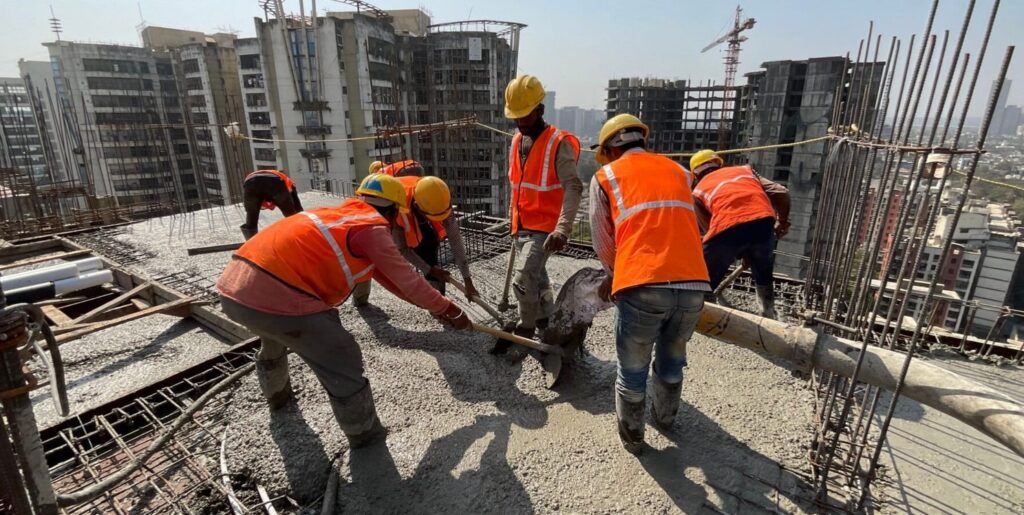
Construction labourers at work in Mumbai, Maharashtra (Image by Yajna S.R. via Pexels)
India’s new carbon market may not be ambitious enough to push major industries towards deep cuts in greenhouse gas emissions, according to a recent analysis by Climate Risk Horizons (CRH). The report says the targets set for industries such as steel, cement and aluminium are “modest and unambitious” and could allow companies to meet their obligations through small improvements rather than major investments in cleaner technologies.
Between October 2025 and January 2026, the government notified greenhouse gas reduction targets for nine industries: cement, aluminium, iron and steel, paper and pulp, chlor-alkali, petroleum refineries, petrochemicals, fertilisers and textiles.
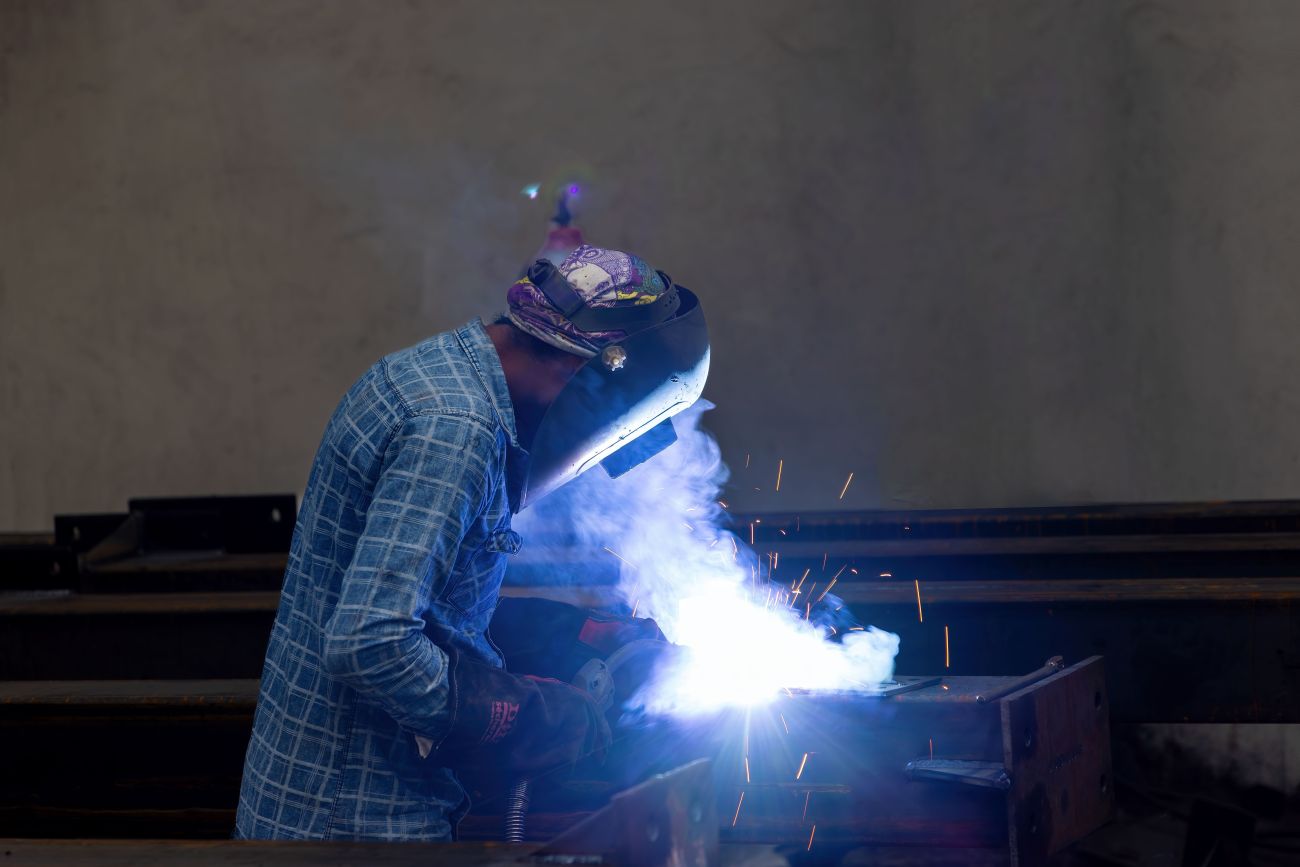
Under the carbon market framework, companies can earn carbon credits when they reduce emissions beyond the required targets. Each credit represents one tonne of carbon dioxide equivalent reduced for every unit of production.
India is the world’s third-largest greenhouse gas emitter. In 2022, the country pledged to reduce the emissions intensity of its economy by 45% from 2005 levels by 2030 and achieve net-zero emissions by 2070.
However, CRH argues that the first set of targets may not be strong enough to support these goals. The report examined targets for steel, cement and aluminium and found that many companies could meet them through relatively low-cost efficiency measures.
For the steel industry, 255 companies are required to reduce their emissions intensity by 6% by 2026-27. CRH says this could largely be achieved through “incremental improvements in process efficiency”.
The cement industry faces an average emissions-intensity reduction target of 1.89% in 2025-26, rising to 3.22% in 2026-27. Some cement companies are not covered by the targets. Aluminium companies face average reductions of 2.3% and 5.8% over the same two years.
“The initial targets, especially for steel, cement and aluminium are likely to remain limited to driving improvements through energy efficiency and other relatively low-cost operational measures,” said Parth Kumar, Programme Manager at the Centre for Science and Environment.
Low costs could weaken the carbon market
The concern is that companies may find it cheaper to buy carbon credits or pay penalties than invest in expensive technologies that can significantly reduce emissions. CRH estimates that purchasing credits at around $10 per tonne of carbon dioxide equivalent could cost major steel, aluminium and cement companies between 0.6% and 7% of their profits.
“For many high-margin polluters, ‘paying to pollute’ could become a preferred business strategy,” said Anirudh T.R., an author of the report.
This could also result in too many carbon credits entering the market. If companies generate credits through relatively easy efficiency improvements, there may be little incentive to make deeper technological changes.
The problem is particularly important because some of the biggest industrial emissions come from processes that cannot be significantly cleaned up through efficiency measures alone. Steelmaking relies heavily on coal-fired blast furnaces, cement production generates emissions through clinker production, and aluminium production uses energy-intensive electrolysis.
Moving these industries towards renewable energy and cleaner production methods requires substantial investment and new technologies.
Kumar warned that future targets should influence corporate investment decisions. “The upcoming targets need to put out a strong signalling which could shift the decision making in boardrooms regarding the choice of technologies,” he said.
CRH also points to possible overlap with existing renewable consumption obligations. Without clear rules on how these systems will work together, companies could receive carbon credits for reductions that are already required under another policy.
The report also questions the strength of penalties for companies that fail to meet their targets. The current framework requires non-compliant companies to pay environmental compensation equal to twice the cost of the credits they should have earned. CRH says falling carbon credit prices could make this penalty too small to discourage non-compliance.
The researchers recommend stronger carbon price safeguards, including minimum price floors and stability reserves. They also want major emitters such as the power sector to be included and financial support for cleaner industrial technologies to be increased.
The report further calls for an independent regulator to oversee the carbon market and reduce potential conflicts of interest. This is particularly important because some government-owned companies are themselves covered by the scheme.
CRH cites SAIL’s Bokaro plant as an example. Its emissions intensity is 3.21 tonnes of carbon dioxide equivalent and it must reduce this to 3.01 tonnes by 2026-27. By comparison, Tata Steel’s Kalinganagar plant has a baseline intensity of 2.49 tonnes and has a target of 2.37 tonnes.
“The GHG emission intensity target rules under the scheme make a long overdue start towards a market-based carbon trading system in India,” said Ashish Fernandes, Director of Climate Risk Horizons. “However, to encourage clean technology deployment, subsequent iterations of the scheme need to set increasingly ambitious targets” under independent and transparent governance.