India’s Monsoon Heat Is Becoming A New Climate Threat
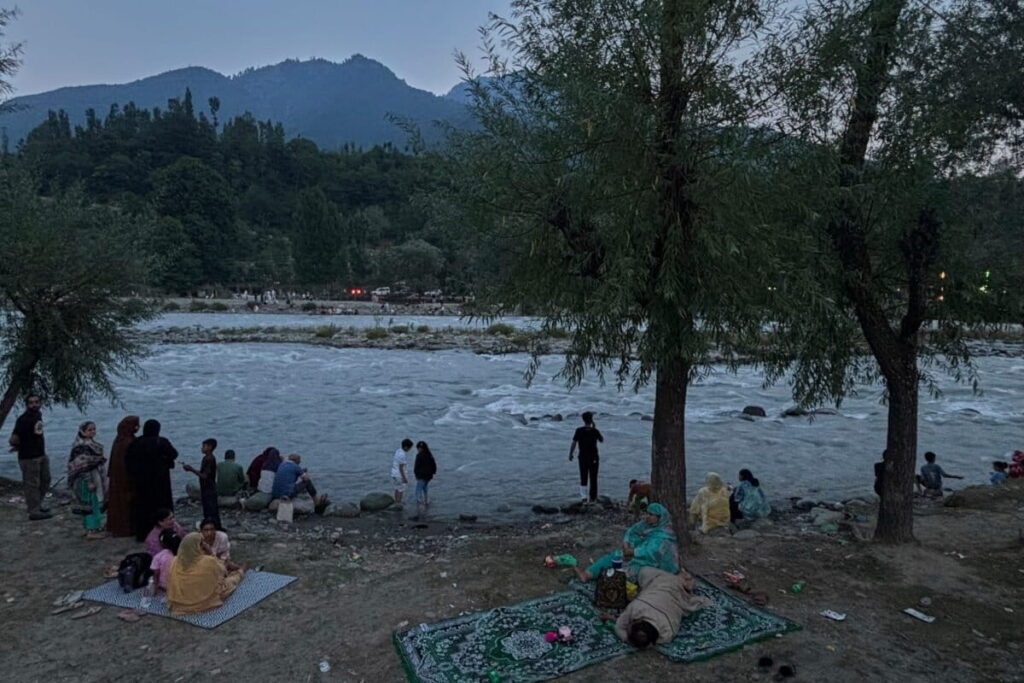
People cool off near a stream during a hot day in Jammu and Kashmir in July 2026 (AP Photo/Mukhtar Khan)
A recent study published in AGU Advances warns that humid heat stress during India’s monsoon season could rise sharply as global temperatures increase, exposing millions to dangerous conditions that existing heat action plans largely overlook. If global temperatures rise by 2°C above pre-industrial levels, hot and humid heat stress could affect about half of India during the monsoon, the study finds.
For 30-year-old V. Kalaiselvi, a farmer in Kothigal village in Tamil Nadu’s coastal Ramanathapuram district, this future is already becoming a reality. Her family grows green gram, cotton and urad dal on three acres. Until recently, she could work in the fields until 10 a.m. during summer. Now, humidity during the monsoon forces her to stop by 9 a.m.
“We cannot stay in the field after 9 a.m.,” she says. “We keep sweating relentlessly and suffer from itching and skin allergies. I frequently feel dizziness, headaches, and sinus pressure. Our children get eye sores.”
Kalaiselvi has adapted by splitting her workday, labouring from 6 to 9 a.m. and again from 3 to 6 p.m. The six-hour gap is spent indoors under ceiling fans, although even the heat inside the house can become difficult to tolerate.
Her experience highlights a growing problem: India’s understanding of extreme heat has traditionally focused on the dry, scorching conditions of April, May and June. Once the monsoon arrives, heat alerts often disappear and emergency measures wind down. But scientists say high humidity can make comparatively lower temperatures far more dangerous because it prevents the body from cooling through sweat.
Why humid heat demands new policies
The study found that between 1979 and 2021, uncompensable heat stress (UHS)—a condition in which the human body can no longer effectively cool itself—affected about 8% of India during summer but only around 1% during the monsoon. Under a 2°C warming scenario, however, monsoon UHS could expand to roughly half the country.
The threat could become particularly severe in the Indo-Gangetic Plain. At 4°C of global warming, the northern Gangetic Plain could experience 28 uncoolable days during the rainy season, 75% more than the 18 days projected during summer.
Vimal Mishra, a co-author of the study at IIT Gandhinagar, explains that temperature and humidity interact in dangerous ways. During monsoon dry spells, temperatures can rise while moisture stored in the soil continues to evaporate. “Both the land and atmosphere play a crucial role here,” he says.
In June and July, when high temperatures coincide with elevated soil moisture, wet-bulb temperatures can cross 30°C, creating potentially life-threatening conditions. The risk can be particularly acute for outdoor workers.
Dr Vidhya Venugopal, Professor and Head of Occupational and Environmental Health at Sri Ramachandra Institute, says heavy agricultural or construction work should generally be limited to a Wet-Bulb Globe Temperature (WBGT) of around 28°C for acclimatised workers, with lower limits for unacclimatised labourers. When humidity rises, sweat cannot evaporate efficiently, forcing the body to work harder to regulate its temperature.
Workers may initially experience fatigue, dizziness, cramps and reduced concentration. Prolonged exposure can lead to heat exhaustion and heatstroke, while repeated dehydration and heat exposure may also contribute to long-term kidney damage.
Aditya Valiathan Pillai, a doctoral researcher at King’s College London, says India’s existing Heat Action Plans have largely relied on dry-air temperature thresholds. “We are witnessing intense precipitation variations — like cloudbursts — and now, an emerging hazard in the form of compound hot and humid conditions,” he says.
A 2023 assessment by Pillai and colleagues of 37 Indian Heat Action Plans found that most frameworks did not adequately account for humid heat stress.
Another major challenge is the lack of reliable data on heat-related deaths. Mishra says India does not have comprehensive cause-specific mortality data for heat, making researchers rely on indirect links between mortality and temperature.
Public health expert Dileep Mavalankar points to Ahmedabad’s experience as an example of how official figures can underestimate the real toll. During the city’s 2010 heatwave, excess mortality analysis found nearly 800 additional deaths, compared with just 75 officially recorded heatstroke deaths.
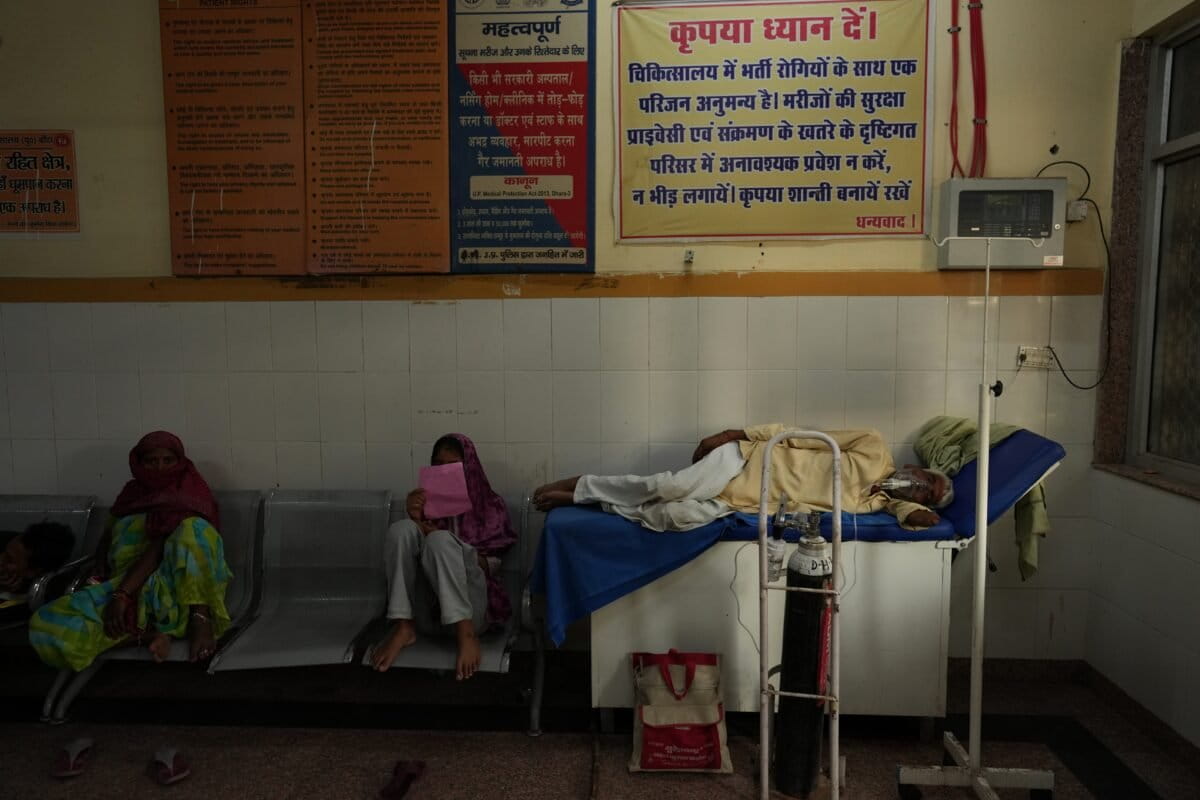
Experts therefore call for daily mortality data, better heat-stress monitoring and early-warning systems that account for humidity. Primary Health Centres should also be prepared to treat severe heat illness with ice packs, cold water and intravenous fluids.
“Time is the single most critical factor in averting death,” Mavalankar says.
For Pillai, the policy challenge is urgent but achievable. “That same knowledge gap now exists with humid heat,” he says. “Policies tackling this issue cannot be built solely on abstract literature — they require a deep, ground-level understanding of human vulnerability.”
As climate change reshapes India’s monsoon, villages such as Kothigal may offer an early warning of what lies ahead. For workers like Kalaiselvi, the distinction between summer heat and monsoon rain is already becoming meaningless. The next generation of Heat Action Plans may need to recognise that India’s most dangerous heat is no longer confined to the hottest months.