India’s Ethanol Shift Sparks Debate Over Water, Food And Farming
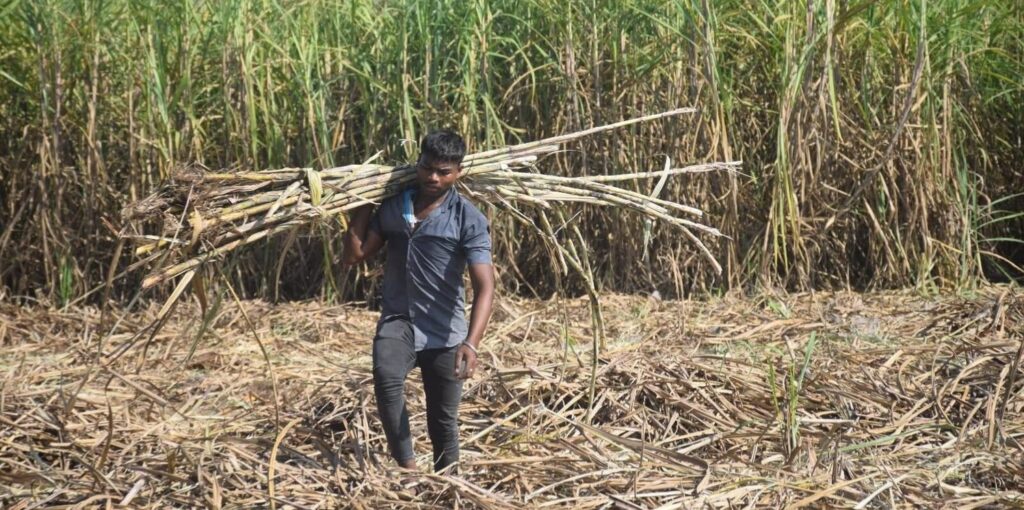
A sugarcane field in Narsinghpur, Madhya Pradesh (Image by Manish Chandra Mishra/Mongabay)
- India’s ethanol programme is increasingly moving beyond sugarcane and molasses, with grain-based distilleries now playing a larger role in ethanol supply.
- Industry voices say grain-based ethanol can diversify feedstock, but it also raises questions about maize, animal feed, food processing and price pressure.
- Water and climate experts say India should assess ethanol through lifecycle water accounting, groundwater stress and food-security safeguards before moving beyond E20.
- Experts caution that Brazil’s ethanol model offers lessons, but India’s water stress, population pressure and food-security needs make direct replication difficult.
India’s push to expand ethanol production is helping reduce dependence on imported oil, but it is also raising concerns about water use, food security and environmental sustainability. As the country increasingly turns to grain-based ethanol, experts say the transition must be carefully managed to avoid putting pressure on farmers and natural resources.
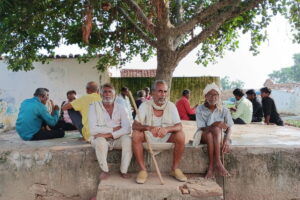
In December 2025, farmers gathered with tractors near an under-construction grain-based ethanol plant in Rathi Khera village in Rajasthan’s Hanumangarh district. They feared the project would deplete groundwater, pollute water sources and damage farmland. The company said the plant would use zero-liquid-discharge technology and pollution-control systems, but protests later turned violent, resulting in clashes with police and the suspension of construction.
Similar protests have been reported in Madhya Pradesh, Punjab and Telangana, where local communities have questioned the impact of ethanol and distillery projects on water, agriculture and the environment.
Balancing energy security with food and water security
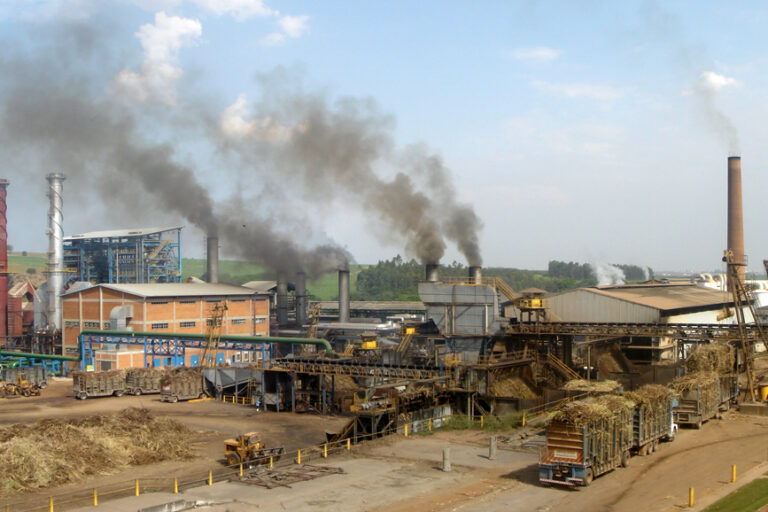
India’s ethanol industry has changed rapidly over the past decade. Earlier, most ethanol was produced from sugarcane molasses, a by-product of the sugar industry. Today, about 65-70% of the country’s ethanol comes from grains, mainly maize and rice supplied from Food Corporation of India stocks, while sugarcane-based feedstocks contribute around 30-35%.
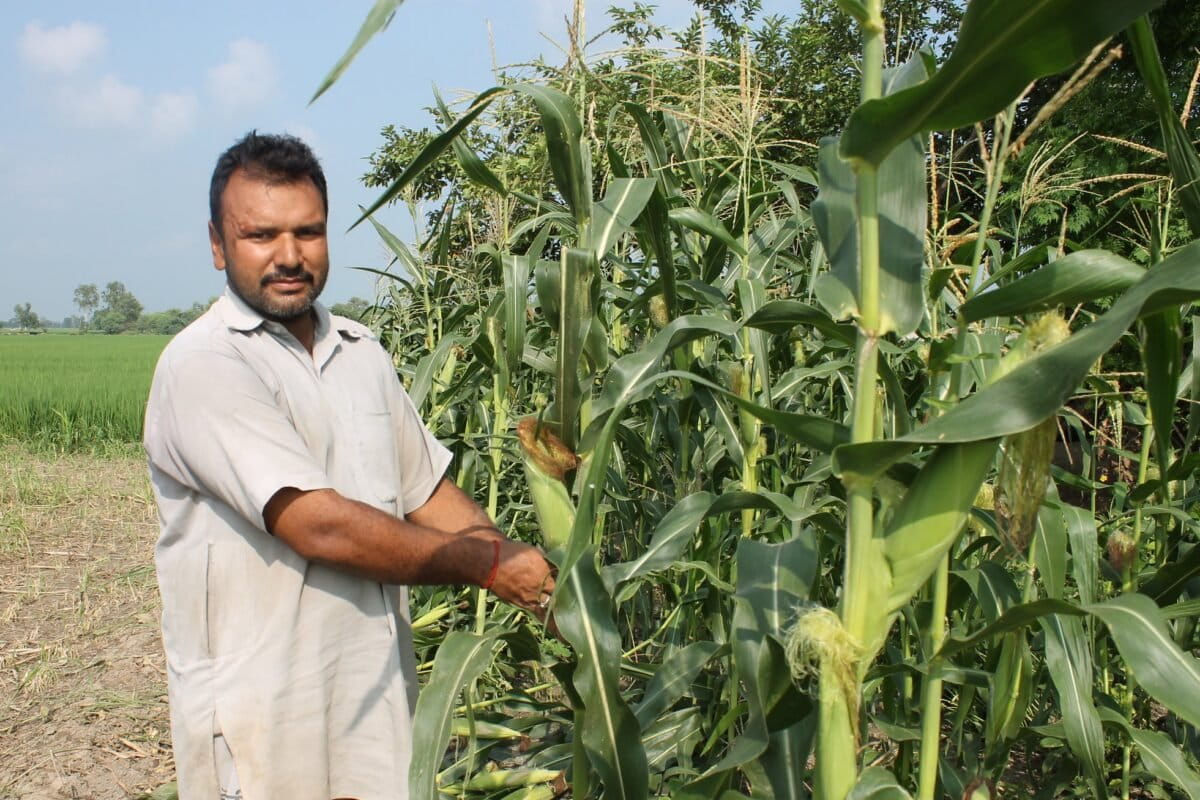
According to Athar Shahab, Managing Director of Zuari Industries, grain-based distilleries now supply more than 70% of the ethanol purchased by state oil companies. He said using more grain reduces dependence on sugarcane but creates a new challenge because maize is also needed for poultry feed, animal feed and food processing.
“The debate, therefore, should not be framed as food versus fuel,” Shahab said. “The real question is whether India can expand ethanol while simultaneously increasing agricultural productivity.”
He added that improving crop yields, seed technology, storage facilities and procurement systems would be essential. “Otherwise, pressure could emerge in feed markets and eventually be transmitted to consumers,” he warned.
Researchers say ethanol expansion must be planned carefully. Ramya Natarajan, a research scientist at the Centre for Study of Science, Technology and Policy (CSTEP), said studies have already identified concerns over water use, feedstock availability and sustainability.
“The strongest rationale for the programme is energy security and farmer income,” she said. “However, as blending targets increase, it will be important to ensure that feedstock demand does not create unintended trade-offs with food and nutritional security.”
Brazil is often cited as a successful model for ethanol production, but experts say its conditions are very different from India’s. Around 80% of Brazil’s ethanol comes from sugarcane grown largely with rainfall rather than irrigation. The country also has stronger land-use regulations and satellite monitoring to prevent illegal deforestation.
Evandro Gussi, president of Brazil’s sugarcane industry association UNICA, said much of Brazil’s sugarcane expansion has taken place on former pastureland rather than forests. He also noted that farmers often harvest two or even three crops from the same land each year, making production more efficient.
However, Fabio V. Scarpare, a bioenergy researcher at Washington State University, said Brazil’s experience cannot simply be copied.
“India should be careful not to treat ethanol scaling only as a fuel-substitution policy,” he said. “It is also a land, water, crop-choice, and food-security policy.”
He explained that India’s ethanol crops depend much more on irrigation and groundwater than Brazil’s largely rain-fed sugarcane, making water management a much bigger concern.
Anjal Prakash, faculty member at FLAME University, also believes India should evaluate ethanol beyond its role in reducing emissions.
India, he said, must assess crop-based ethanol “not just from an energy or emissions lens but from a water and climate resilience perspective.”
Prakash recommended detailed water accounting, groundwater assessments and restrictions on expanding feedstock production in water-stressed regions. He also said India should prioritise ethanol produced from molasses, agricultural residues and waste materials.
“Without these safeguards, ethanol policy will risk intensifying groundwater depletion and vulnerability among climate-stressed communities,” he said.
New research supports these concerns. A modelling study published in PLOS One by researchers led by Chandan Kumar Jha of the Indian Institute of Management Ahmedabad found that all ethanol expansion pathways involve trade-offs related to food security, water use and fertiliser demand.
The study estimates that water consumption could increase by 21-118% by 2030 and by 49-138% by 2050, depending on the feedstock used. It also projects greater fertiliser use and higher nitrogen pollution under some scenarios. The researchers conclude that future ethanol expansion will require careful choices on feedstocks, irrigation, fertiliser use and second-generation biofuels.
Agriculture policy analyst Devinder Sharma believes India should place food security ahead of fuel production.
“The country should be focusing on ensuring food security to feed its people,” he said. “Instead, we are very happily and merrily trying to divert our resources to feeding the cars.”
He also argued that India should be cautious in comparing itself with Brazil because the two countries differ greatly in population, water availability and agricultural pressures.
Experts also point to lessons from countries such as Indonesia, where environmental groups have raised concerns about biofuel expansion affecting forests, land rights and Indigenous communities. While India’s situation is different, they say strong safeguards are essential to prevent similar problems.
Brazilian bioenergy expert Luiz Augusto Horta Nogueira said ethanol remains an important renewable fuel but warned that fuel production should never come at the cost of food production or water protection.
Most experts agree that ethanol will remain part of India’s clean energy strategy. However, they say its success will depend on protecting water resources, safeguarding food supplies and ensuring that environmental and social concerns are addressed alongside energy goals.