From Protest To Persecution: The Crackdown On Student Voices
Shalini Jul 31, 2026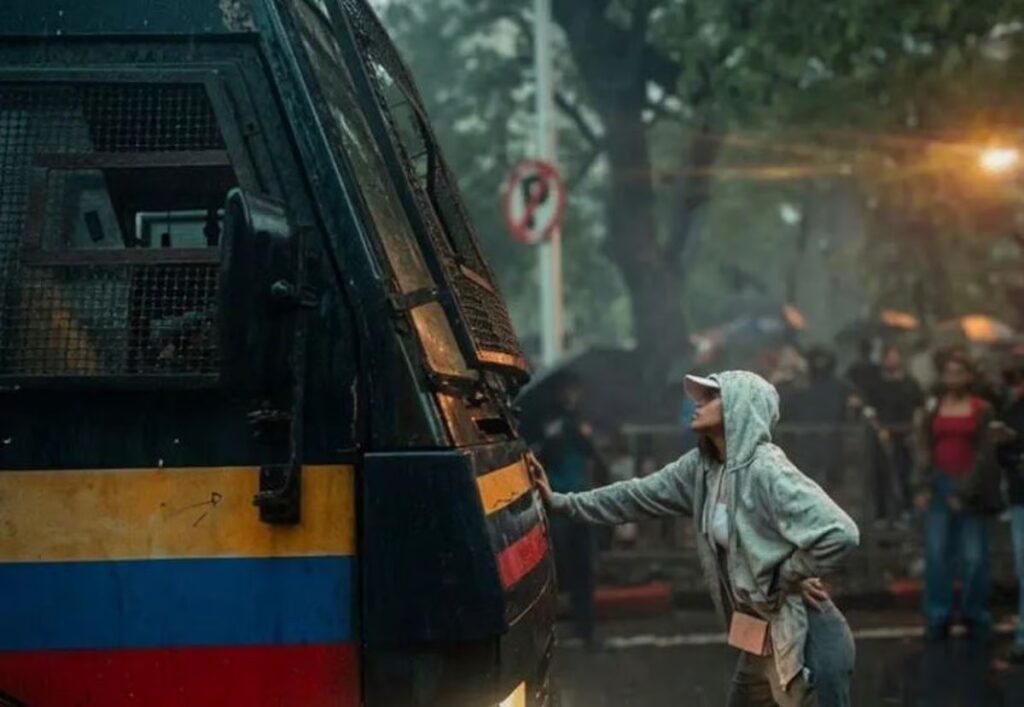
Model and protester Rhiya Ahir has filed a cyber police complaint alleging that she faced an organised online hate campaign, including abusive messages, rape threats and morphed images, after a video of her at a protest near Mumbai's Shivaji Park went viral
When Union Education Minister Dharmendra Pradhan resigned after weeks of sustained student protests over repeated examination paper leaks, many believed the movement had achieved more than a political victory. It appeared to establish an important democratic principle: that governments must remain accountable when public institutions fail. Students were assured that their concerns would be heard, that there would be no vindictive action against those who had protested, and that the focus would now shift to repairing India’s examination system.
Instead, the days following the protests have raised troubling questions about whether those assurances were ever meant to be honoured.
Far from closing the chapter on the protests, several students now say they are facing intimidation, legal action and online abuse. The experience of 27-year-old Mumbai-based model Rhiya Ahir has become one of the clearest examples of what many protesters describe as a campaign to discourage dissent after the movement had formally ended.
For any democracy, this is the more important story. The success or failure of a protest is not measured only by whether it secures a resignation or forces Parliament to debate an issue. It is measured by how the state treats those who dared to raise uncomfortable questions once the television cameras have moved on.
A movement promised dialogue, but met with punishment
The anti-paper leak movement was unlike many recent protests. Led largely by students and young professionals, it demanded accountability rather than political power. Its central argument was simple: public examinations determine educational opportunities, employment and social mobility, and repeated paper leaks had shattered public confidence in those institutions.
When the protests intensified, the government’s response included negotiations, followed eventually by Dharmendra Pradhan’s resignation on grounds of “moral responsibility.” The resignation created the impression that the government had accepted the need for accountability.
Yet what followed appears deeply inconsistent with that message.
During the July 20 demonstrations in Delhi, several protesters suffered injuries after police action. Reports emerged of students being struck by pellet guns, while others alleged that police used force, including baton charges, during attempts to disperse the crowds. Congress leader Rahul Gandhi later met injured students in hospital, including one who reportedly lost vision in one eye after sustaining a pellet injury.
The controversy deepened after a general diary entry reportedly recorded at Parliament Street Police Station referred to the deployment of anti-riot measures, including non-electric shells, electric shells, tear-gas grenades and plastic pellets. Opposition leaders argued that this contradicted initial denials about the use of pellet guns and demanded an independent investigation.
Equally disturbing are allegations that criminal cases have been filed against several protesters despite assurances that peaceful participants would not face retaliation once the demonstrations concluded.
If these reports are accurate, they represent more than administrative inconsistency. They raise questions about whether official assurances made during negotiations were honoured in good faith.
The credibility of any democratic negotiation depends on trust. If protesters believe that promises made to persuade them to leave the streets will later be quietly abandoned, future dialogue becomes considerably more difficult.
The cost of speaking out
The experience of Rhiya Ahir illustrates another dimension of the aftermath.
Like several young people associated with the movement, Ahir has reportedly faced sustained abuse after the protests concluded. The attacks have not been limited to criticism of her action — blocking a police van carrying protesters in Mumbai — but have extended to personal harassment and attempts to discredit her for participating in the demonstrations.
This reflects a broader trend increasingly visible in contemporary public life. Young citizens who engage in peaceful democratic protest often find themselves confronting consequences long after the demonstrations have ended. Online abuse, reputational attacks and legal proceedings can become powerful deterrents against future participation in public affairs.
Such developments risk sending a dangerous message to India’s youth: participation in democratic processes may carry personal costs even when protests remain peaceful.
This matters because the anti-paper leak movement was fundamentally about restoring faith in public institutions. Students were demanding fairness in examinations, transparency in governance and accountability from those responsible for administering systems that shape their futures.
Responding to those demands with intimidation rather than reform undermines the very legitimacy the government sought to restore through the Union Education Minister’s resignation.
The issue extends beyond any one individual or political party. Democracies depend upon citizens believing they can question authority without fear of retaliation. Peaceful protest is not an inconvenience to democracy; it is one of its essential safeguards.
Governments are naturally expected to maintain public order, and police action may sometimes become necessary where violence occurs. But those powers carry an equally important obligation to distinguish between maintaining law and order and discouraging legitimate democratic participation.
If peaceful protesters are injured, criminally investigated or subjected to harassment despite earlier assurances, confidence in public institutions inevitably suffers.
The resignation of the Education Minister was widely presented as evidence that democratic accountability remained alive. Whether that accountability proves genuine will now be judged not by the resignation itself, but by what happens to the students who made it possible.
If the promises made before the protests ended are honoured, the movement may yet strengthen India’s democratic institutions. If they are not, the legacy of the protests will be remembered less for the minister who resigned than for the students who were asked to trust the state—and later discovered that trust may have been misplaced.