For India’s Women, Indoor Heat Is Theirs To Bear And Theirs To Fix
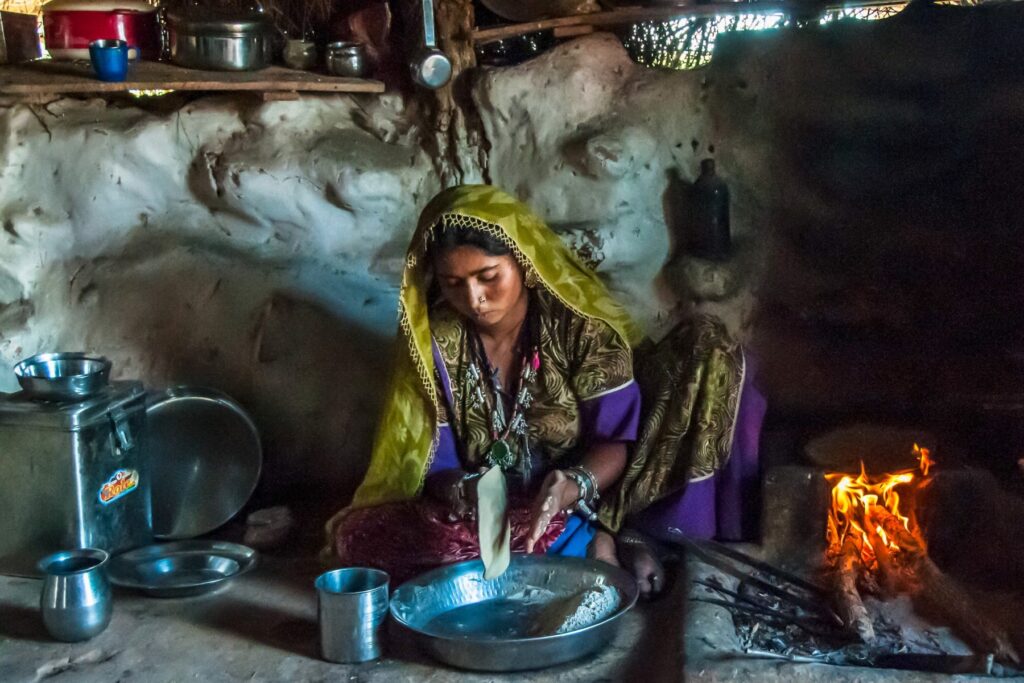
For many women across India, cooking cannot stop when temperatures soar. Kitchens, such as this one in Rajasthan, are some of the hottest places to work (Image: stefanobarze / Alamy)
- Gender inequality sees women labour in poor quality housing despite soaring temperatures, with solutions limited, expensive and inadequate
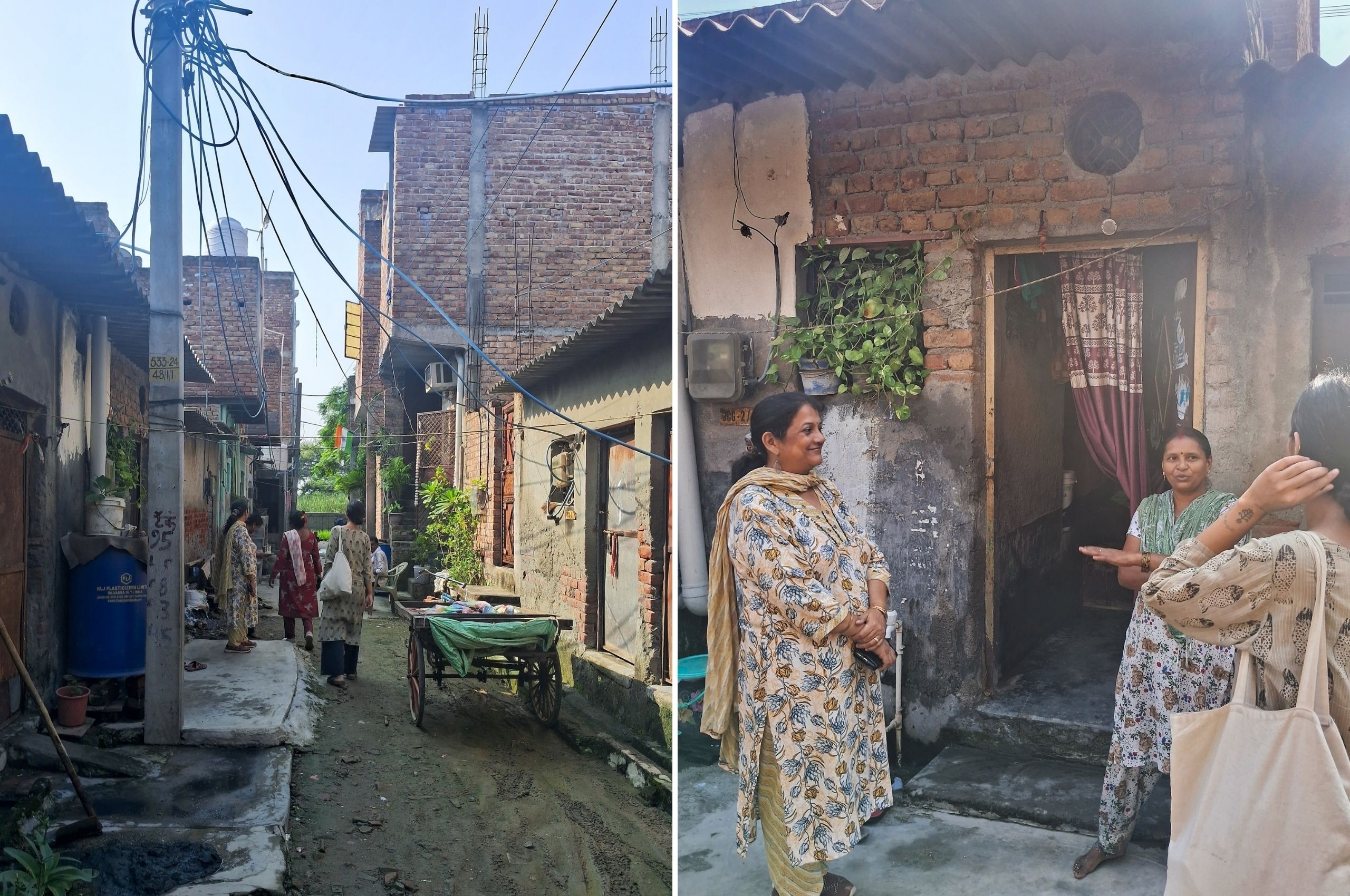
Kanchan cares for her husband and two children in a single-room house with brick walls and a metal-sheet roof.
By day, the room is a kitchen and living space. At night it becomes the family’s bedroom.
Her work here in Savda Ghevra, a settlement on the north-west edge of Delhi, starts at 6am when she cooks for her husband.
By the afternoon, when the building’s tin roof is taking the full force of the harsh afternoon sun, she is still going, making fresh rotis for her children returning from school.
Last September, a thermal camera I brought into Kanchan’s house recorded surface temperatures of 36.5C as she went about her afternoon work – and that was already past the worst of summer. This May, the outdoor temperatures in the city reached almost 45C and the night passed 32C – the hottest night Delhi had recorded in 14 years.
“Mein nahi karungi toh aur kaun khaana banayega?” she says. “If I don’t cook, who else will?”
Night brings little relief. “Even around the time we are trying to sleep, it feels like it’s still afternoon,” Kanchan says. Her son wants an air conditioner, but she asks: “Where will the money come from, and besides, this house is too small.”
About 50 km away east of Savda Ghevra is Kishan Kunj. Most families in this settlement have migrated from other states and earn a living selling used clothes and utensils. Reshma and Manisha, two young women caring for their family here, describe the same relentless heat that plagues Kanchan.
Their home lacks even the brick walls of Kanchan’s. Its sides are built from woven mats. In the evenings, when outdoor temperatures drop slightly, Reshma and Manisha’s brothers step out to sit and chat with friends or simply be away from the stiflingly hot house.
Reshma and Manisha stay inside – women routinely face harassment in public spaces in Indian cities and in informal settlements, street lighting is poor and public spaces are male-dominated through the evening. “It isn’t safe for us outside, and we don’t really leave the house much anyway,” Reshma says.
Women in India, regardless of educational qualification or marital status, spend 46% of their waking hours on unpaid care work on average – eight times the hours men spend.
India’s cities are warming and densifying fast. And the women at home are feeling the impact. In many cases they are coming up with their own adaptations as they try to make their lives slightly more bearable. But deeper solutions seem far away, say experts and the women who suffer.
The ceiling for heat adaptation
About 40% of India’s urban population lived in informal settlements as of 2022. Here protective measures against extreme heat are limited. Electricity to run fridges, fans and coolers is also difficult to access, with connections often informal or shared.
Where supply does reach households, it is frequently unreliable. Two in five urban Indian households face unanticipated power outages at least once a day, a figure that could be far higher in low-income, informal settlements.
Buying and running cooling appliances is often unaffordable. AC prices rose by 5-15% just before this summer, and research in Mumbai’s informal settlements finds that energy-poor households often refrain from using cooling devices to reign in electricity bills.
Savda Ghevra, where Kanchan lives, was built for families evicted from informal settlements across Delhi, who were allotted land on which many have gradually constructed permanent houses.
Four years ago, Kanchan bought a refrigerator after saving up some money from a part-time job delivering electricity bills around the city – work she takes on after completing her caregiving responsibilities. It was an expensive purchase, she says, but a necessary one. Without it, food would spoil quickly, making her already stretched grocery budget even harder to manage.
Beyond that, her adaptations to heat are smaller and daily: she wakes up earlier to cook; takes breaks every couple of hours; wets a cloth for her head and sits in front of the fan; and drinks buttermilk to rehydrate and keep going.
These are not practices she grew up with, she says. But a few years ago, a new building went up next door, cutting off what little air reached her house. “Ghutan hone lag gayi thi andar. It started feeling suffocating inside.” The adaptations followed. But personal adaptation has a ceiling, and for women that ceiling is often lower than it is for men.
“The physiology, when it comes to heat, is not very different. The ceiling is the home, the gender, the burdens,” says Robert Meade, a researcher at the Harvard T.H. Chan School of Public Health in the United States. “It is the cultural norms and social reasons that constrain women’s ability to adapt to heat.”
When he and colleagues were studying women’s heat exposure in Gujarat, a state in western India, they advised taking breaks and not working in the hottest parts of the day. “But that’s not really an option for them” due to their caregiving responsibilities, he says.
“Think of it as them treading water and you hand over a brick. They won’t drown, but it will make the easiest tasks difficult,” says Meade.
Four walls and no windows
About 1,400 km south of Savda Ghevra is the Dharavi Koliwada neighbourhood in Mumbai.
By some estimates it is home to one million people, packed into 2.6 sq km. Here the problem of construction takes a different form, but the heat and its consequences again land most heavily on women.
The settlement has grown rapidly in recent years, often through the addition of upper floors and subdivision of rooms. This has changed not just how people live but also how air moves – or does not.
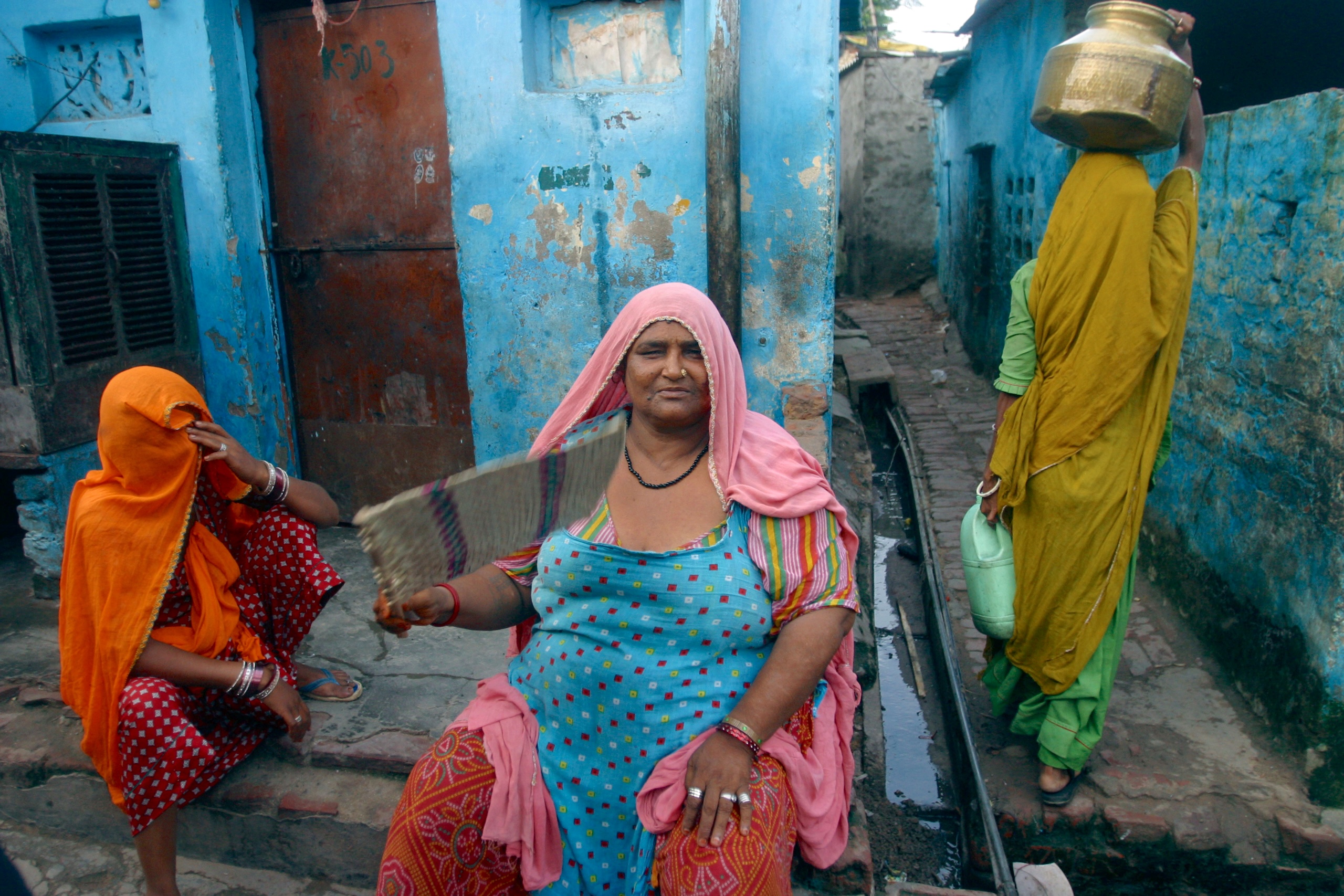
“There used to be a creek here. It was open, there were no tall buildings, and the air would pass,” says Mary, whose family are Koli, among the original fishing communities of the area. “Now everything is packed. Everyone now keeps adding newer floors every year.”
Her neighbour Devyani cooks on a gas stove in a kitchen that used to have windows on all of its three external sides but now on all three, there is someone’s wall.
“If we break this wall, there’s another house right there, we can’t put in a window, and it’s suffocating,” she says.
After cooking she sits in the stairwell of her community building, which is only marginally less hot than the kitchen.
Both Mary and Devyani describe an inversion that is now routine, and one that has crept up on them over the years. There was a time when coming home meant stepping into shade and relative cool, when the estuary breeze reached the lanes and the neighbourhood had not been sealed in by concrete on every side. Now, stepping onto the main road brings relief.
Densification in Dharavi has also turned cooling into a source of neighbourhood strife. Several women describe hot exhaust from wealthier neighbours’ ACs blowing directly into their homes.
“The houses are so close that someone’s AC in front of our window blows hot air directly into our house. Par bol nahi sakte kyunki woh paise waale hai. We can’t say anything because they’re the ones with money,” Devyani says.
When it comes to kitchen work, the problems are gendered. Devyani notes with a laugh that her husband has never cooked in their overheating, windowless kitchen. “Lekin aisa bol nahi sakte. But you can’t say that out loud,” she jokes.
The problem, says Mukta Naik, architect, urban planner, and a fellow at the Sustainable Futures Collaborative, starts with the built environment itself. “Urban planning in India has historically not taken women’s use of domestic space seriously. Homes were generally never designed to make domestic labour convenient; the kitchen would often be outside so that smoke could escape. Women’s time spent inside the house is barely ever factored in,” she says.
Improved ventilation would help, she says. Not just cross-ventilation but vertical ventilation that provides escape routes for hot air to rise and exit buildings. “Vertical shafts with mechanised exhaust can be put in places where windows and horizontal cross-ventilation is not possible,” Naik explains. It can be retrofitted into existing structures, and would address both heat and indoor air pollution at once.