Centre Spent Rs 2,586 Cr on PM Modi Adverts Since 2020: RTI Data
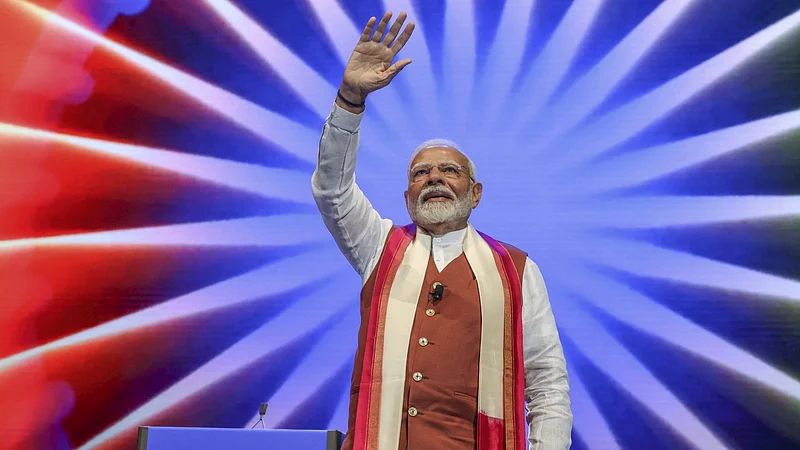
The RTI disclosure about advertisements promoting PM Modi across various social media platforms has once again brought attention to the debate surrounding government advertising practices, transparency in public expenditure and the role of state-funded publicity campaigns (Image: PTI)
Fresh information obtained through a Right to Information (RTI) application has revealed that the Central government spent Rs 2,586 crore on advertisements promoting Prime Minister Narendra Modi across multiple media platforms between 2020-21 and 2025-26. The figures were disclosed by the Central Bureau of Communication (CBC), which functions under the Ministry of Information and Broadcasting.
The RTI application was filed by former Trinamool Congress Rajya Sabha MP Saket Gokhale, who sought details regarding expenditure on government advertisements featuring or promoting the Prime Minister. The CBC provided a year-wise breakdown of spending across print, television, radio, digital platforms, social media and outdoor publicity campaigns.
The data indicates that government spending on publicity remained substantial across all major communication channels during the six-year period. According to the figures released, print advertisements accounted for nearly Rs 796 crore of the total expenditure. Television and radio campaigns together represented the largest share, with spending reaching approximately Rs 936 crore. Outdoor publicity, including billboards, hoardings and other public displays, accounted for nearly Rs 584 crore.
The RTI response has triggered renewed debate over government advertising expenditure and the use of public funds for promotional campaigns featuring political leaders.
Sharp rise in outdoor and digital advertising
The data highlights a significant increase in spending on outdoor advertising over the years. In 2022-23, expenditure under this category stood at Rs 32.76 crore. However, within a year, the amount surged dramatically to Rs 162.21 crore in 2023-24, reflecting a major expansion in the government’s outdoor publicity efforts.
Similarly, expenditure on digital and social media campaigns witnessed a substantial rise during the period under review. Under the CBC’s “new media” category, spending increased from Rs 14 crore in 2020-21 to Rs 131.35 crore in 2025-26. The sharp increase underscores the growing importance of online platforms in government communication strategies.
The RTI documents also show that spending on print media remained significant despite the shift toward digital channels. According to Gokhale, expenditure on print advertisements alone reached nearly Rs 338 crore during 2025-26.
Describing the figures as alarming, Gokhale said the level of spending demonstrated the government’s priority on publicity campaigns. “The figures are shocking,” he said while referring to the data disclosed through the RTI process.
The CBC’s response also included preliminary expenditure figures for the ongoing 2026-27 financial year. Although only the first six months of the year have been completed, advertising expenditure had already reached Rs 2.76 crore at the time the information was provided.
Questions raised over transparency and beneficiaries
While the CBC disclosed overall expenditure figures, it declined to reveal the names of advertising agencies, media organisations and other entities that received the funds. The agency cited “commercial confidence” as the reason for withholding the information.
The decision drew criticism from Gokhale, who argued that taxpayers have a right to know how public funds are being distributed and which organisations are benefiting from government advertising budgets.
“Taxpayers have a right to know where this money is being spent,” Gokhale said, questioning the refusal to disclose the names of agencies and media houses that received government advertising contracts.
The former MP also contended that the figures released by the CBC represent only a portion of the total expenditure on government publicity. According to him, the disclosed amount covers spending by a single agency and does not include expenditure incurred by various ministries, public sector undertakings or advertisements issued separately by political organisations.
“This is only one agency’s expenditure. It excludes spending by other ministries, public sector undertakings and political party advertisements. The actual figure is much higher,” he alleged.
Gokhale further accused the government of using public advertising budgets to influence sections of the media. He argued that the scale of expenditure raises concerns about the relationship between government advertising and editorial independence.
“When the reward for promoting Modi and the BJP is Rs 2,586 crore, are we surprised that much of the media remains compromised?” he asked.
The RTI disclosure has once again brought attention to the broader debate surrounding government advertising practices, transparency in public expenditure and the role of state-funded publicity campaigns. Supporters of government outreach initiatives often argue that advertising is necessary to inform citizens about welfare schemes, public services and policy initiatives. Critics, however, contend that such campaigns can blur the line between public information and political promotion when they prominently feature political leaders.
With the CBC declining to identify the recipients of the advertising funds, questions over transparency and accountability are likely to continue. The figures disclosed through the RTI have added fresh momentum to discussions about how public money is allocated for government communication and whether greater disclosure requirements should apply to such expenditures.