Kerala Landslide Survivors Wait For A Place To Call Home
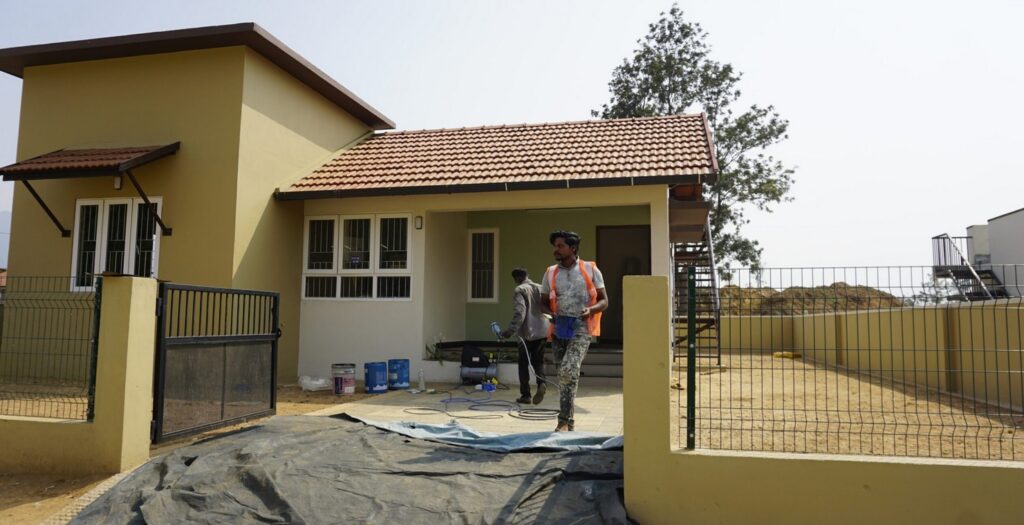
A construction labourer at work at the rehabilitation township in Kerala (Image by Divya Kilikar/Mongabay)
Nearly two years after the devastating Wayanad landslide claimed hundreds of lives and destroyed entire settlements, many survivors remain caught between grief, uncertainty and hope. While a government-built rehabilitation township promises a fresh start, most affected families are still waiting for the day they can finally move into their new homes.
For Bushara Mujeeb, the wait has been long and painful. The landslide took away 25 members of her extended family and uprooted the life she once knew. Since then, survival has been her primary concern.
“Since the landslide, organising food, shelter, and clothing has been my biggest preoccupation,” Bushara said. “We’ve just been living moment to moment, trying to get past that trauma.”
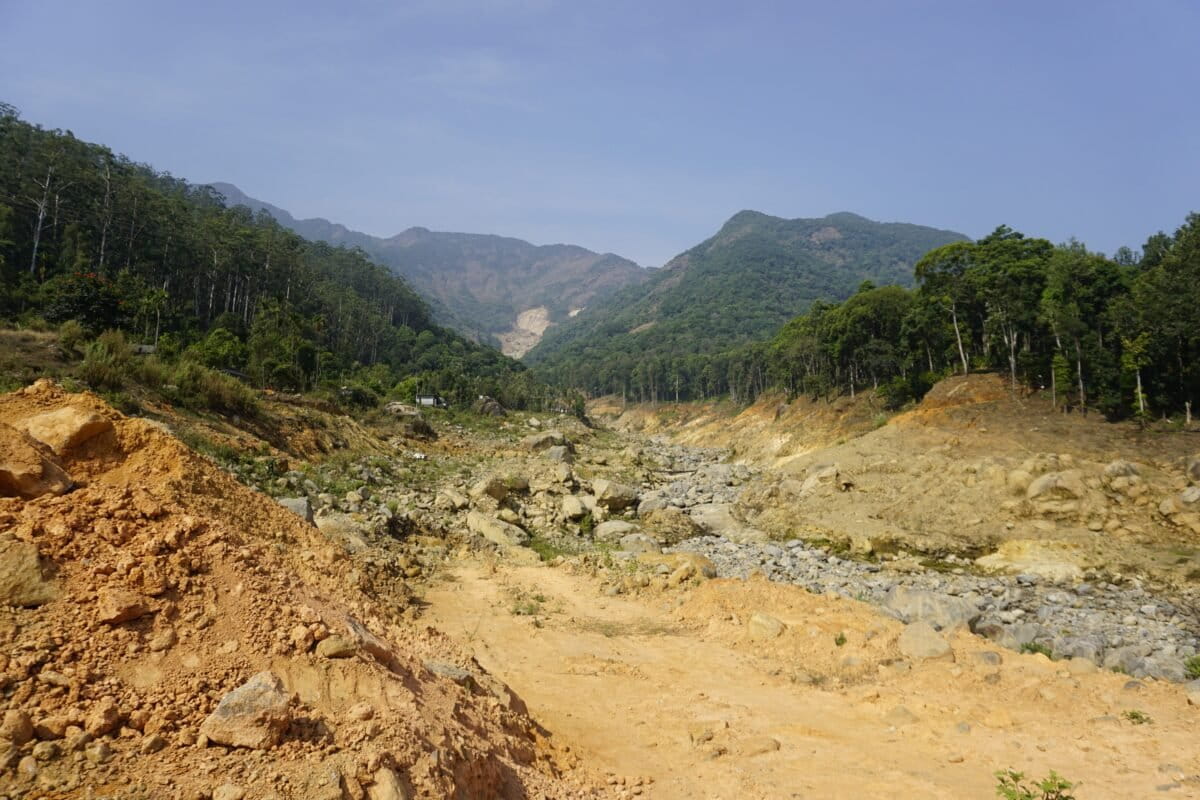
On July 30, 2024, intense rainfall triggered a catastrophic landslide in the Wayanad villages of Chooralmala, Punchirimattam and Mundakkai. Within minutes, torrents of rock, mud and debris swept through the region, destroying around 1,500 homes and killing 266 people. Vast stretches of forests and plantations were also wiped out, severely affecting local livelihoods dependent on coffee, tea and cardamom cultivation.
In the aftermath, the Kerala government announced an ambitious rehabilitation project aimed at rebuilding not just houses but entire communities. The proposed township in Kalpetta was envisioned as a model for long-term disaster recovery, offering survivors safe and permanent housing along with access to essential services.
For families like Bushara’s, the promise of a home represents more than a roof over their heads.
“Moving into the new home will be a relief,” she said. “It’ll be stability of one kind.”
Building back better
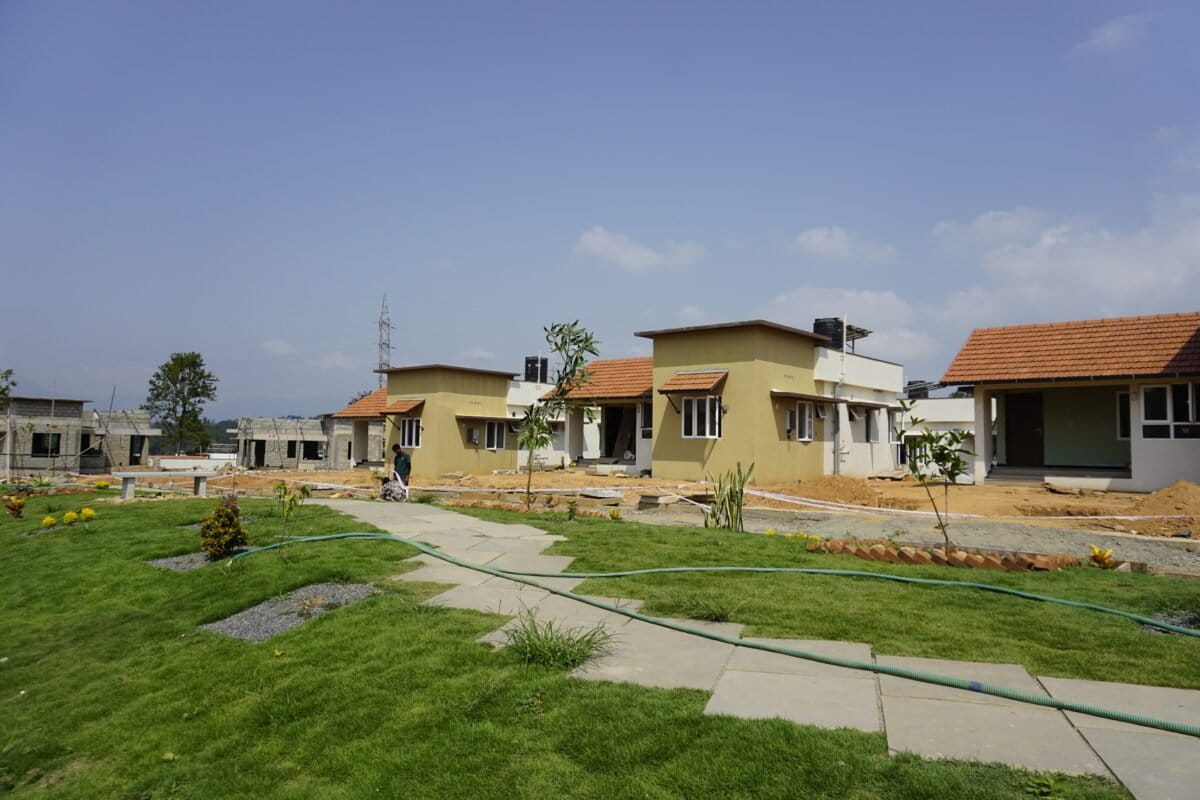
The township is being developed on a 64-acre former tea estate in Kalpetta, roughly 16 to 20 kilometres from the landslide-affected areas. Rows of nearly identical houses now stand where tea bushes once covered the hillside.
According to officials, the location was selected after evaluating 31 possible sites across Wayanad. Experts assessed risks from floods and landslides before determining that the estate offered a safer environment for long-term settlement.
“The township had to come up in a central location, not far from commercial activity, so that every facility is accessible to the community,” said Arun J.O., the township’s Chief Operating Officer.
The rehabilitation plan covers 410 families whose homes were located within the designated landslide and buffer zones and who lacked alternative housing options. In addition, separate homes are being built for 12 Adivasi families who preferred to remain close to their ancestral lands.
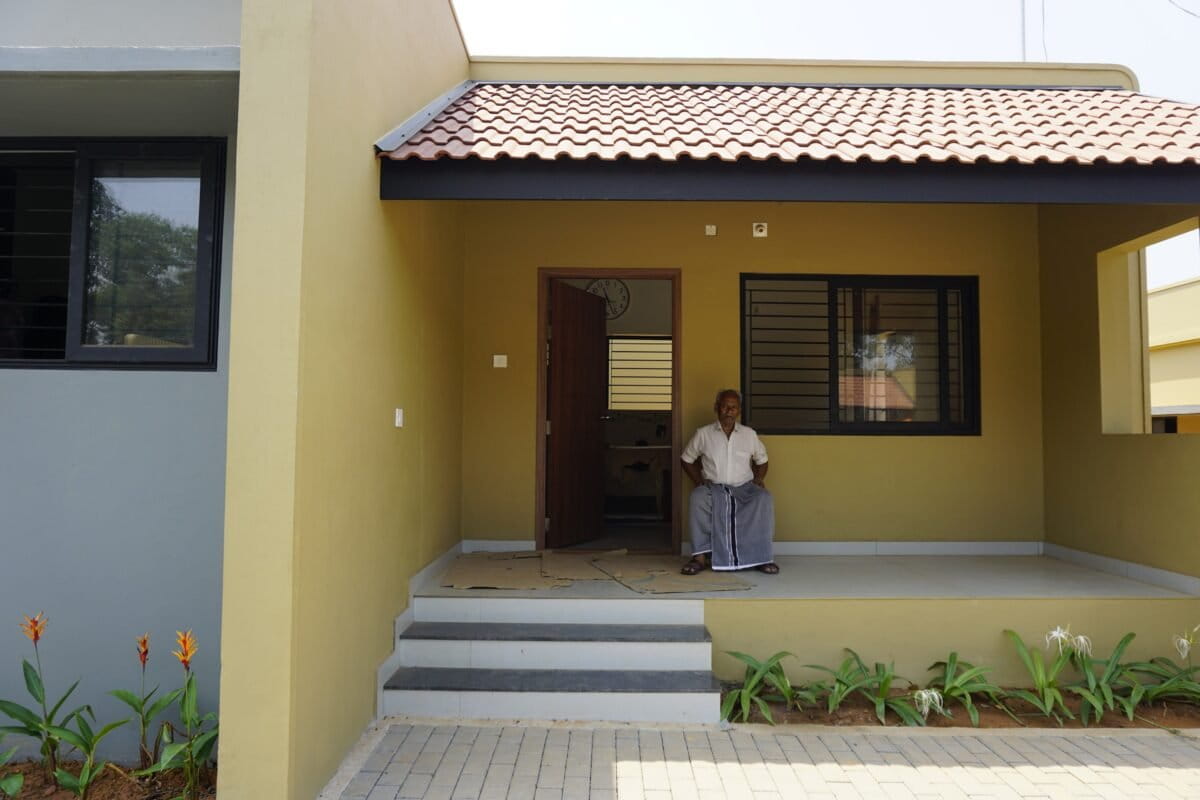
So far, 178 houses have been completed. Each two-bedroom unit includes a study room, work area, solar panels and furnishings backed by long-term warranties. The homes have also been designed with disaster resilience in mind, featuring reinforced structures intended to withstand future hazards.
The township’s planners say the project goes beyond conventional housing schemes. Instead of isolated houses lining roads, clusters of homes have been organised around shared community gardens and open spaces.
“Throughout our consultations, the survivors expressed a desire to live together as a community,” Arun explained.
That feedback heavily influenced the township’s design. Community facilities such as a disaster shelter, healthcare centre, anganwadi, sports ground and waste-management centre are planned as part of the larger settlement.
Urban designer Anees Abdullah said the layout was deliberately created to encourage social interaction.
“We studied several neighbourhood concepts and decided to employ a shared street approach,” he said. “The road network opens up to park-facing blocks rather than houses directly facing roads. This design has proven to be safer for children while facilitating interaction and a sense of community.”
The emphasis on rebuilding social ties reflects a growing understanding that post-disaster recovery involves more than replacing physical structures. For many survivors, losing neighbours, relatives and familiar surroundings has been as traumatic as losing property.
Between hope and uncertainty
Despite the township’s progress, most eligible families have yet to move in. Construction is ongoing, and authorities estimate that the remaining houses and facilities will be completed by October 2026.
The delay has become a source of frustration for survivors who continue to live in rented accommodation or temporary arrangements.
Bushara currently rents a house in Kalpetta. The monthly rent exceeds the government allowance she receives, adding to the financial strain already faced by her family.
Others remain worried about those who were excluded from the rehabilitation package. Eligibility was restricted largely to families whose homes fell within officially demarcated no-go and buffer zones.
Vinita Keyan, who lives just outside the designated boundary in Chooralmala, is among those left out.
“We aren’t eligible for relocation because our house wasn’t affected,” she said. “But we live in fear that something will happen.”
Under the rehabilitation package, eligible families could either accept a home in the township or receive ₹15 lakh as a one-time cash compensation to settle elsewhere. While many chose the township, some opted for alternative housing initiatives run by political and community organisations.
One such survivor is Shahjahan, who moved into a housing project built by the Indian Union Muslim League alongside other members of his surviving family.
“A lot of empty promises were made but only the Muslim League delivered,” he said.
Shahjahan and his family narrowly escaped the landslide, but more than 20 of their relatives died. His father, K.G. Mohammed, suffered a leg injury while fleeing through darkness and debris. Nearly two years later, the injury continues to affect his ability to work.
“What we really miss is the peace and quiet of our home, surrounded by the forest,” Mohammed said. “We’re very happy and grateful for the house, but the next worry for us is stable employment.”
Meanwhile, the government-built township has attracted considerable public attention. Curious visitors regularly tour the site, drawn by its scale, sustainability features and reputation as a pioneering rehabilitation project.
Yet behind the attention and praise are hundreds of families still waiting to begin the next chapter of their lives.
For Bushara, the new house cannot replace what was lost. It cannot bring back loved ones or erase the trauma of that July morning. But it may offer something equally important: a chance to rebuild.
“What’s lost isn’t coming back,” she said. “My mother still struggles with coming out of her depression. Returning to that sense of community will help a lot.”
As construction continues, survivors remain hopeful that the township will eventually deliver not just safer homes, but also the stability, belonging and dignity that disaster took away.