‘I Fear I’ll Retire Before Then’: High Fuel Costs Leave Drivers Stranded
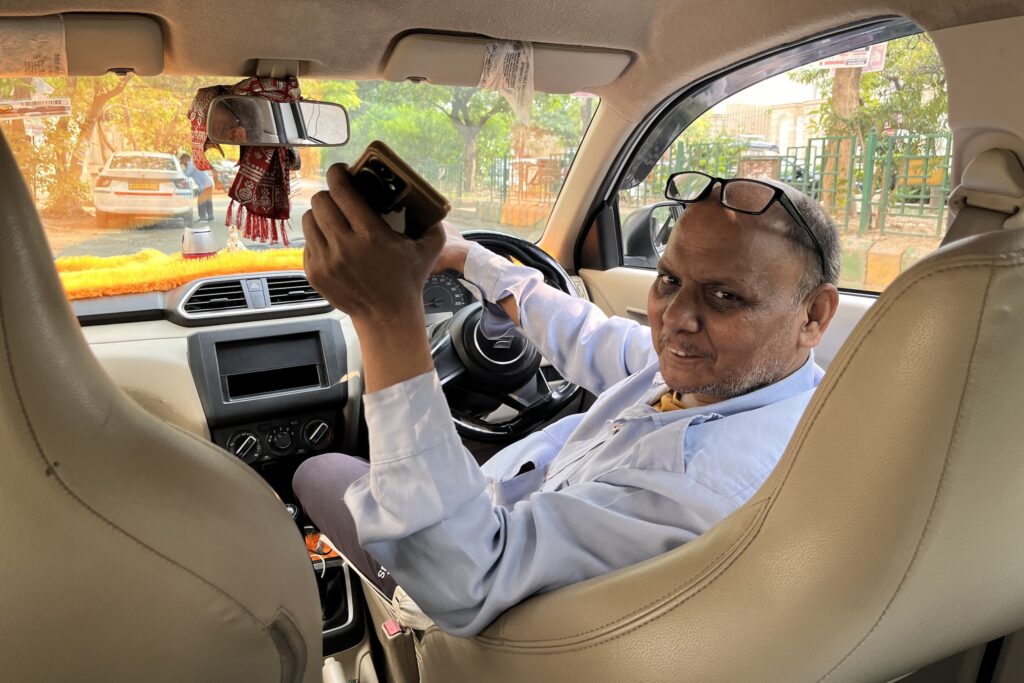
Delhi-based cab driver Ramsurat alternates between petrol and compressed natural gas to manage costs while waiting for EVs to become more affordable (Image: Alok Gupta)
For 60-year-old app-based cab driver Ramsurat, rising fuel prices are more than a temporary inconvenience. “The rising fuel cost keeps eating into my income,” he says from New Delhi, where he now works after leaving his hometown in Uttar Pradesh decades ago.
His struggle with fuel price volatility began in the early 1990s. As a young truck driver, Ramsurat witnessed the impact of the 1990-91 Gulf War between Kuwait and Iraq, which sent fuel prices soaring across India. The surge squeezed the earnings of truck drivers and transport workers, pushing many, including Ramsurat, to migrate to larger cities in search of better opportunities.
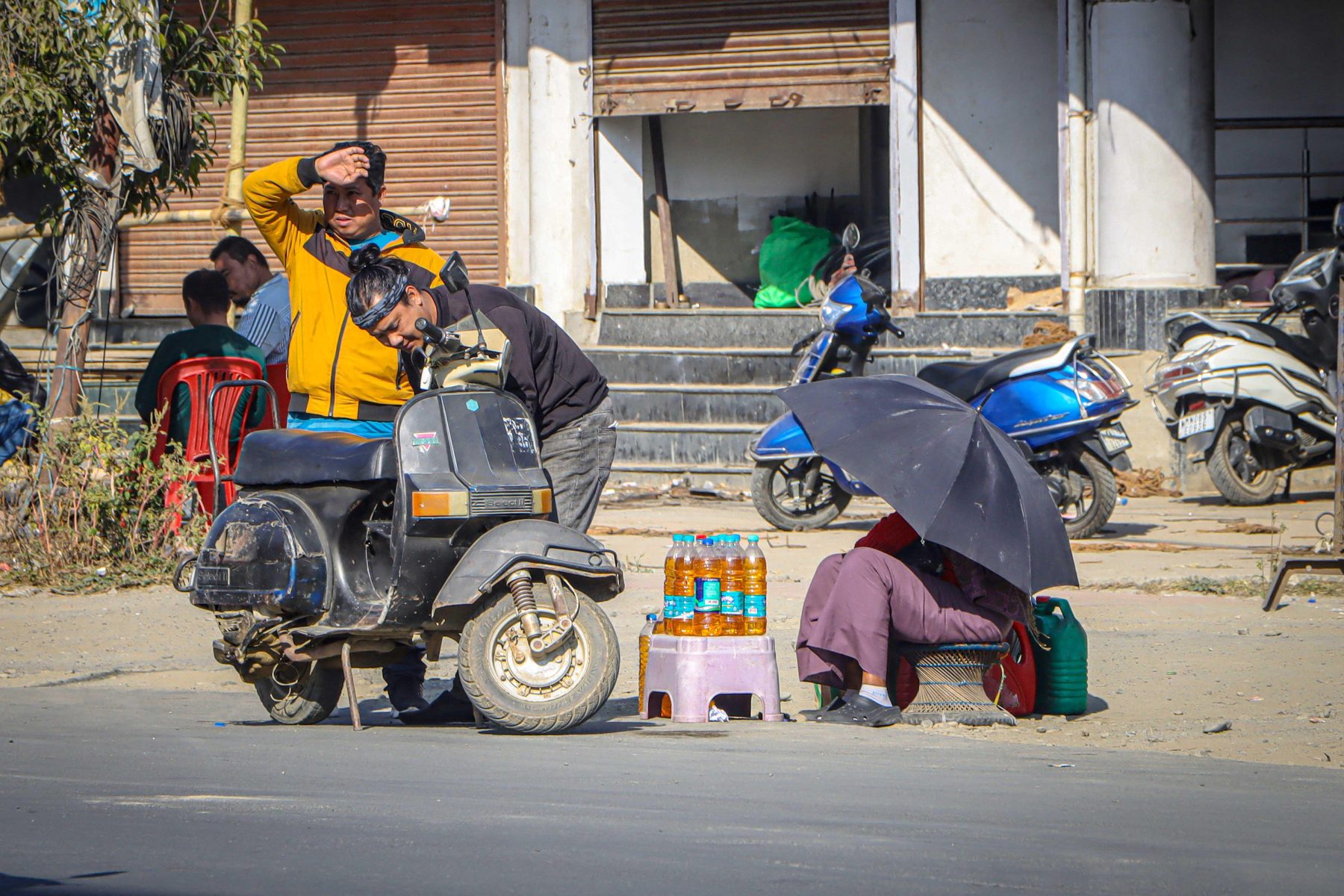
He remembers how drivers coped with the crisis through humour. Fuel tanks on trucks often carried witty slogans such as, “Thoda kam peena meri rani, bahut mehenga hai Iraqi paani” (“Drink less, my queen, the oil from Iraq is pricey”).
More than three decades later, another geopolitical conflict has reignited similar concerns. The closure of the Strait of Hormuz during the US-Iran war has triggered a global fuel crisis, forcing India to revise fuel prices four times since mid-May. Prime Minister Narendra Modi has urged citizens to conserve fuel by using public transport, carpooling and reducing unnecessary travel.
According to Nikit Abhyankar, co-author of a University of California, Berkeley report on India’s transportation sector, every global oil shock delivers a “double whammy effect” for India. “Price of crude oil rises, and it also weakens Indian rupee,” he explains. “A 10% rise in crude oil and a 5% depreciation of the rupee means the cost of crude oil gets expensive by more than 15%.”
The recent conflict has already weakened the rupee significantly against the US dollar, adding to the burden of costly oil imports.
The Berkeley report argues that transitioning to electric vehicles (EVs) could dramatically reduce India’s dependence on imported oil. It estimates that EV adoption could cut crude oil imports by more than 90% and save the country around USD 240 billion annually by 2047.
Yet India remains far from achieving that vision. While EV sales have risen sharply—from about 50,000 units in 2016 to 2.08 million in 2024—they still fall short of the pace required to meet the government’s target of 30% EV penetration by 2030.
For drivers like Pankaj Kumar, affordability remains the biggest barrier. “That’s almost half of my annual income,” he says, referring to the additional INR 1-2 lakh typically required to buy a battery EV or hybrid vehicle. He also points to inadequate charging infrastructure. “I want to own a hybrid electric car, but I don’t see many charging stations within the city and on highways.”
Battery Bottlenecks and China’s Role
One of the key reasons EVs remain expensive in India is the country’s limited domestic battery manufacturing capacity.
A January 2026 study by the Institute for Energy Economics and Financial Analysis (IEEFA) found that India has achieved only 2.8% of its battery manufacturing targets under government incentive programmes. The report highlighted supply chain challenges, policy coordination failures and implementation delays.
In 2021, the government launched a USD 2.47 billion production-linked incentive (PLI) scheme to encourage domestic battery manufacturing under the Atmanirbhar Bharat, or Self-Reliant India, initiative. The aim was to reduce dependence on imports and make EVs more affordable.
However, the scheme encountered several setbacks. Beneficiaries struggled with strict domestic value-addition requirements and ambitious installation timelines. In one embarrassing episode, Hyundai Global Motors, selected under the scheme, withdrew after Hyundai Motor India clarified that it had no connection with the company.
Charith Konda, co-author of the IEEFA study, notes that several selected firms lacked prior battery manufacturing experience. “Beneficiaries also needed Chinese engineers and technicians to set up plants, but there were significant delays in visa approvals,” he says.
Industry representatives argue that battery manufacturing is inherently complex and capital-intensive. The India Energy Storage Alliance (IESA) says technology transfer, workforce development and geopolitical uncertainties have all slowed progress. Nevertheless, the alliance believes the PLI scheme has helped initiate domestic battery production and attract investment.
India’s dependence on China remains substantial. In 2022, the country imported USD 1.8 billion worth of lithium-ion batteries, with 85% originating from China.
Recognising these realities, India relaxed foreign direct investment restrictions on neighbouring countries in March 2026. The move opens the door to greater Chinese participation in sectors such as battery manufacturing.
For China, the timing is favourable. The country currently produces batteries at roughly four times the level demanded by its domestic EV market. Slowing demand and increasing competition have prompted Chinese manufacturers to seek opportunities abroad.
Although India rejected Chinese EV giant BYD’s proposal to invest USD 1 billion in a manufacturing facility in Hyderabad in 2023, cooperation continues through joint ventures. One notable example is the partnership between India’s JSW Group and China’s SAIC Motor under the MG Motor brand.
“Rather than relying on imports of EVs and battery components from China, India should leverage the improving bilateral ties to attract Chinese investment and technical expertise,” argues Konda.
Africa: A New Frontier for Electric Mobility
Even as India struggles to accelerate EV adoption domestically, it is expanding its automotive footprint across Africa.
The continent presents significant opportunities because of its transportation patterns. Two-wheelers account for approximately 85% of registered vehicles in Burkina Faso and 70% in Uganda. These figures closely resemble mobility trends in many parts of India.
Indian manufacturers have successfully capitalised on this similarity. Bajaj Auto commands around 40% of the two- and three-wheeler market across more than a dozen African countries. Other major companies, including Mahindra & Mahindra, TVS and Tata Motors, have established assembly operations across the continent.
“India and Africa share similar transportation systems and challenges,” says Akanksha Golchha of the Centre for Strategic and International Studies. Indian vehicles, she notes, are well suited to local conditions because they are fuel-efficient, durable and capable of handling varied road terrain.
Researchers believe that stronger South-South cooperation could accelerate the shift away from internal combustion engine vehicles, which still account for about 90% of Africa’s transport fleet. Such a transition would reduce oil dependence, lower fuel costs and improve air quality.
For India, Africa could become both a market and a testing ground for electric mobility solutions. Yet the success of that ambition will depend on resolving the challenges at home—especially affordable batteries, robust charging infrastructure and stronger manufacturing capabilities.
Until then, drivers like Ramsurat have little choice but to continue relying on petrol and compressed natural gas. Watching fuel prices rise yet again, he remains uncertain about whether electric mobility will arrive in time to transform his working life.
“I fear by then I’ll retire,” he says.