‘Water Batteries’ Push Raises Landslide Risks In Western Ghats
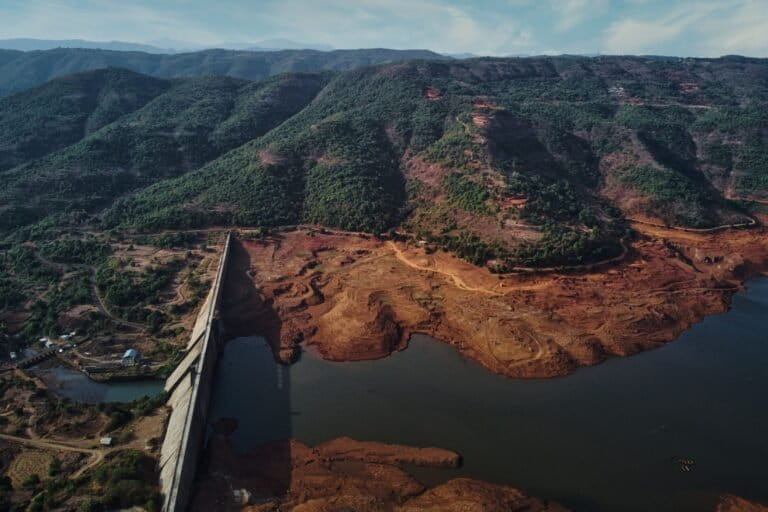
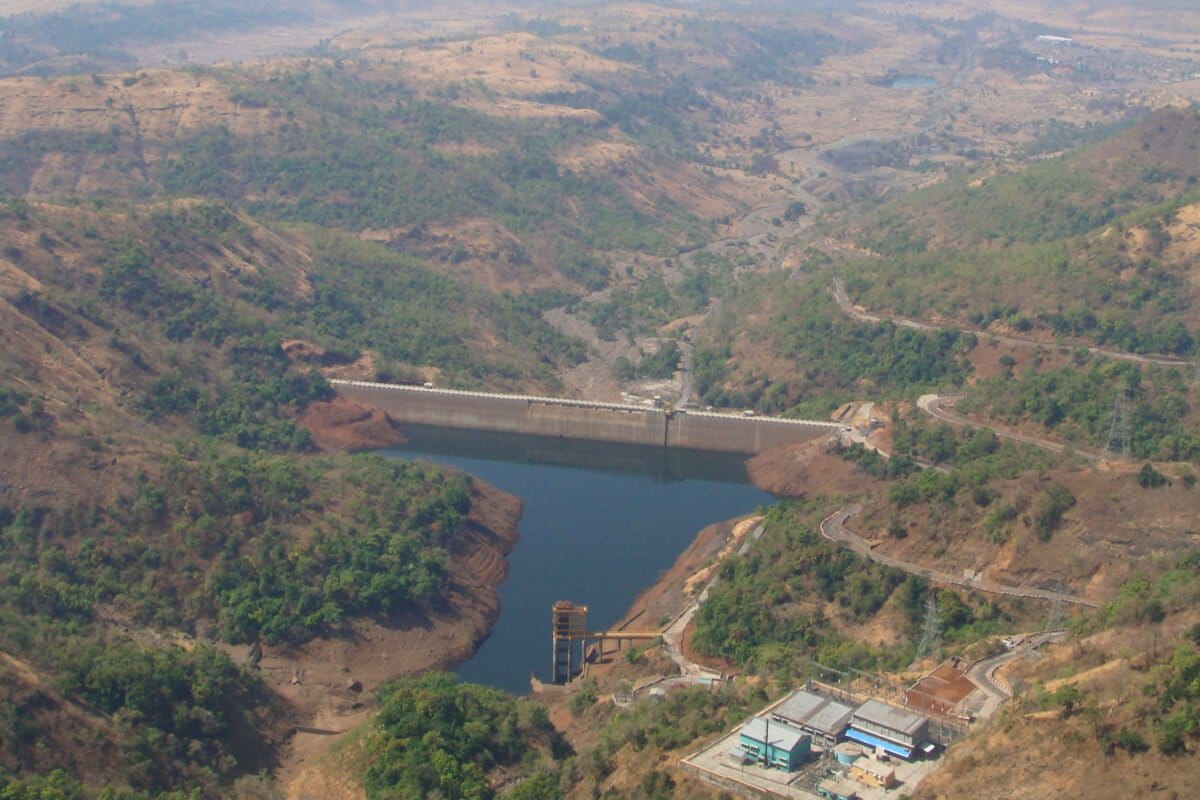
A bird’s eye view of a dam in Maharashtra (Representative image by Dipinder Rainu via Pexels)
-
India’s ambitious push to expand pumped-storage (‘water batteries’) capacity, with Maharashtra accounting for the country’s highest identified potential, is driving major projects into the landslide-prone Western Ghats.
-
Experts warn that blasting, tunnelling and construction in this fragile mountain ecosystem could heighten geological risks, threatening local communities, workers and biodiversity.
-
Weak regulatory oversight, inadequate cumulative impact studies and the absence of mandatory climate-risk assessments raise serious questions about whether India’s clean-energy expansion is prioritising safety and environmental accountability.
In June 2005, heavy rainfall triggered a landslide at Maharashtra’s Ghatghar pumped-storage project, then under construction in Thane district. Rocks, water and debris rushed into the project’s tailrace tunnel, trapping nearly 22 workers. The accident remains a stark warning about the consequences of building major infrastructure in the fragile terrain of the Western Ghats. Nearly two decades later, India’s ambitious expansion of pumped-storage projects risks repeating the same mistakes unless regulators make geological and climate safety central to project approvals.
Pumped-storage projects (PSPs), often described as “water batteries”, use surplus electricity to pump water from a lower reservoir to an upper one. When power is needed, the water is released downhill to generate electricity. As renewable energy becomes a larger part of the electricity grid, this technology can help balance fluctuations in supply and demand.
The Central Electricity Authority’s roadmap envisages India reaching 87 GW of installed PSP capacity by 2034 and crossing 100 GW by 2036. Maharashtra leads the country in identified potential, with 56,355 MW. The state already has 400 MW operational and 2,500 MW under construction. Another 6,300 MW has received CEA approval, while 24,800 MW remains at the survey and investigation stage.
“As the grid becomes renewable-heavy, pumped storage serves as a viable long-duration storage technology,” says Disha Aggarwal, a fellow at the Council on Energy, Environment and Water. It is important for managing “fluctuations in electricity supply and demand across days and seasons, and to meet unexpected shortfalls”.
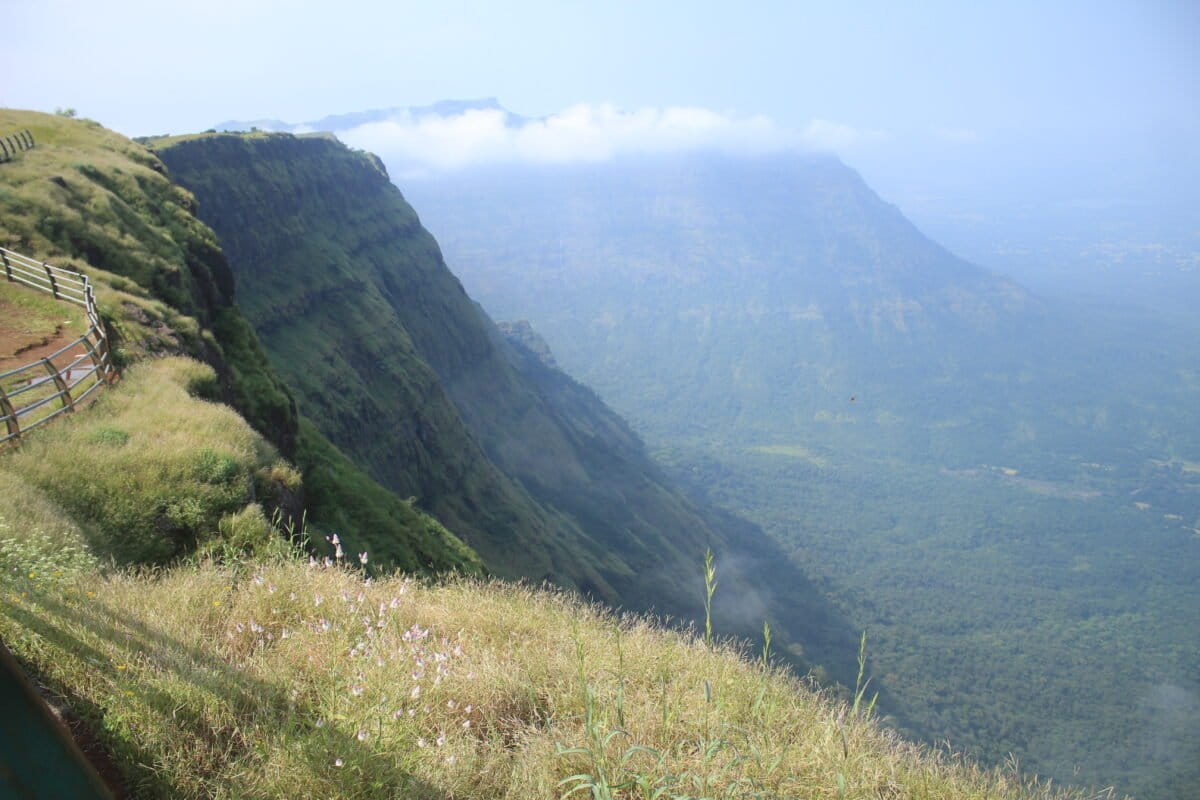
But the case for energy storage cannot become a blanket justification for projects in ecologically and geologically vulnerable locations. Several of Maharashtra’s proposed projects are in the Western Ghats, a biodiversity hotspot where steep slopes, heavy monsoon rainfall and a history of landslides demand unusually rigorous scrutiny.
Regulators cannot outsource responsibility for landslide risks
The Geological Survey of India has identified around 90,000 square kilometres of the Western Ghats and Konkan uplands in western Maharashtra as landslide-prone, accounting for roughly 30% of the state. Maharashtra’s 2024 Landslide Management Plan identified 485 villages requiring immediate mitigation and recorded 145 landslide-related deaths between 2018 and 2024.
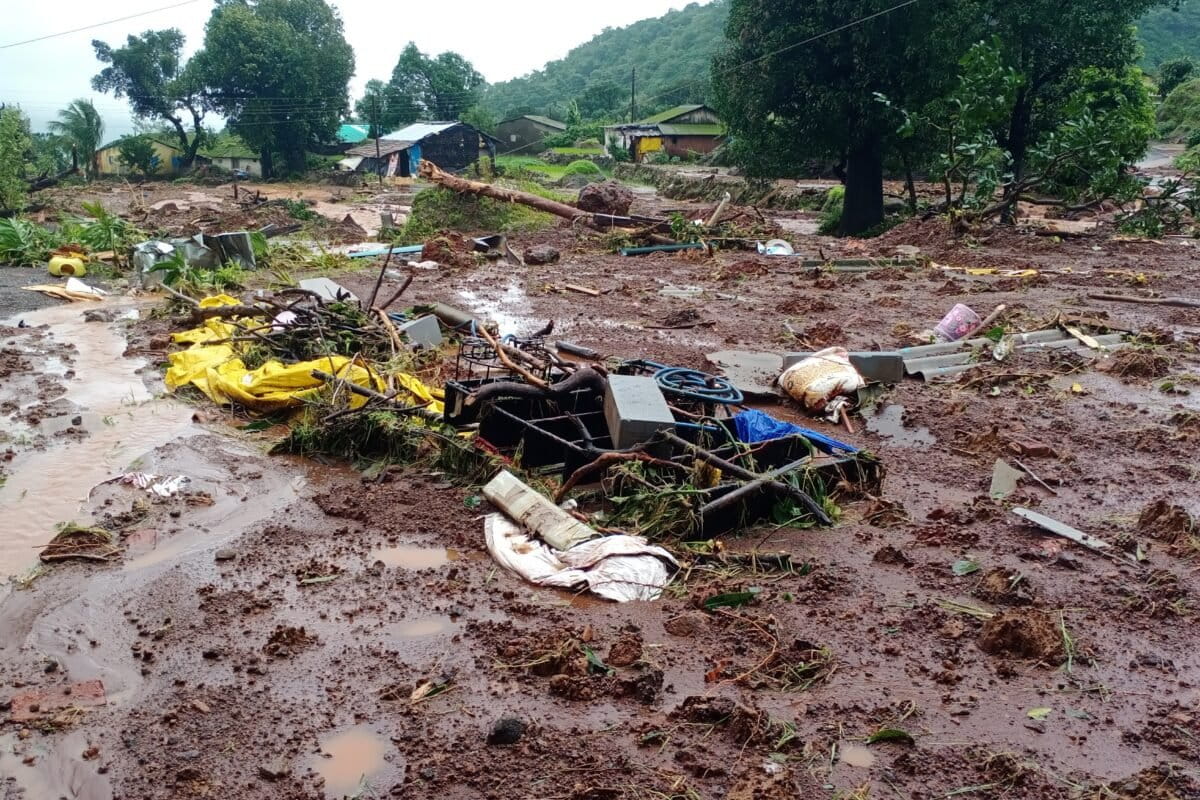
The risks are particularly evident in Mahad taluka, where a 2021 landslide in Taliye village killed 85 people. The area is proposed to host two 1,500 MW projects: JSW’s Pane Pumped Storage Project and Adani Green Energy’s Warasgaon-Warangi project. Two more PSPs are proposed in the Junnar-Ambegaon region, where the 2014 Malin landslide killed 153 people.
“Blasting and tunnelling destabilise slopes, contributing to landslides. This puts both residents and workers at risk,” says Parineeta Dandekar of the South Asia Network on Dams, Rivers and People (SANDRP).
The problem is not simply that landslides occur in the Western Ghats. It is that project approvals must account for where they have occurred, why slopes fail and how construction could increase the danger. Shishir Rao, a postdoctoral researcher at the University of Texas at San Antonio, says project assessments he has examined do not adequately account for historical landslide vulnerability. Their emphasis on engineering assessments of slope stability is insufficient in a landscape experiencing repeated failures.
Vivek S. Kale, former adjunct professor of Earth Sciences at IIT Bombay, describes the Western Ghats as “a fragile ecosystem and geological system”. He argues that safer locations and infrastructure alignments must be identified before construction begins, rather than relying on mitigation after damage occurs.
This places a clear responsibility on regulators. Project developers should not be allowed to determine the suitability of sites through assessments commissioned by themselves and then treat those assessments as sufficient proof of safety. Kale warns against exclusive reliance on private consultants appointed by developers. Independent geological experts, ecologists, social scientists and affected communities must have an effective role in scrutinising proposals.
At present, different agencies examine different aspects of projects. The Central Water Commission assesses foundation and seismic issues, the Geological Survey of India examines geological aspects, and the Central Soil and Materials Research Station reviews geotechnical aspects for projects requiring CEA concurrence. But the existence of multiple technical clearances does not automatically guarantee an integrated assessment. Off-stream closed-loop projects are also exempt from CEA concurrence, creating questions about whether comparable scrutiny applies across project categories.
As Rao points out, ecologists and social scientists often enter the process after a project location has effectively been decided. “Involvement doesn’t necessarily imply similar or equal authority to influence decisions.” Consultation without decision-making power is not meaningful regulatory oversight.
Climate safeguards must be mandatory, not voluntary
The regulatory framework remains equally weak on cumulative and climate risks. Government notifications in 2023 brought PSPs more explicitly into the environmental-clearance framework, but subsequent changes eased requirements for certain exploratory activities. In 2025, the environment ministry formalised an exemption allowing specified exploratory drilling in forest areas without treating it as forest-land diversion, subject to conditions.
Such procedural relaxations make it more important, not less, for regulators to ensure that early-stage investigations do not become a route to establishing projects before their wider impacts are understood.
Dandekar argues that assessments must move beyond individual project boundaries. “Impact assessments should not be restricted to a particular project,” she says, calling for studies of the “combined impact of multiple projects” on the Western Ghats. Without cumulative assessments, regulators risk approving a series of projects whose combined effects on slopes, rivers, forests and communities are far greater than those captured in individual reports.
Climate-risk assessment is another glaring gap. The Environmental Impact Assessment framework does not make such assessments mandatory, leaving safeguards partly dependent on lenders and voluntary standards. Dandekar’s warning is unequivocal: “Unless it is legally enforceable, it does not have teeth.”
The consequences of inadequate scrutiny are evident in Nepal. Flash floods along the Nepal-China border in August 2026 damaged or destroyed hundreds of megawatts of hydropower capacity. An expert panel had previously flagged the absence of a climate-resilience assessment for the Upper Trishuli-1 project, among the worst affected.
India’s regulators must not wait for a similar disaster to expose the cost of weak oversight. They need mandatory climate-risk assessments, independent geological investigations, cumulative impact studies and transparent disclosure of how public objections and expert recommendations influence final decisions. Approvals should also carry enforceable safety conditions, independent monitoring and clear accountability when developers fail to comply.
Pumped storage may be essential to India’s renewable-energy ambitions. But the urgency of the energy transition cannot excuse shortcuts in environmental governance. “Balancing climate objectives with climate risks should be a key consideration rather than an afterthought,” says Aggarwal. That principle must be reflected in binding rules and regulatory decisions, not left to the discretion of project developers. The state’s responsibility is not merely to facilitate new energy infrastructure, but to ensure that its costs are not transferred to vulnerable communities and ecosystems.