Climate Change, Mining Endanger Meghalaya’s Ancient Caves
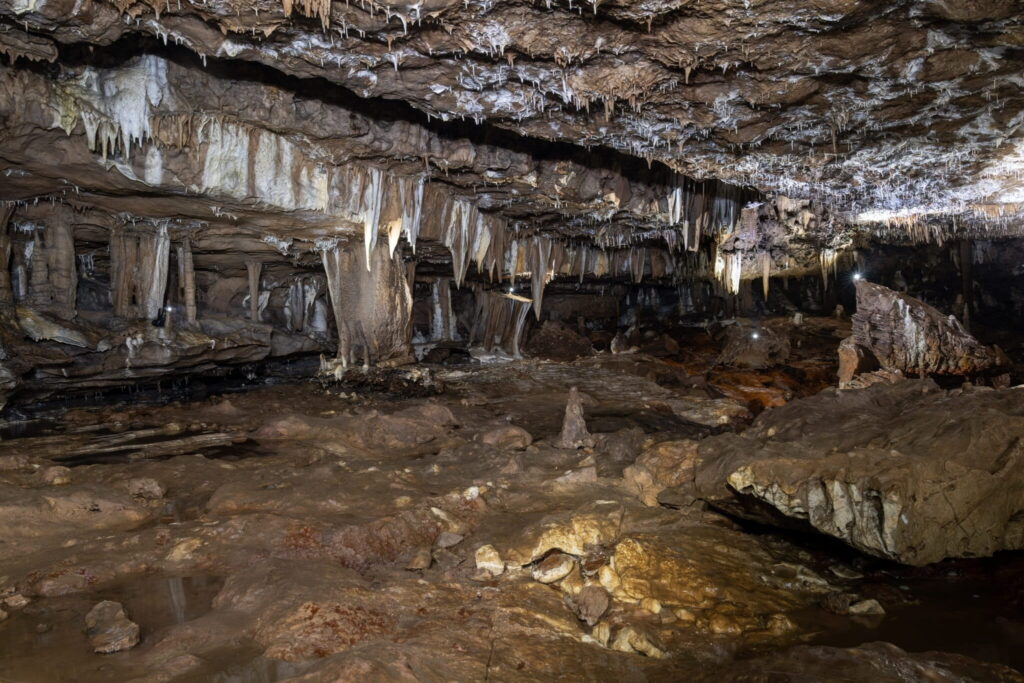
A view of Mawmluh Cave (Images by Pratik Chakarborty)
Meghalaya’s limestone caves preserve an extraordinary record of Earth’s climatic past, including evidence of the 4,200-year-old event that gave its name to the Meghalayan Age. But climate change and mining are threatening these fragile geological archives and the unique ecosystems they shelter. With regulation limited, local communities are exploring responsible cave tourism as a way to protect their subterranean heritage while creating livelihoods.
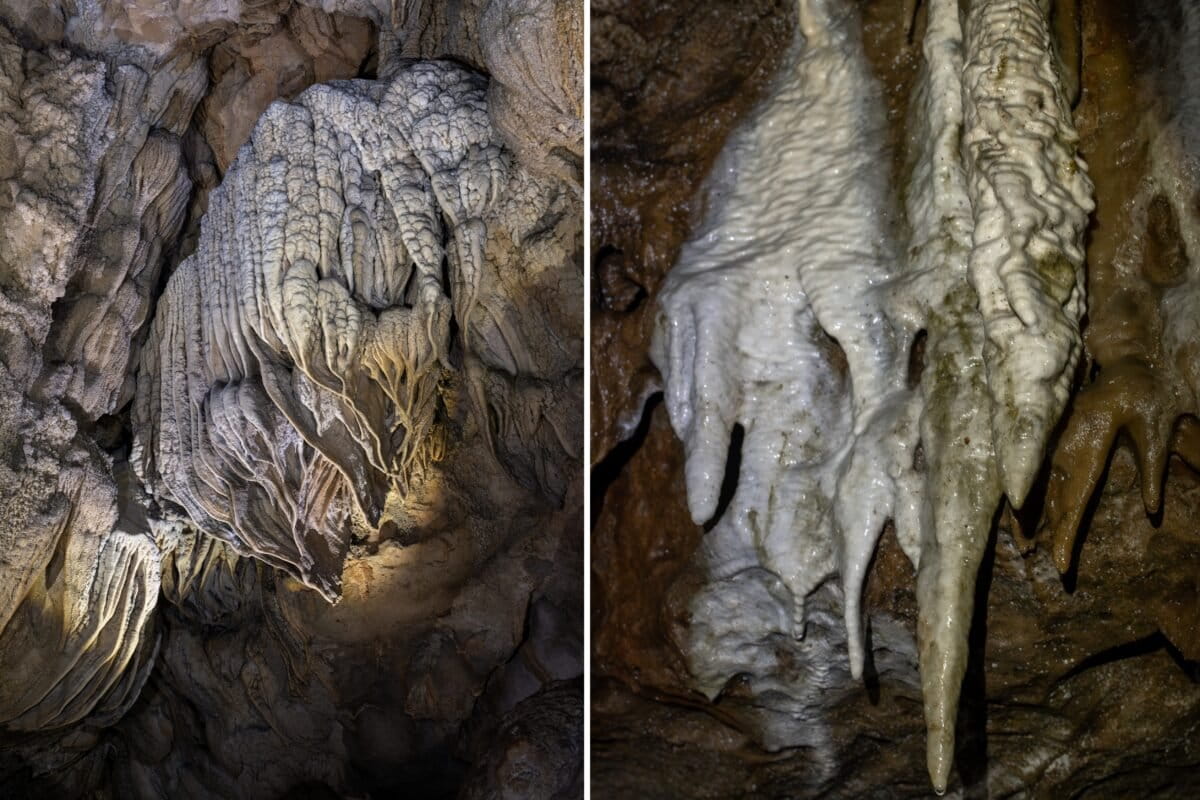
It is an autumn morning at Mawmluh Cave, near Cherrapunji in Meghalaya. Twenty-seven-year-old Milton Marak switches on his headlamp and leads a group into the darkness. Inside, the beams reveal towering stalagmites, delicate soda straws and curtains of calcite hanging from the ceiling.
Marak first entered the 7.2-kilometre cave at 18, carrying a borrowed torch. After years of training, he knows its passages well enough to guide visitors without a map.
“We’ve deliberately kept the cave natural,” he says. “If we install lights, it becomes a showroom. The real experience is entering a naturally dark cave with only your own light.”
Visitors are instructed not to touch formations, litter or carve their names into the walls. Only 25 people are permitted inside each day. The restrictions are intended to protect a landscape that took thousands of years to develop.
Mawmluh is more than a tourist destination. Beneath Meghalaya’s limestone hills, hundreds of caves preserve a record of the planet’s climate history. Today, however, changing rainfall patterns and unregulated mining are putting this archive at risk.
A climate archive beneath the hills
Rainwater filtering through limestone carries dissolved minerals into caves. Over thousands of years, these minerals accumulate in layers, forming stalagmites that preserve evidence of past rainfall, droughts and environmental change. Scientists use uranium-thorium dating to establish when the layers formed and analyse their chemistry to reconstruct changes in the Indian summer monsoon.
“They are like books in a library,” says Sebastian Breitenbach, a paleoclimatologist at Northumbria University. “You just have to learn the language and then you can read the past.”
One stalagmite from Mawmluh contains evidence of a major weakening of the Indian summer monsoon around 4,200 years ago. The event coincided with periods of drought and societal change in regions including the Indus Valley, Mesopotamia and Egypt. The cave formation was selected as the geological marker for the beginning of the Meghalayan Age, formally recognised in 2018.
But the climatic changes scientists study through these formations are now threatening the caves themselves. Meghalaya is experiencing increasingly erratic rainfall, with shorter wet seasons and more intense downpours. Heavy flows can carry sediment underground, damaging formations and changing the chemical conditions required for their growth.
“It’s ironic,” says Jaishree Sanwal Bhatt, a geologist at the Jawaharlal Nehru Centre for Advanced Scientific Research. “The climate changes we study in these records are now putting those records at risk.”
Stalagmites need a steady supply of infiltrating water to grow. If that supply stops, growth ceases, leaving a permanent gap, known as a “hiatus”, in the climate record. Prolonged dry spells and sudden floods can also threaten insects, fish and crustaceans dependent on stable underground water.
Mining and the cost of destruction
Mining presents an immediate threat. Limestone quarrying can destroy caves by removing the rock that contains them, while coal mining can disrupt groundwater flows and introduce pollutants into underground streams.
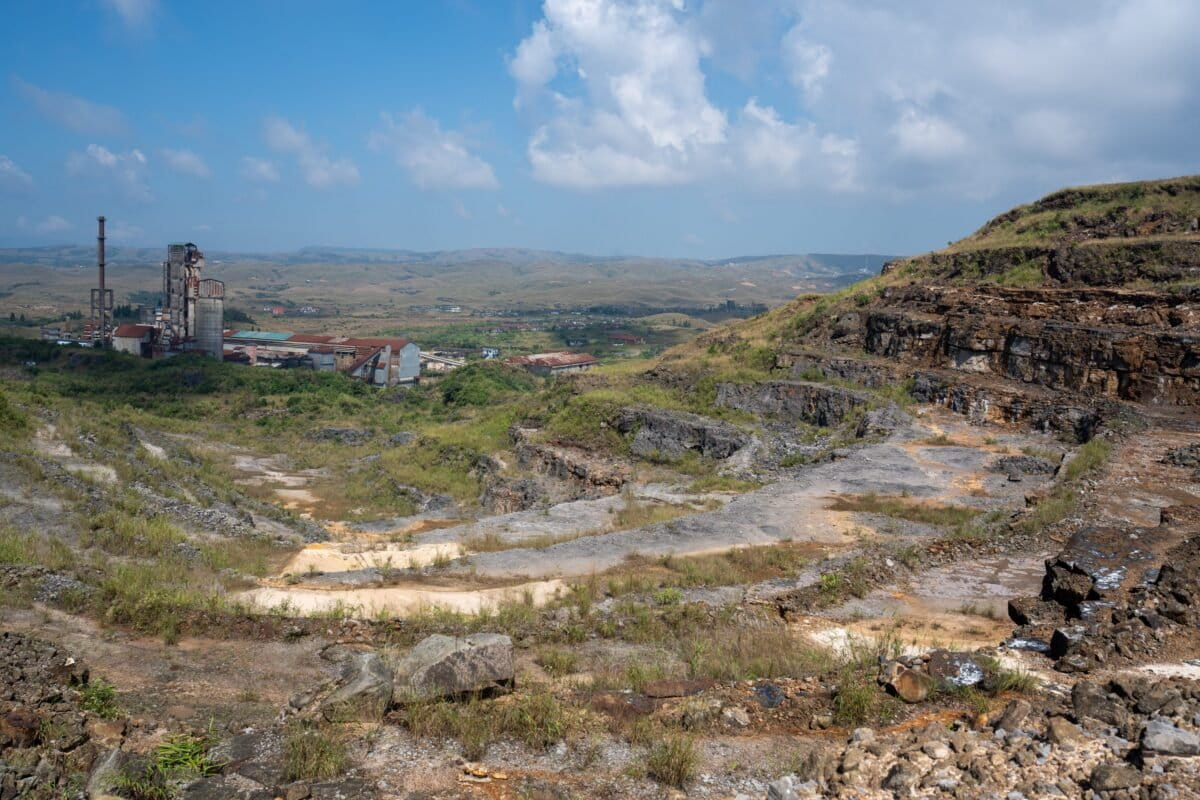
“I remember standing inside Mawmluh Cave and hearing blasting from a nearby limestone quarry,” Breitenbach recalls. “Not a great experience.”
Coal dust, oil, plastic waste and sulphur can alter mineral formation and damage fragile ecosystems. Despite the National Green Tribunal’s 2014 ban, illegal rat-hole mining continues. The state government has registered more than 1,000 cases since the prohibition. An explosion at an illegal mine in East Jaintia Hills earlier this year killed 27 miners and injured nine.
Bhatt says the destruction is irreversible. Unlike forests, cave formations cannot regenerate once removed. Quarrying can collapse passages and erase structures that took tens of thousands of years to develop.
The damage also threatens species adapted to perpetual darkness. Inside Mawmluh, Marak points his headlamp towards transparent freshwater shrimp, white crabs, spiders, cave crickets and worms. Researchers have also discovered species found nowhere else, including Neolissochilus pnar, believed to be the world’s largest known subterranean fish.
Brian D. Kharpran, who founded the Meghalaya Adventures’ Association in 1990, has spent three decades documenting more than 1,700 of the state’s estimated 2,000 caves. He argues that even so-called scientific mining requires the destruction of forests, hills and limestone landscapes. A public interest litigation he filed in the Supreme Court in 2007 seeking protection from quarrying and mining was dismissed.
Communities seek a way forward
With regulation limited, some villages are turning to community-managed tourism. Quenty Mary Jallong, 24, recently completed a nature-guide training programme under the association. She hopes to work with her village council to develop a local cave as a carefully managed tourist destination.
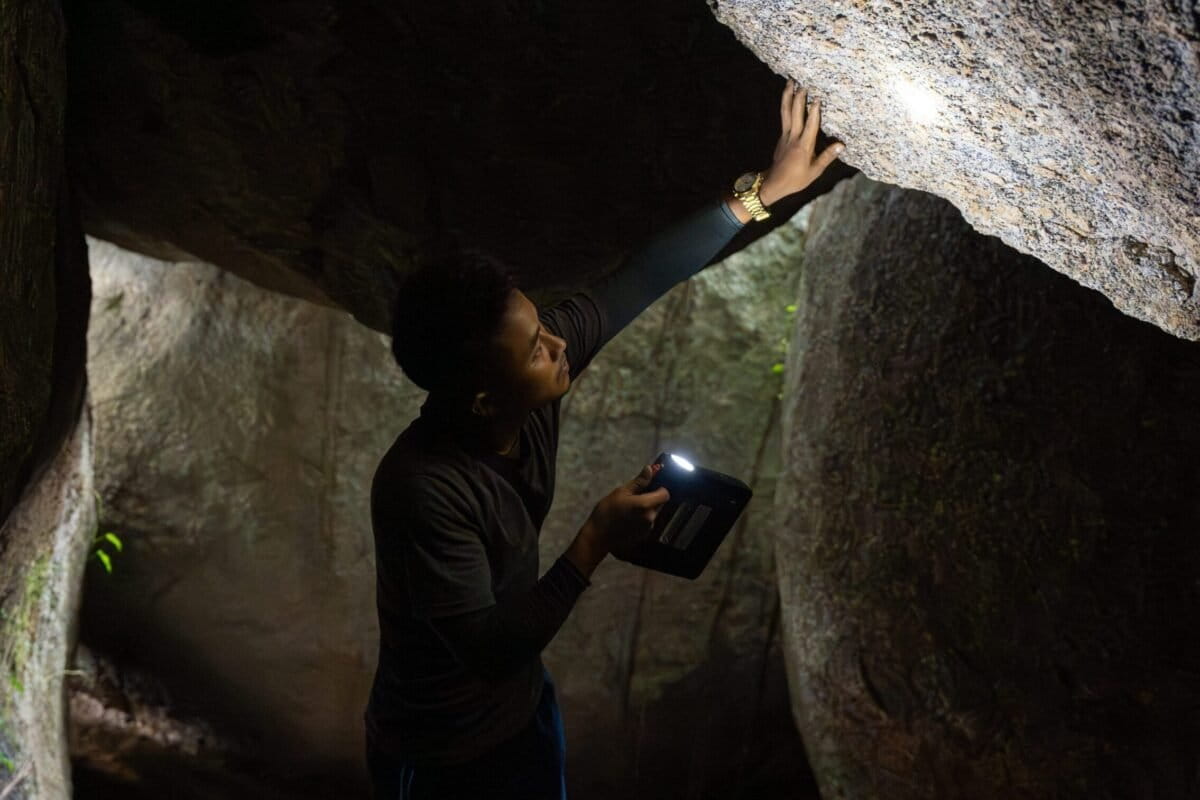
“I wanted to learn what lies inside,” she says. “Jobs are very difficult to find in our village. Most opportunities would require leaving the village. But I would rather help create opportunities here, within my own community.”
Young guide Wanpylnbiang, 22, shares that ambition. Having left school after Class 12 because his family could not afford further education, he hopes responsible tourism will allow young people to earn a living without leaving their villages.
Kharpran’s association has trained around 100 local youths as cave guides and worked with village councils to promote conservation. He advocates opening only a small number of caves to visitors, leaving ecologically sensitive systems protected.
“Unless locals benefit from cave protection, mining will be an appealing alternative,” he says.
Scientists, however, caution that tourism alone cannot safeguard the caves. “Ecotourism is important, but conservation must also be guided by science,” Bhatt says. She calls for stronger mining regulations, scientifically defined buffer zones, sustained monitoring and collaboration between researchers, policymakers and communities.
At Mawmluh, Marak watches another group disappear into the darkness. “Earlier, we had very few visitors,” he says. “Today, hundreds of people come every year to experience the cave. That has made me realise how important it is to preserve it so future generations can experience it too.”
(Published under Creative Commons from Mongabay-India)