‘Notebandi’ To ‘Votebandi’: Cong Says Modi Govt Eroding Democracy

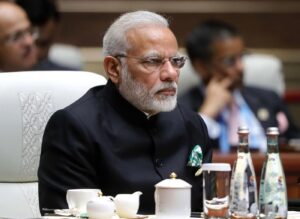
FILE PHOTO: Congress leader Jairam Ramesh has alleged that while demonetisation dealt a severe blow to people's earnings and livelihoods, the Modi government was now attacking their ability to choose those in power and hold them accountable
- Congress leader Jairam Ramesh draws a parallel between 2016 demonetisation and alleged “votebandi”, accusing the Modi government of eroding voting rights.
- Ramesh targets Prime Minister Narendra Modi and Amit Shah over alleged “vote theft”, linking it to rising inflation, unemployment and the erosion of citizens’ rights.
- Congress frames the fight as a defence of voting rights and democratic accountability, rallying behind the slogan, “Vote chor, gaddi chhor”.
The Congress has accused the Narendra Modi-led government of weakening India’s democratic institutions and undermining citizens’ voting rights, drawing a parallel between the 2016 demonetisation exercise and what it termed “votebandi” or vote suppression.
Congress general secretary in-charge of communications Jairam Ramesh alleged that while demonetisation dealt a severe blow to people’s earnings and livelihoods, the government was now attacking their ability to choose those in power and hold them accountable.
In a post on social media platform X, Ramesh said, “‘Notebandi’ and ‘votebandi’ are two sides of the same coin. Back then, in 2016, driven by the arrogance of power, the government attacked people’s earnings and livelihoods. Today, it is attacking their votes and their voices.”
The comparison comes amid the Congress’s sustained allegations of electoral irregularities and its criticism of the Election Commission’s handling of electoral rolls. The party has argued that the deletion of eligible voters’ names and other alleged irregularities threaten the foundation of representative democracy.
Targeting Prime Minister Narendra Modi and Union Home Minister Amit Shah, Ramesh described what he called “vote theft” as a direct assault on citizens’ rights. He alleged that the government was seeking to weaken the most important instrument through which ordinary people can question those in power and demand accountability.
‘Vote theft’ and the erosion of accountability
Ramesh said the vote was not merely a means of electing a government but a powerful tool through which citizens could influence public policy and ensure that their concerns were heard. For the poor, labourers, farmers, marginalised communities, young people and the middle class, he argued, electoral participation was particularly important because it offered a way to challenge decisions that affected their lives.
He alleged that the Modi government had increasingly distanced itself from public concerns and was prioritising the interests of a handful of corporate groups over those of ordinary citizens.
The Congress leader linked what he described as the weakening of electoral accountability to several economic and social concerns, including rising inflation, unemployment, farmers’ distress and the erosion of rural employment guarantees.
“Vote theft”, he suggested, had consequences extending beyond electoral politics. When citizens’ votes lose their power, governments face fewer incentives to respond to public grievances, he argued. This, in turn, allows those in power to disregard the economic hardships and everyday concerns of the people.
Ramesh also criticised the government’s decision to replace the Mahatma Gandhi National Rural Employment Guarantee Act (MGNREGA) with a new system, alleging that the change weakened the employment rights of rural workers.
He said inflation had eaten into household savings, unemployment had put the future of young people at risk, and policy decisions favouring corporate interests had further marginalised ordinary citizens. These concerns, he argued, underscored the importance of protecting the vote as a means of holding the government responsible for its actions.
The Congress’s criticism also raises questions about the role of independent institutions in protecting electoral democracy. The Election Commission is constitutionally mandated to conduct free and fair elections, and allegations of voter deletions and electoral irregularities have intensified calls for greater transparency in the preparation and revision of electoral rolls.
Congress turns voting rights into a wider political fight
Ramesh maintained that the right to vote was inseparable from other constitutional and democratic rights. A citizen’s vote, he said, was also a means of demanding answers on food security, employment, farmers’ incomes and the financial stability of the middle class.
He alleged that attempts to weaken voting rights would diminish the ability of citizens to question government policies and hold elected representatives accountable. The Congress, he said, was therefore fighting not merely to protect electoral participation but to safeguard the broader rights of every citizen.
The party has increasingly sought to frame the issue of alleged electoral manipulation as a question of democratic accountability rather than a dispute confined to election procedures. By linking voting rights with livelihoods, employment and economic insecurity, it is attempting to make electoral integrity a central issue in its political challenge to the government.
Ramesh concluded his post with a slogan directed at the prime minister and the ruling establishment, seeking to connect the alleged suppression of votes with what he described as a wider theft of citizens’ rights and the popular mandate.
“From ‘Notebandi’ to ‘Votebandi’, from the theft of votes to the theft of rights, from the theft of a popular mandate to the theft of accountability — vote chor, gaddi chhor,” he said.
The remarks sharpen the Congress’s attack on the Modi government, placing the protection of voting rights at the centre of its campaign against alleged electoral irregularities. They also underline a larger democratic concern: elections cannot ensure meaningful accountability if citizens lose confidence that their votes are being fairly counted and their voices genuinely represented.