The Uneasy Question Of Safety For Northeast Indians In Delhi
Pratirodh Bureau Sep 8, 2026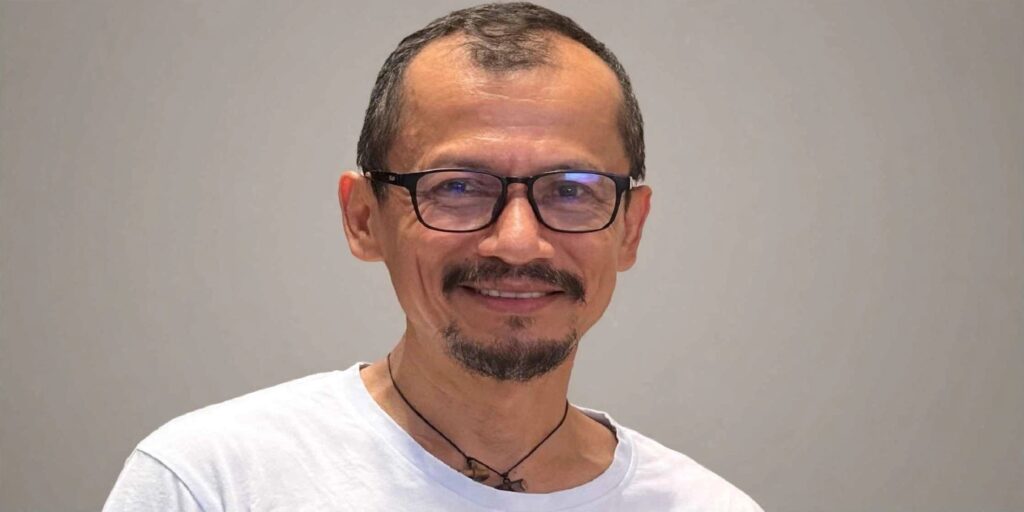
Manipur guitarist Chongtham Vikram Singh was beaten to death in Delhi for objecting to noise at a dhaba
The killing of Manipuri musician Chongtham Vikram Singh in South Delhi has reopened a deeply uncomfortable question: how safe are people from Northeast India in the national capital? Singh, 55, was allegedly assaulted by a group of men outside his home in Kilokari after objecting to noise late on September 6. He was taken to hospital but died from his injuries the following morning. Delhi Police have arrested seven accused and detained a minor. At this stage, police have not established that the assault was racially motivated.
That distinction matters. It would be premature to label Singh’s killing a hate crime without evidence establishing motive. Yet it would be equally inadequate to treat the incident as an isolated episode of neighbourhood violence and ignore the wider experience of Northeast Indians in Delhi.
For many from the region, the fear is not simply of one extraordinary act of violence. It is the accumulation of everyday hostility: racial slurs, mocking of physical features, stereotypes about food and culture, harassment in public spaces, discrimination in housing and employment, and the casual assumption that people from the Northeast are somehow less Indian or permanently foreign.
Singh’s death has therefore resonated far beyond the immediate circumstances of the assault. His killing has brought back memories of earlier cases, including the 2014 death of Arunachal Pradesh student Nido Taniam in Delhi after he was mocked over his appearance and subsequently assaulted. The case became a national flashpoint over racial discrimination against people from the Northeast.
When racism becomes casual
Racism does not always announce itself through violence. Often, it begins as something apparently trivial: a joke about someone’s eyes, an imitation of an accent, a slur about eating momos, or the assumption that a person from Manipur, Mizoram, Nagaland or Arunachal Pradesh must be foreign.
This casual racism matters because it establishes a hierarchy of belonging. A person may be legally and constitutionally Indian, yet repeatedly be told through words and behaviour that they do not look Indian enough.
Recent incidents demonstrate that this is not merely an old problem. In February 2026, three Arunachal Pradesh women in Malviya Nagar, Delhi, were allegedly subjected to racial abuse during a neighbourhood dispute. Police arrested a couple in connection with the case.
Such incidents help explain why Singh’s death has generated anxiety within the Northeast community. The question being asked is not necessarily whether every violent incident against a Northeastern person is racist. It is whether a broader environment of stereotyping and othering makes such communities particularly vulnerable to harassment and violence.
The danger of “casual” violence
There is another dimension to Singh’s killing that should not be overlooked: the normalisation of physical aggression.
According to reports, what began as an argument over noise escalated into a fatal assault. A neighbour recalled initially believing that the disturbance was merely a minor altercation.
This is precisely what makes the case disturbing. A disagreement that might ordinarily end with an argument instead became deadly. In a crowded city where disputes over noise, parking, street activity or neighbourhood behaviour are common, violence cannot become an accepted way of settling everyday disagreements.
For Northeast Indians, however, ordinary vulnerability can acquire an additional racial dimension. If a person is already perceived as an outsider, a verbal confrontation can more easily become an encounter shaped by prejudice, stereotyping or dehumanisation—even when racism is not ultimately established as the motive.
Delhi’s unfinished fight against prejudice
Delhi has repeatedly confronted this problem, yet progress remains incomplete. A recent assessment noted the enormous gap between complaints and convictions in cases involving racial prejudice against Northeast Indians, pointing to thousands of FIRs but very few convictions.
That gap has consequences beyond individual cases. If victims believe that reporting abuse will accomplish little, minor incidents can go unreported until they become serious. If offenders believe racial insults are merely jokes and physical intimidation is simply a neighbourhood dispute, the boundary between casual prejudice and serious violence becomes dangerously blurred.
The answer is not to declare Delhi uniformly unsafe or to suggest that every Delhi resident is hostile to Northeasterners. Millions of people from the Northeast live, work, study and build communities in the capital, and many experience solidarity and acceptance. But safety cannot be measured only by the absence of spectacular crimes. It also depends on whether people can walk through their neighbourhoods without being mocked, threatened or treated as perpetual outsiders.
Singh’s death should therefore lead to two simultaneous demands: a thorough investigation into what happened and a broader reckoning with the conditions that make Northeast Indians feel vulnerable in metropolitan India.
As political leaders and community organisations have already emphasised, justice for Singh must be swift and impartial. But justice cannot end with arrests. Delhi needs stronger police sensitisation, effective responses to racial abuse, greater accountability for hate-driven harassment and sustained public education about India’s extraordinary ethnic diversity.
The central lesson is simple: racism does not begin with a killing. It begins when difference is made into an excuse for humiliation, exclusion and aggression. Singh’s death should compel Delhi to confront not only the violence that took his life, but also the everyday prejudice that makes so many people from the Northeast wonder whether they truly belong in the city they call home.