‘GDP Growth Can’t Conceal Falling Rupee And Unemployment In India’
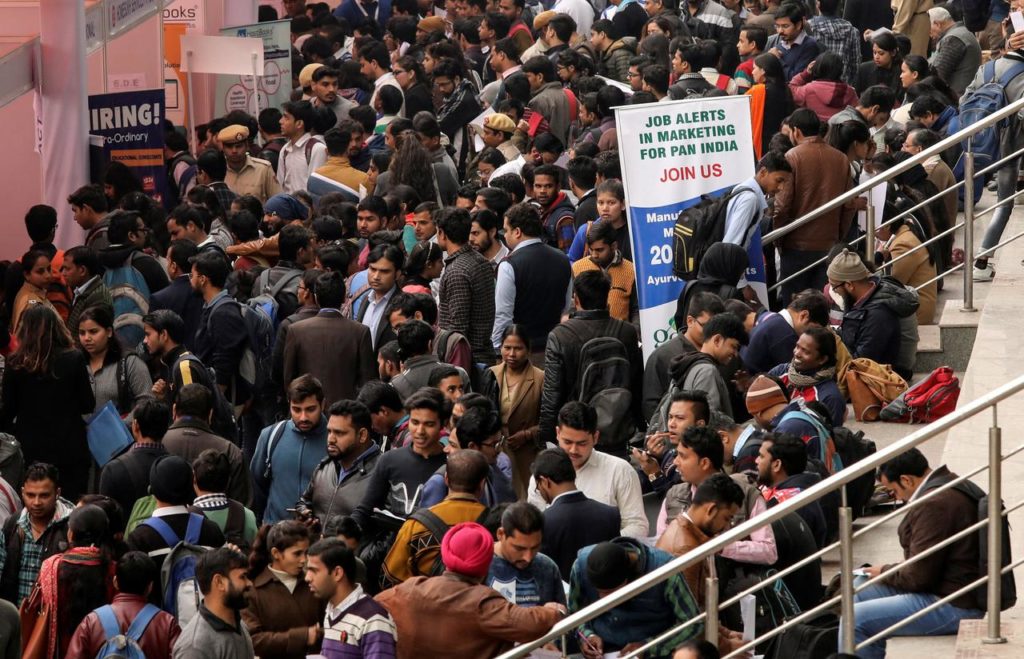
The Saamaana editorial described the Modi government’s celebration of the reported 7.8 per cent quarterly growth in GDP as “grandstanding” and argued that headline economic numbers did not necessarily reflect the financial realities -- including unemployment -- faced by millions of Indians (Representational Image)
The Shiv Sena (Uddhav Balasaheb Thackeray) on Wednesday launched a sharp attack on the Narendra Modi government, questioning its celebration of India’s latest economic growth figures while accusing it of overlooking unemployment, inflation and mounting financial distress among ordinary citizens.
In an editorial published in the party mouthpiece Saamana, the Sena (UBT) took aim at Prime Minister Narendra Modi’s social media post celebrating the reported 7.8 per cent quarterly growth in gross domestic product (GDP). The party described the government’s response as “grandstanding” and argued that headline economic numbers did not necessarily reflect the financial realities faced by millions of Indians.
The editorial questioned whether strong GDP growth could truly be described as meaningful progress when a large section of the population remained dependent on government assistance for basic necessities.
“If the nation is reaching unprecedented heights of progress, the fundamental question remains why must 85 crore citizens depend on free food grains just to survive?” it asked.
The party argued that economic growth should ultimately translate into better employment opportunities, stable incomes and affordable living costs. Instead, it claimed that many households continued to struggle with rising prices and limited job opportunities.
Agrarian distress was also highlighted by the Sena (UBT), which cited the reported deaths of more than 7,000 farmers by suicide in a year. The party said such figures demonstrated that the benefits of economic growth were not being felt uniformly across the country.
The editorial also raised concerns about the financial condition of the Maharashtra government. It claimed that outstanding payments to contractors had crossed Rs 90,000 crore and alleged that 17 contractors had died by suicide after being pushed into severe financial difficulties.
The party questioned the government’s handling of available financial resources, including the PM CARES Fund. It asked why an alleged unspent balance of Rs 10,000 crore could not be deployed to provide assistance to people facing economic hardship.
The Sena (UBT) further argued that ordinary households were confronting another round of price increases at a particularly difficult time, with several changes taking effect from September 1.
According to the editorial, milk prices in Mumbai had increased by around Rs 9-10 per litre, while jaggery prices had risen by 25 per cent. Onion prices, it said, had crossed Rs 50 per kilogram. The party also pointed to higher prices for compressed natural gas (CNG) and piped natural gas, with the latter reportedly increasing by Re 1 per unit.
The party said higher fuel and energy costs were likely to have a wider impact because they influence transportation and the prices of goods and services. It argued that increases in petrol, diesel and CNG prices could eventually push up fares for autorickshaws and taxis.
Even everyday expenses, the editorial claimed, were being affected. It pointed to the rising cost of milk and sugar and said that a basic “cutting tea” in Mumbai had reached Rs 13, adding another burden for daily-wage workers and other low-income consumers.
The editorial also expressed concern over developments in the rural economy. It noted that agricultural growth had reportedly slowed from 4.4 per cent to 3.6 per cent and linked the slowdown to uncertainty surrounding the monsoon and the kharif crop.
The party said a prolonged gap in rainfall had raised concerns about agricultural production and rural incomes. For farmers already dealing with financial pressure, it argued, weaker agricultural growth could further deepen economic uncertainty.
The Sena (UBT) also cited the weakening rupee and unemployment as indicators of broader economic challenges. It argued that while GDP remained an important measure of economic performance, it could not by itself capture the financial pressures experienced by households.
The editorial ultimately questioned the government’s emphasis on headline growth figures, arguing that economic success should be judged by how ordinary citizens experience the economy.
The Sena (UBT) maintained that rising prices, unemployment, farmer distress and financial instability remained pressing concerns despite the reported GDP expansion. It argued that celebrating growth without addressing these issues risked creating a disconnect between official economic claims and the everyday realities of citizens.
The party’s criticism comes amid an ongoing political debate over whether India’s strong headline growth is translating into broad-based improvements in incomes and living standards. For the Sena (UBT), the central question is not simply how quickly the economy is growing, but whether that growth is making life more secure and affordable for ordinary Indians.