E20 Petrol Under Fire: Cong Seeks Review Over Fuel Costs, Food Prices
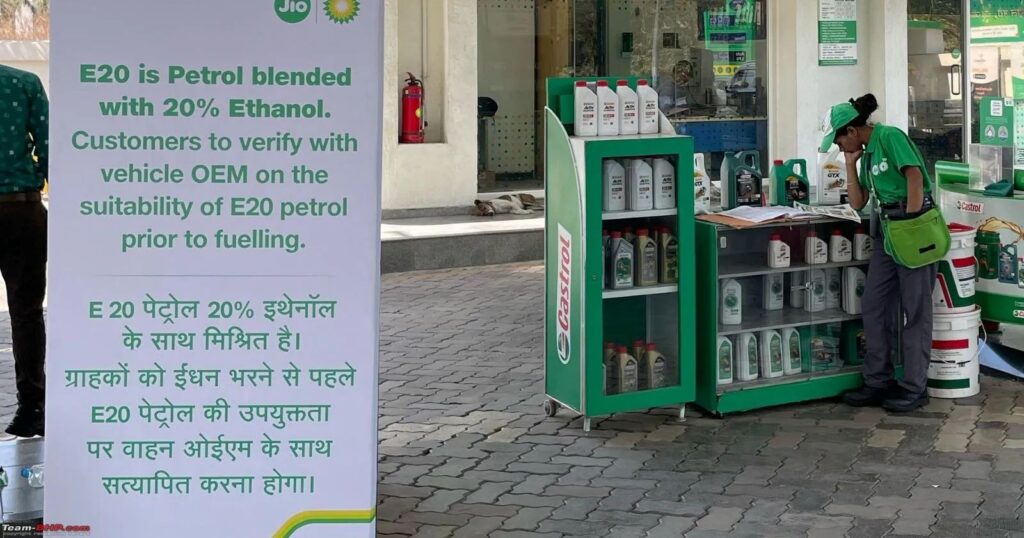
E20 petrol is a fuel blend of 80% fossil-derived petrol and 20% ethanol. According to critics, diverting sugarcane and foodgrains towards ethanol production has increased household costs, while motorists are grappling with reduced mileage and concerns over vehicle compatibility
The Congress has stepped up its opposition to the Centre’s E20 petrol policy, calling for an immediate review of the ethanol-blending programme and alleging that it is creating additional financial pressure on households.
The party has argued that the policy is affecting consumers on two fronts: motorists are facing concerns over mileage, vehicle compatibility and limited fuel choices, while the increased use of agricultural produce for ethanol could put upward pressure on food prices.
E20 petrol is a blend containing 20 per cent ethanol and 80 per cent petrol. Ethanol for the programme is produced from agricultural feedstocks, including sugarcane, maize and rice. The Congress has raised concerns about whether diverting such crops towards fuel production could affect their availability for food and other uses.
In a social media post, the party cited a Hindi newspaper report that claimed significant increases in the prices of several food commodities over a three-month period. According to the figures cited, sugar prices increased by 40 per cent, jaggery by 24 per cent, rice by 16 per cent and maize flour by 11 per cent.
The Congress linked these increases to the diversion of agricultural resources towards ethanol production. It claimed that around 25 lakh tonnes of sugar-grade sugarcane had been redirected for ethanol production.
The party also cited specific price increases, saying sugar had risen from Rs 48 to Rs 67 per kilogram and jaggery from Rs 50 to Rs 65 per kilogram during the period. It further claimed that animal-feed costs had increased by 10.34 per cent.
The opposition party has also raised questions about the impact of E20 petrol on vehicles. It argued that older cars and two-wheelers that were not designed for higher ethanol blends could experience reduced fuel efficiency or compatibility-related problems.
The Congress has demanded that consumers should have access to petrol without ethanol, arguing that motorists should not be compelled to use a particular blend if their vehicles are not compatible with it.
The party has also questioned the economic rationale of the policy, asking why retail petrol prices have not fallen despite periods of lower international crude oil prices and the savings that ethanol blending can generate through reduced dependence on imported petroleum.
The issue has increasingly become part of the Congress’s broader criticism of the government’s energy and fuel policies. The party has alleged that the E20 rollout has been implemented too quickly and could disproportionately affect middle-class vehicle owners and households.
The Congress Working Committee, in a resolution adopted on August 19, reiterated concerns over lower mileage, vehicle compatibility, consumer choice and the environmental implications of using agricultural commodities for fuel production. It also called for greater attention to alleged fuel-contamination concerns and the wider ecological costs associated with ethanol production.
The opposition party has argued that the government should undertake a comprehensive assessment of E20 before expanding its use further. It wants the concerns of vehicle owners, farmers and consumers to be examined together rather than treating ethanol blending solely as an energy-security measure.
The Congress’s central demand is for greater consumer choice, including the availability of petrol without ethanol, alongside a review of the programme’s economic, environmental and automotive consequences.
With E20 becoming increasingly widespread, the political debate is now shifting from whether ethanol can reduce India’s dependence on imported fuel to a broader question: who ultimately pays the cost of the transition?