Why We Can’t Rely On Air Conditioning To Keep Us Cool
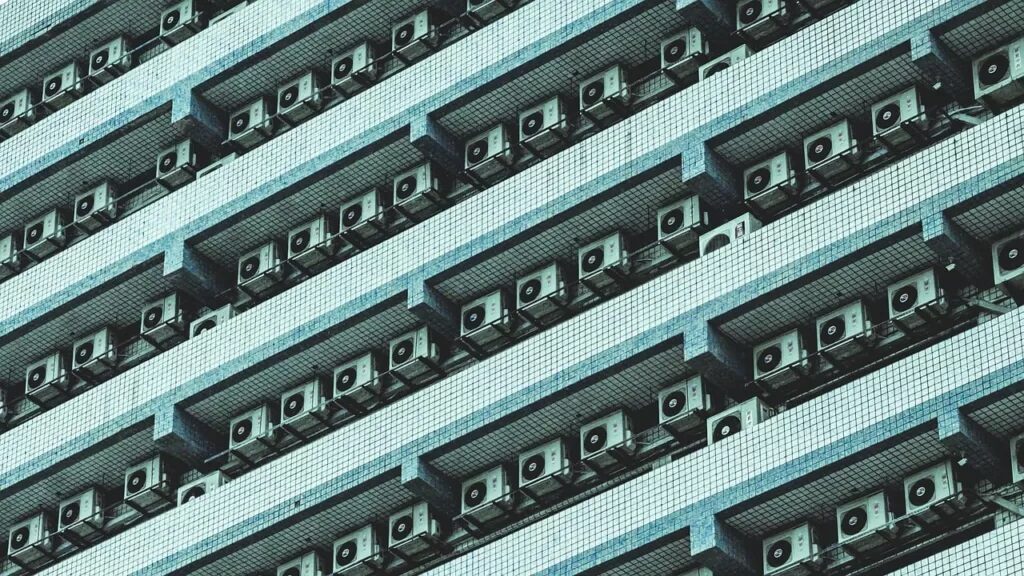
Given the history of commercialisation of air-conditioning as a consumer product, it’s unsurprising that people see it as essential (Zouper Dragon via Pixabay; Pixabay Licence)
In summertime in Chongqing, China, Xi Yu* (35) hates the short walk from his apartment to the subway station on his commute to the university where he works. With temperatures often hitting 38°C in high humidity, even the daily water spraying of main roads by the local municipality does little to help.
Yu is grateful the subway station and trains are air-conditioned but is always relieved to arrive at his office. He likes to keep the air-conditioning at a chilly 19°C, even though his colleagues complain it’s too cold. Leaving the office is usually a shock to the system with the dramatic change in temperature.
Back home, Yu turns on the air conditioning as soon as he gets in, although he knows it will eat up almost half his monthly energy bills. Later, he and his wife will phone the children who are staying with their grandparents in the mountains for the summer, as most other families do. Come Friday, Yu and his wife will make the slow, traffic-congested journey to join them for the weekend.
This scenario could be the future for city dwellers globally as the climate warms. Universal dependence on air-conditioning and temporary or permanent migration away from hotter zones, for those who can afford it.
The most recent physical science report from the United Nations Intergovernmental Panel on Climate Change has estimated extreme heat events over land will become 4 to 9 times more frequent this century, and 1.9°C to 5.1° degrees hotter.
This month’s IPCC synthesis report for policymakers will again emphasise the risks of extreme heat. But air-conditioning is no panacea as recent research on experiences of living with air-conditioning has found. This in-depth, qualitative analysis of coping with heat in Dubai, Chongqing and London showed, alongside the benefits, the social and health challenges of air-conditioned urban lives, as well as ways to reduce dependence on air-conditioning.
In contrast to London, where air-conditioning in homes is rare, air-conditioning is the norm at home, in the office, on public transport and in public buildings in Dubai and Chongqing. Use of air-conditioning in these cities means people perceive themselves as unaffected by the weather and feel that work in offices continues without impact.
But the lifestyles they described told a different story. In both Dubai and Chongqing, life during the summer months is lived indoors. People noted that they take less exercise and miss the feelings of freedom, space and being closer to nature from being outside. While most had a balcony or garden, these are unusable in the hottest months.
Indoors, hard flooring is common in Dubai but so too is floor-to-ceiling glazing and a lack of external shading. In summer, going out is limited to trips to air-conditioned locations, almost all of which are commercial in nature (shopping malls, gyms), with one fascinating exception.
In Chongqing, war-time bunkers have been repurposed and are used as cool social spaces. In both cities, people socialise less in the hot weather. In Dubai, people plan their holidays to travel to relatively cooler countries during the worst of the heat. In the summer months in Chongqing, the retired and the children are sent to the mountains where it is cooler – working parents try to visit on weekends.
Surprisingly, despite their reliance on the technology, many people do not see air-conditioning as either comfortable or healthy. For some, the temperature is too cold in order to accommodate others at work or at home. For others, over-use is intentional.
For example, Fei, a 29-year-old postgraduate student, said: “The hotter it is outside, the lower I will set on the air conditioner. Sometimes I wear a long-sleeved blouse and a pair of trousers, then go to bed with a thick cover.”
Overall, people acclimatise physiologically and behaviourally, not to hot weather, but to a narrow range of relatively cold temperatures created by ubiquitous air-conditioning. Perceptions are common of poor air quality, overly dry air and a lack of fresh air, leading to a range of minor health complaints, such as colds, rhinitis and joint pain. Moving from low indoor temperatures to the heat of outside is particularly unpleasant and seen as a risk to health. While most people interviewed worked indoors, there were some insights into the challenges for outdoor workers including construction workers and delivery drivers, for whom air-conditioning has limited benefits.
The participants’ accounts of living with air-conditioning showed the extent to which air-conditioning is already culturally embedded, to the extent of over-reliance, in some climate zones.
Given the history of commercialisation of air-conditioning as a consumer product, bolstered by extensive marketing over 70 years to emphasise its progressive, modern nature, it’s unsurprising that people see it as essential. While the use of air-conditioning will continue to provide benefits in the rapidly-warming world, complementary approaches are vital to reduce outright dependence and our analysis points to several possibilities.
From a technological and regulatory perspective, minimum set points for air-conditioning units which dynamically increase in line with outside temperatures would end practices of setting temperatures unnecessarily low. This would also help physiological acclimatisation to hotter weather.
Revising building regulations to address local context and predicted weather, using established adaptations such as limiting glazing and requiring exterior shading, will reduce indoor temperatures. So too will householder changes such as hard flooring inside and increasing greenery outside.
Providing civic cool spaces allows equitable access to relief from heat and these can be designed for passive cooling, that is, remaining cool through their form and design rather than from electro-mechanical air-conditioning systems. From a social and cultural perspective, repositioning air-conditioning as a form of cooling system rather than as providing ‘thermal comfort’ could challenge its primacy.
Educating people on the benefits and importance of physiological acclimatisation to heat will help to shift behaviour away from air-conditioning dependence. Reminding people of behavioural adaptations, such as keeping in the shade or sucking ice, and changing social routines in the heat, such as shifting working and education patterns away from the hottest hours, are additional ways to reduce air-conditioning use.
Air-conditioning will not solve all the problems of coping with global heating. Changes to technology, building design, regulation, social routines and personal behaviour will help avoid some of the downsides of the chilly, expensive and fragmented lives that Xi Yu and many others already experience.
*Xi Yu is a pseudonym.
Originally published under Creative Commons by 360info™. Read the original article here)