The Twisha Sharma Case: Of Abuse, Power And Character Assassination
Shalini May 20, 2026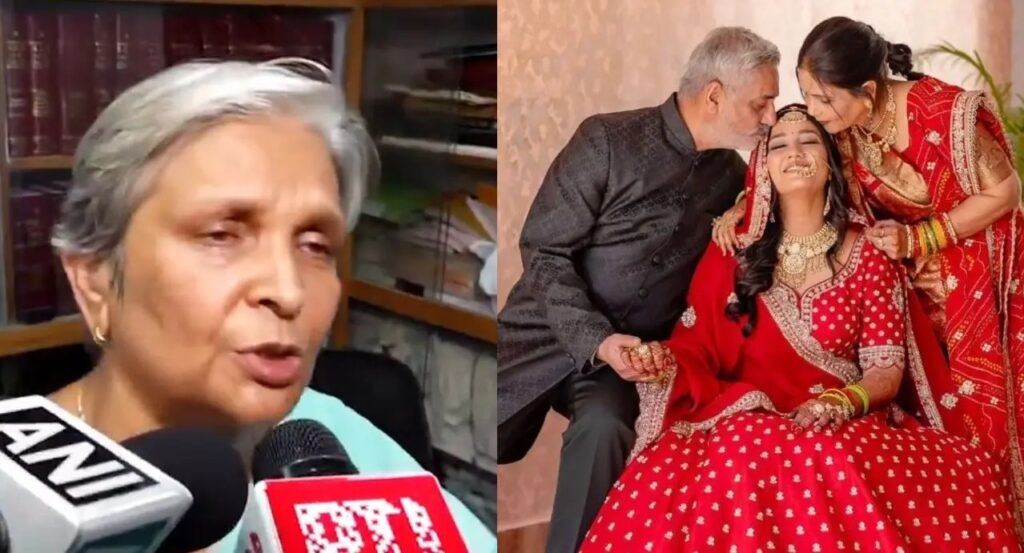
The case took a disturbing turn when Twisha’s mother-in-law Giribala Singh addressed a press conference in Bhopal on Monday, May 18, and levelled a series of deeply personal and damning allegations against the deceased woman (Image: newslivetv.com)
The death of Twisha Sharma in Bhopal has sparked outrage not only because of the allegations of dowry harassment and abuse she allegedly faced inside her marital home, but also because of the public campaign that followed her death — a campaign critics say amounts to the systematic character assassination of a woman who is no longer alive to defend herself.
Twisha’s death, which is under investigation, has drawn widespread public attention in Madhya Pradesh after her family accused her husband Samarth Singh and his relatives of subjecting her to sustained mental harassment, dowry demands and emotional abuse after marriage. Her family has alleged that she was repeatedly pressured over money and lifestyle expectations and was made to suffer inside her matrimonial home in Bhopal.
As the investigation intensified, the case took a disturbing turn when Twisha’s mother-in-law Giribala Singh addressed a press conference in Bhopal on Monday, May 18, and levelled a series of deeply personal and damning allegations against the deceased woman. Instead of responding only through legal channels, Giribala Singh publicly claimed that Twisha was schizophrenic, used marijuana and had wanted to abort her foetus. She further alleged that Samarth Singh had questioned the paternity of the unborn child.
The public nature of these allegations has shocked many observers, especially women’s rights activists, who argue that the statements appear aimed less at uncovering truth and more at tarnishing Twisha’s image after her death. Critics say such accusations, made against a woman who cannot respond or defend herself, fit into a familiar pattern seen in several cases involving domestic abuse and dowry-related deaths — where the character of the victim is attacked in order to weaken sympathy for her and reduce scrutiny on the accused.
The allegations made during the press conference was aimed to effectively shift public discourse away from the serious accusations of harassment and dowry pressure that Twisha’s family has raised. Instead of focusing on the conditions she allegedly endured after marriage, attention began moving toward her personal life, mental health and private decisions regarding pregnancy.
Twisha’s family has maintained that she was subjected to emotional cruelty within her marital home and that repeated demands and humiliation pushed her into severe distress. According to relatives, she had spoken about being mistreated and isolated after marriage in WhatsApp chats with her mother and some friends. The dowry allegations, they argue, cannot be buried beneath attempts to portray her as unstable or morally compromised.
Public Allegations Against Twisha Raise Questions About Victim-Blaming
Among the most controversial claims made by Giribala Singh was the allegation that Twisha’s own family had “exploited” her beauty and pushed her into the glamour industry. Critics argue that such remarks were designed to create a prejudicial narrative around Twisha’s character and lifestyle rather than contribute meaningfully to the legal investigation.
The insinuation that a woman involved in modelling, media or glamour-related work is somehow morally suspect reflects a deeply entrenched pattern of misogyny, activists say. In many high-profile domestic violence and dowry cases, women are frequently portrayed as “modern”, “unstable” or “difficult” in an attempt to shift blame away from husbands and in-laws.
Equally disturbing to many observers were the claims regarding Twisha’s alleged marijuana use and mental health condition. No court has established these claims as fact, and yet they were publicly broadcast at a time when the deceased woman’s family is demanding accountability for her death. Legal experts note that such allegations, when made publicly without judicial scrutiny, can influence public perception and potentially shape sympathy in favour of the accused.
Women’s rights groups argue that this strategy often serves another purpose — creating grounds for mitigation if criminal charges proceed. By portraying the deceased as mentally unstable, addicted or involved in troubled relationships, the defence narrative may seek to reduce moral and legal culpability for the accused husband and his family. In this case, critics believe the public statements may ultimately be aimed at protecting Samarth Singh or helping secure a lighter sentence if he is found guilty in court.
The allegation that Samarth Singh questioned the paternity of the foetus has also generated outrage because it introduces intensely private and unverifiable claims into the public sphere. Activists argue that such claims are not merely personal attacks but attempts to destroy the dignity of a deceased woman.
The Twisha Sharma case has therefore become more than a criminal investigation. It has turned into a larger conversation about how women continue to be judged even after death, especially in cases involving marital conflict, dowry harassment and domestic abuse. For many, the issue is no longer only what happened to Twisha inside her marital home in Bhopal, but also why, after her death, the focus appears to have shifted toward dismantling her reputation instead of examining the allegations against those she lived with.