Cong Hits Out At RSS Over Leader’s Remarks On Talks With Pak
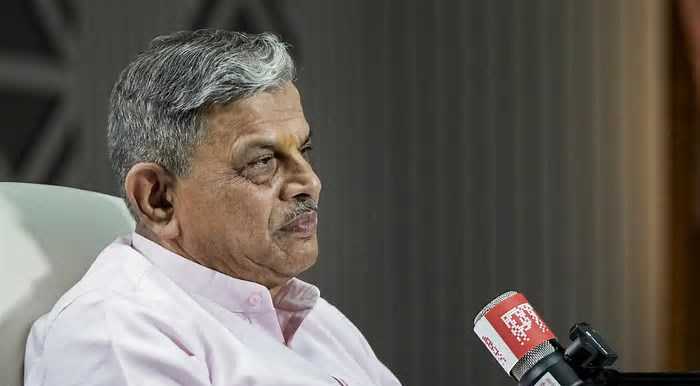
The controversy began after RSS leader Dattatreya Hosabale, in an interview, spoke about the importance of keeping communication channels open between India and Pakistan even amid continuing diplomatic tensions
The Indian National Congress on Wednesday launched a sharp attack on senior Rashtriya Swayamsevak Sangh (RSS) leader Dattatreya Hosabale after he advocated maintaining dialogue with Pakistan despite strained bilateral relations. The controversy erupted after a video clip from Hosabale’s interview with PTI Videos surfaced online, triggering criticism from Congress leaders, who accused the RSS of sending mixed signals on nationalism and foreign policy.
Congress general secretary Jairam Ramesh took to social media platform X to mock the RSS leader’s remarks and link them to the organisation’s recent outreach programme in the United States. “It appears that the recent US trip of Shri Hosabale, during which one of his colleagues admitted to the PM doing what the US wanted him to do, has impacted him as well as the RSS,” Ramesh wrote.
The Congress leader also argued that similar comments from leaders outside the ideological orbit of the RSS would have provoked outrage from supporters of the ruling establishment and sections of the television media. Without naming specific channels or political figures, Ramesh suggested that the standards of political criticism in India differed depending on who made the remarks.
The debate began after Hosabale spoke about the importance of keeping communication channels open between India and Pakistan even amid continuing diplomatic tensions. In the interview, he said national security and self-respect remained non-negotiable, but dialogue should not be completely abandoned.
“The security and self-respect of a country have to be protected and the government of the day should take care of it,” Hosabale said. “But at the same time, we need not close the doors. We should always be ready to engage them in a dialogue.”
His remarks were seen as significant because they appeared to adopt a more conciliatory tone than what critics often associate with the RSS on issues involving Pakistan. Hosabale stressed that ordinary citizens and civil society groups could play a role in easing hostility between the two countries, particularly at a time when formal diplomatic engagement remains limited.
According to Hosabale, the leadership in Pakistan had damaged India’s trust through repeated actions and policy failures, making government-to-government engagement difficult. However, he argued that people-to-people interaction could still help prevent complete breakdowns in communication.
He also suggested that dialogue did not necessarily imply compromise on national security. Instead, he maintained that a strong nation should remain capable of both defending itself and keeping diplomatic options open.
The remarks come at a time when relations between India and Pakistan remain tense over issues including cross-border terrorism, Kashmir, and diplomatic disengagement. Official bilateral talks have largely remained frozen in recent years, with both countries limiting formal interaction to essential matters.
Congress Targets RSS Over US Outreach
The controversy has also drawn attention to the RSS’s recent international outreach efforts as part of activities linked to its centenary year. Senior RSS functionaries, including Hosabale, travelled to the United States and the United Kingdom to address events, interact with members of the Indian diaspora, and engage with academics and policy experts.
During the visit, Hosabale addressed gatherings at institutions including Stanford University and the Hudson Institute. According to organisers, the outreach programme focused on explaining the RSS’s social work, ideological perspective and vision for India’s future to international audiences.
However, the Congress has repeatedly criticised the RSS over statements made during the trip. Senior Congress leader Rahul Gandhi recently mocked the organisation by calling it the “Rashtriya Surrender Sangh,” accusing it of abandoning the aggressive nationalism it often projects domestically.
Gandhi’s remarks came after comments made by senior RSS leader Ram Madhav during an event in the United States sparked political controversy. Madhav had reportedly suggested that India had agreed to halt purchases of oil from Iran and Russia and had also accepted higher tariffs imposed by the administration of US President Donald Trump.
Reacting to those remarks, Rahul Gandhi alleged that the RSS’s “fake nationalism” had been exposed before an international audience. Congress leaders argued that the comments projected India as yielding to American pressure on crucial economic and foreign policy matters.
The BJP and RSS, however, rejected the Congress criticism and maintained that the remarks had been taken out of context. Amid the controversy, Madhav later issued a clarification and apology, stating that some of his comments were factually incorrect.
“I wish to clarify that India has neither agreed to stop Russian oil imports nor accepted the tariff measures without protest,” Madhav said after the backlash. He added that New Delhi had strongly objected to the tariff actions proposed by Washington.
Madhav also stressed that India’s foreign policy decisions continued to be guided by national interest rather than external pressure. His clarification sought to counter the Congress narrative that the RSS leadership had admitted to policy compromises during discussions abroad.
Despite the clarification, Congress leaders continued to attack the RSS over what they described as inconsistencies between its domestic rhetoric and international messaging. Jairam Ramesh suggested that the organisation’s recent statements reflected a softer and more conciliatory posture once its leaders engaged with global audiences.
Political observers note that the exchange reflects the continuing battle between the Congress and the RSS-BJP establishment over nationalism, foreign policy and ideological positioning. The RSS has long projected itself as a nationalist organisation committed to strong national security policies, while the Congress has frequently accused it of using hyper-nationalist rhetoric for political purposes.
Hosabale’s comments on dialogue with Pakistan have therefore acquired significance beyond the immediate issue of bilateral relations. Critics within the Congress view them as evidence that even the RSS recognises the practical need for diplomatic engagement despite years of hardline political messaging.
Supporters of the RSS, however, argue that Hosabale’s remarks were balanced and pragmatic rather than conciliatory. They point out that he clearly emphasised the importance of protecting India’s “security and self-respect” while advocating dialogue.
For now, neither the RSS nor the BJP has officially distanced itself from Hosabale’s remarks. But the Congress appears determined to continue using the issue to challenge the ruling establishment’s nationalist credentials, especially in the context of the RSS’s growing international engagement and outreach activities.