Storms And Lightning Kill Over 100 In Uttar Pradesh
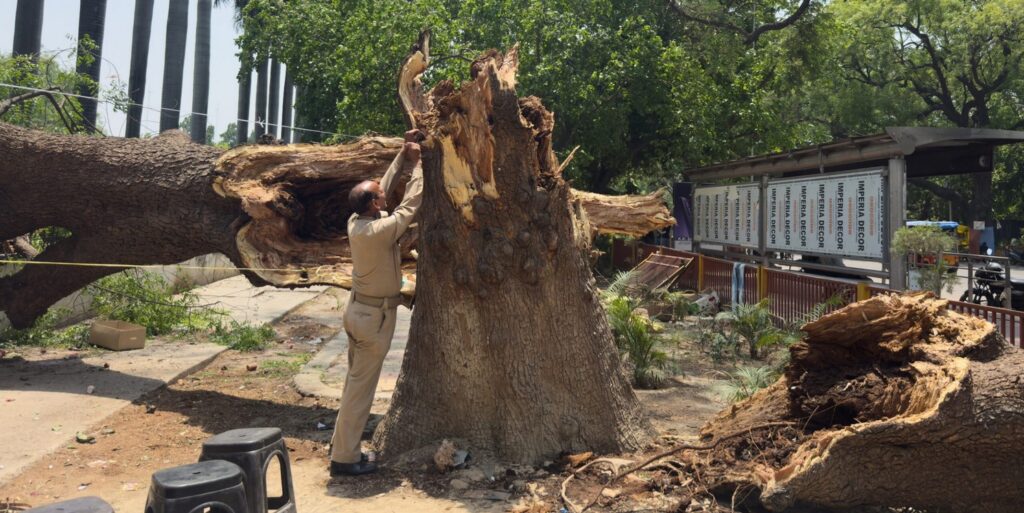
A home guard member works to set up a temporary shelter following storms in Prayagraj, Uttar Pradesh on May 14 (AP Photo/Rajesh Kumar Singh)
A powerful storm system that swept across Uttar Pradesh last week has left widespread devastation in its wake, claiming at least 111 lives and injuring dozens more people. The extreme weather event, marked by violent winds, lightning strikes, hailstorms and heavy rain, caused large-scale destruction across several districts and exposed the vulnerability of many regions in north India to increasingly severe pre-monsoon weather conditions.
The storm struck on May 13 and affected multiple districts across the state, with eastern Uttar Pradesh witnessing the worst damage. According to figures released by the state government, around 72 people suffered injuries while nearly 170 livestock animals died during the disaster. More than 200 houses were either partially or completely damaged as strong winds uprooted trees, tore apart rooftops and disrupted essential services.
Prayagraj emerged as the worst-hit district, recording 21 deaths. Mirzapur followed with 19 fatalities, while Sant Ravidas Nagar reported 16 deaths and Fatehpur accounted for 11. Several other districts also witnessed casualties and severe property damage as the storm system moved rapidly across the state.
The storm caused massive disruption to daily life in several districts. Roads were blocked due to fallen trees and electric poles, while power outages affected thousands of households. In many rural areas, residents spent hours without electricity or communication services as teams worked to restore damaged infrastructure. Farmers and small livestock owners were among the worst affected, as crops, cattle sheds and stored grain suffered extensive damage.
Although thunderstorms and dust storms are common in northern India during April and May, weather officials noted that this particular storm system was unusually intense and spread across a much larger geographical area than normal seasonal disturbances.
Extreme Weather Conditions Triggered Unusually Intense Storm Activity
The India Meteorological Department (IMD) described the storm as one of the most severe pre-monsoon weather events seen in recent years in Uttar Pradesh. According to the department, districts such as Prayagraj and Bareilly recorded wind speeds of up to 130 kilometres per hour, while many other districts experienced winds exceeding 100 kilometres per hour. Under ordinary storm conditions, wind speeds generally remain between 40 and 60 kilometres per hour.
The storm was accompanied by intense lightning activity, hailstorms and moderate rainfall, creating dangerous conditions across both urban and rural regions. The combination of high-speed winds and lightning strikes was responsible for most of the fatalities and injuries reported from the affected districts.
Meteorologists explained that several climatic factors came together to create the unusually violent weather system. During April, large parts of Uttar Pradesh, Bihar and eastern Madhya Pradesh experienced extreme temperatures ranging between 40 and 45 degrees Celsius. Such high temperatures are considered favourable for the development of severe thunderstorm activity because they increase instability in the atmosphere.
At the same time, strong southeasterly winds carried moisture from the Bay of Bengal into north India, making the lower layers of the atmosphere warm and humid. Simultaneously, western disturbances brought cooler and drier air into the upper atmosphere. The interaction between the hot, moisture-laden air near the surface and the cooler air above created conditions for rapid atmospheric instability, eventually leading to powerful thunderstorms.
Weather experts pointed out that climate variability and rising temperatures may also be contributing to the growing intensity of such weather events. In recent years, north India has witnessed increasingly erratic pre-monsoon conditions, with stronger storms, sudden heavy rainfall and more frequent lightning incidents causing significant damage to lives and livelihoods.
As relief operations continue, many families in the worst-hit districts remain dependent on government support for shelter, food and compensation. The tragedy has once again highlighted the urgent need for stronger disaster preparedness systems, improved weather forecasting outreach and better infrastructure resilience in vulnerable regions facing extreme weather events.