How Climate Change And Tourism Are Reshaping Farming In Kangra
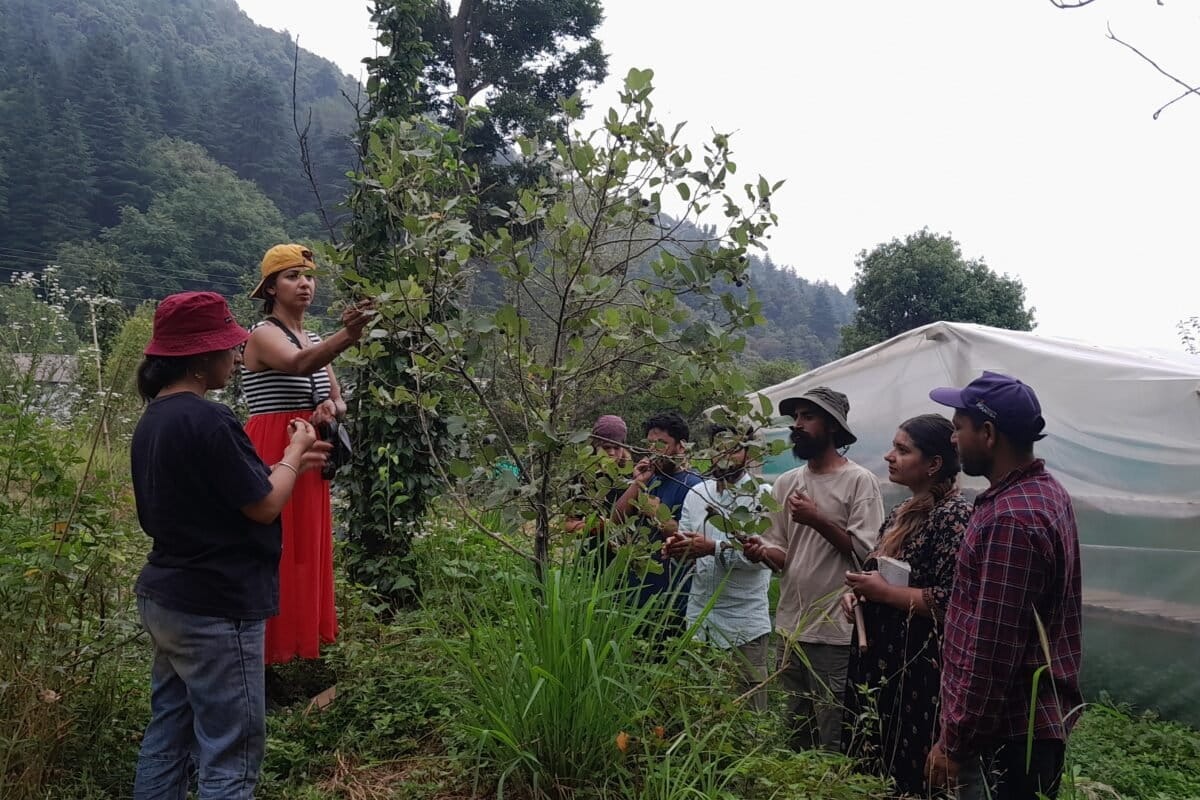
A workshop on permaculture being held at Shunya Farm, where mixed cropping and moisture-retention practices are used to strengthen climate resilience (Image by Pallavi Sharma)
- Farmers in Bir village in Himachal Pradesh say weather patterns have become harder to predict, affecting sowing and harvest cycles.
- Residents report declining water availability, changing crop choices, and farmland being converted for tourism-related construction.
- Farmers are adapting through crop shifts, income diversification, and efforts to reduce dependence on external inputs, though erratic weather is making adaptation increasingly difficult.
For generations, farmers in Bir village in Himachal Pradesh’s Kangra district have relied on seasonal rhythms to guide when to sow and harvest crops. Today, many residents say those patterns no longer hold.
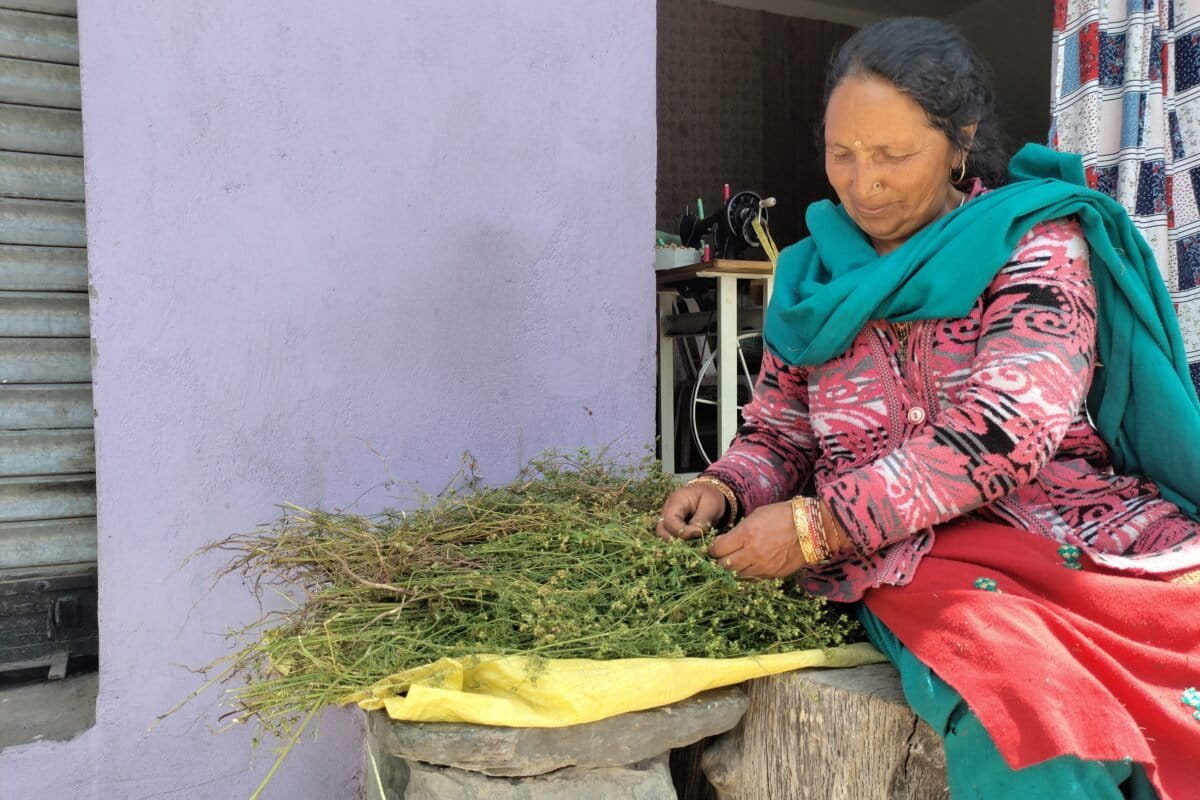
“Earlier, the rains came at the right time. Now, when crops need sunshine, it rains instead. Summers have become hotter too,” says Sarla Devi, 60, a farmer and cattle rearer from Bir.
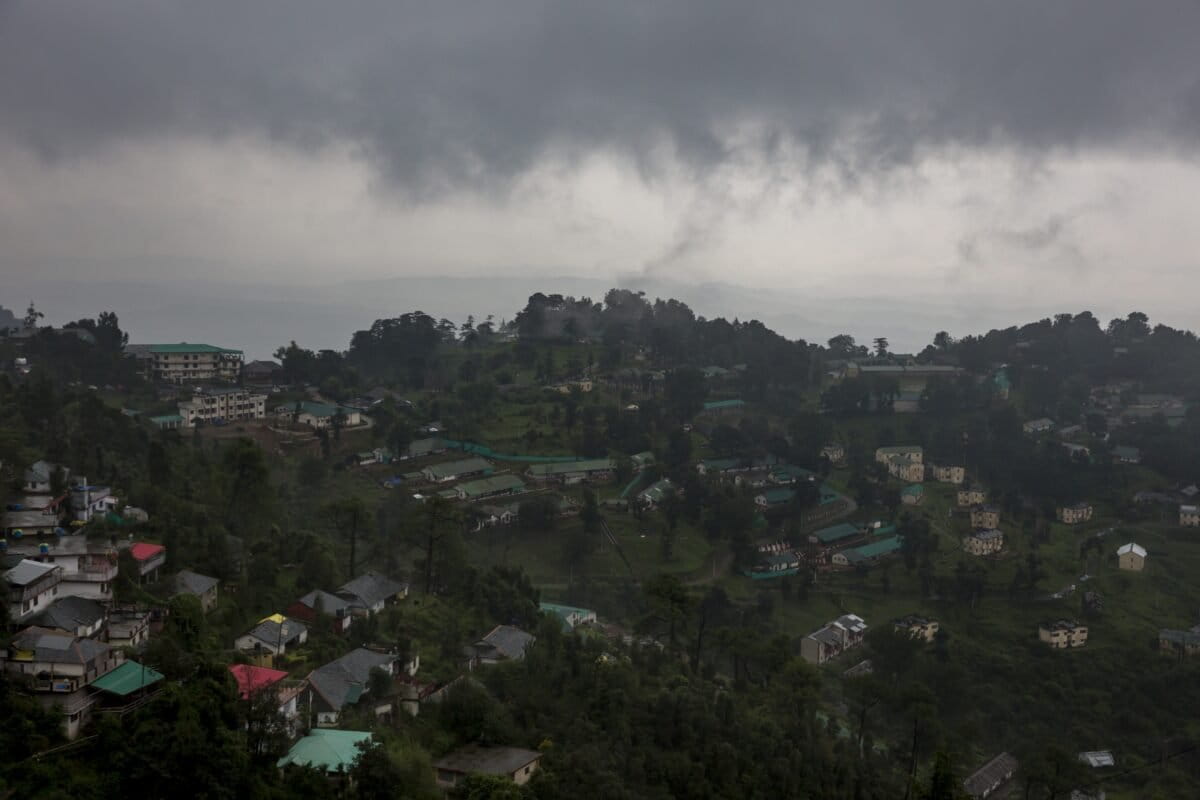
Situated in the mid-Himalayan region of Himachal Pradesh’s Kangra district, the Bir-Billing area has long supported small farms growing grains, vegetables, and fodder crops. Bir village lies at roughly 1,525 metres above sea level. But residents say erratic rainfall, warmer winters, and sudden weather shifts are affecting crop cycles and making agriculture less predictable.
Scientific findings echo these concerns. The Intergovernmental Panel on Climate Change’s Sixth Assessment Report notes that mountain regions, including the Hindu Kush Himalaya, are experiencing increasing temperatures and changing seasonal weather patterns, while shifts in temperature and precipitation are affecting the timing and availability of water for agricultural activities.
At the same time, climate pressures are unfolding alongside rapid land-use change. Bir and nearby Billing, internationally known as a paragliding destination, have seen steady growth in guesthouses, cafés, and tourism infrastructure over the past decade. Residents say agricultural land is increasingly being sold or repurposed for construction.
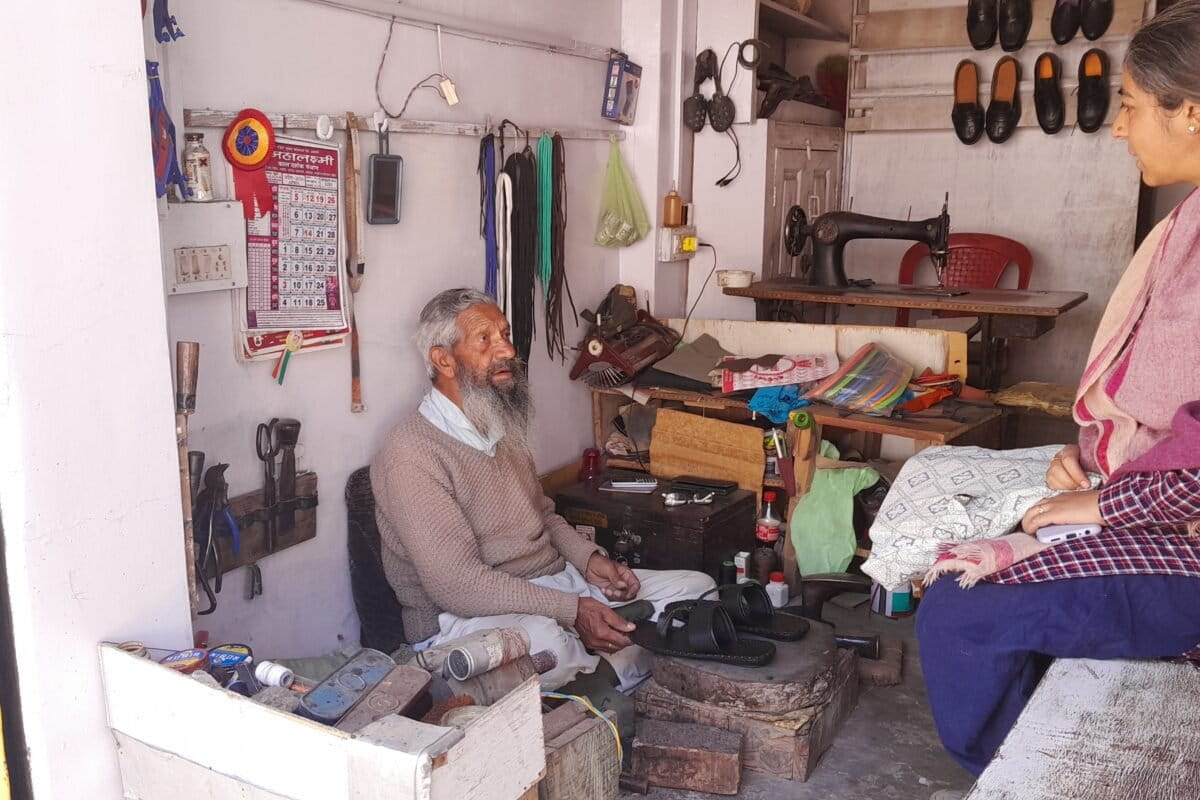
Older residents say weather changes are visible across decades. “The weather has completely changed. The rain that used to come in January now comes in March. There is a difference of nearly three months,” says Ram Das, 86, a farmer and cobbler from Bir.
Such shifts can affect winter crops that depend on cold temperatures and timely moisture. Untimely rain or hail during the flowering and grain-setting stages can also reduce yields.
Farmers say traditional sowing calendars are becoming less reliable, forcing them to experiment with new planting times and crop choices.
Water shortages and crop change
Residents say water availability is another growing challenge. “Earlier, our irrigation channel flowed well. Now it has dried up,” Ram Das says. He attributes the decline partly to the growth of settlement and tourism infrastructure upstream. “There were fewer people before. Now, many hotels have come up, with tanks storing water above. Very little reaches the fields below.”
In mountain farming systems, traditional mountain irrigation channels that carry water downhill from natural springs often sustain crops during dry spells. When flows decline, cultivation becomes more difficult. Ram Das says that the impact is visible in changing crop patterns.
“We used to grow paddy, and it would support us through the year. Paddy is a crop that cannot grow without water. Now we sow much less because there is not enough water, making it very difficult.”
Residents say maize and vegetables are still cultivated, but yields are less predictable when rainfall arrives in short, intense bursts followed by dry periods.
Land-use change and shifting livelihoods
Alongside climate stress, Bir’s agricultural landscape is changing rapidly. “People have sold much of their land. Hotels are being built on farmland now,” Ram Das says. Tourism has created new sources of income for some households, but residents say it has also changed land values and labour patterns. Younger generations are increasingly drawn to service-sector work rather than farming.
Pawna Kumari, State Secretary of Himachal Ghumantu Pashupalak Mahasabha, an advocacy group, says farming priorities have shifted as well. “Earlier, people farmed mainly to feed their families. Now, many grow according to the market and move towards cash crops and vegetables.” She adds that abandoned fields are becoming more common. “When you go through Bir now, many fields are lying empty.”
Residents say environmental change is visible beyond agriculture. “Birds have reduced. Earlier, you could hear them across the fields. Now in many places you hear none,” Pawna Kumari says.
Studies in mountain regions have linked declines in pollinators and biodiversity to habitat change, monoculture expansion, pesticide use, and intensified land use. Researchers note that declining pollinator populations can affect agricultural productivity and biodiversity in mountain farming systems. Some residents in the village also point to increased use of chemical inputs, including weedicides (herbicides), which they say have altered soils and vegetation in parts of the valley.
“Mountain farming systems are especially sensitive to shifts in rainfall and water availability because they depend heavily on seasonal cycles and local ecological balance,” says Saurabh Bhardwaj, Director, Climate Change Hub, WWF-India.
Recent studies on Himalayan agriculture and mountain ecosystems have linked climate-driven warming, changing precipitation patterns, water stress, and biodiversity loss with increasing ecological fragility in mountain farming systems.
For many residents, the concern is not only whether farming can remain profitable, but whether it can remain viable at all in a changing climate. Erratic rainfall, shrinking water supplies, and pressure on farmland are altering decisions about what to grow, when to sow, and whether younger generations will continue cultivating the land.
Some farmers are responding by shifting crops or diversifying incomes. Others are trying to restore soil health and reduce dependence on external inputs. But residents say adaptation has limits when weather patterns themselves are becoming harder to read.
Seeds and Deeds, an eco-enterprise based in Bir, runs short workshops and retreats on permaculture and regenerative living from Shunya Farm, which the group describes as one of the region’s oldest permaculture sites. “We aim to build a community of farming practitioners who see farmland as an ecosystem where all species thrive,” says Jeewika Bhat, founder of the initiative. She says the long-term aim is to help develop a blueprint for resilient small farms in the Himalayan region.