‘The Kerala Story’: How A Film Ignited Violence Against Minorities
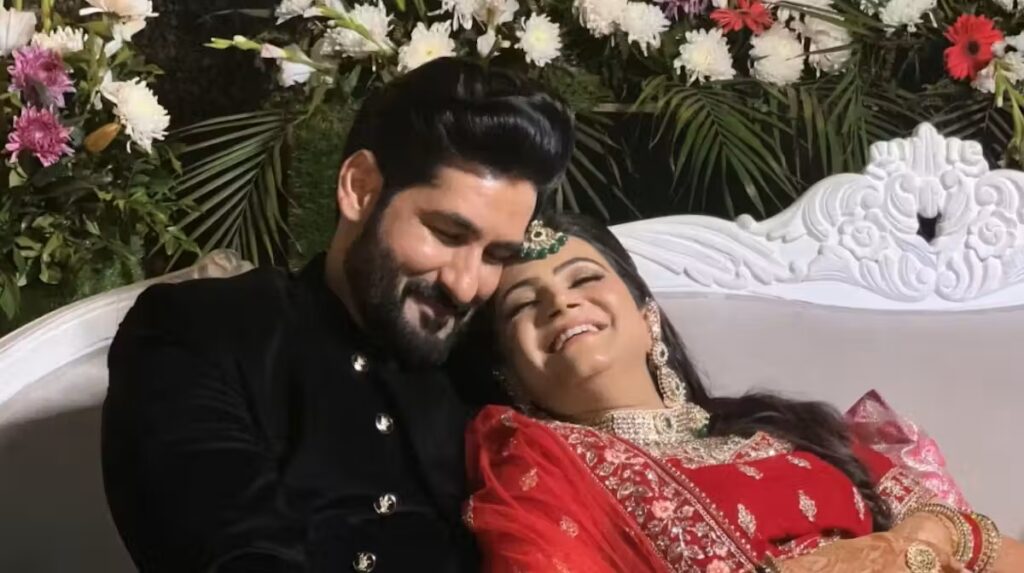
This photo of a newlywed couple is from the Instagram account called the India Love Project. The groom is Muslim and the bride is Hindu-Punjabi (India Love Project)
A controversial low-budget Indian feature film The Kerala Story, about a discredited anti-Muslim conspiracy theory, has been causing a political storm, going all the way to India’s Supreme Court.
The movie has helped circulate the idea of “love jihad,” a right-wing conspiracy theory that Muslim men are predators and out to marry and steal Hindu women. These ideas date back to the British colonial era and have far-reaching implications for people’s everyday lives.
The trailer claimed 32,000 Hindu girls had been converted to Islam by Muslim men with the intent of recruiting them to ISIS.
Once the film came out, citizens tried to get it banned by sending a petition to India’s Supreme Court.
“Love jihad” is a conspiracy theory that claims Muslim men are converting Hindu and Christian women to Islam. Allegedly, the men feign love, get the women pregnant and eventually traffic them. The motive? To increase the Muslim population of India, perpetuate fanaticism and ultimately establish an Islamic state.
According to a recent Pew Report, 99 per cent of married people in India share the same religion as their spouse. Muslims account for approximately 14 per cent of India’s population.
There is no such thing as a “love jihad” and an investigation by India’s National Investigation Agency has said there is no evidence of “love jihad” taking place.
Political Fallout
The figure of 32,000 women in the film’s trailer was immediately challenged by Indian political leaders and also debunked by fact-checkers from the website, Alt News.
The filmmakers agreed to change the number and a new trailer was released. It removed and replaced “32,000 girls” with “the true stories of three girls.”
And the movie went forward with its release, which according to some news reports, was successful at the box office.
Challenges In The Indian Supreme Court
Some politicians decried the propagandist nature of the movie and in West Bengal, it was banned by the government. Politicians there said the film “manipulated facts and contains hate speech in multiple scenes” and they banned the film to “avoid violence and hatred.”
The Indian Supreme Court lifted the state ban though agreed that a disclaimer on the film was necessary. The disclaimer indicated that the film provides “no authentic data” to support the 32,000 figure and that it presents fictionalized accounts.
Other politicians, including some from the ruling Bharatiya Janata Party, promoted the film. Some of them even offered complimentary tickets or organized free screenings.
Prime Minister Narendra Modi endorsed the movie, assigning to it a distinct legitimacy.
Islamophobia From The 19th Century
The idea of “love jihad” is both current and historical with notions coming from Indian and Hindu nationalism as well as 19th-century British colonial narratives. Both streams constructed Muslim men as hypersexual and hyperaggressive.
In the 19th century, Hindu scholars and new religious organisations (like Arya Samaj and Hindu Mahasabha) began producing a new Hindu-centric version of Indian history. This history grew in response to British colonialism but at the same time, shared similarities with British colonial ideas.
The British portrayed themselves as just rulers, partly by contrasting themselves with their casting of Muslim kings as hypersexual fanatics.
They pointed to a medieval darkness marked by the lust and tyranny of Muslim rulers. Mughal rulers were portrayed as rapists attacking both Hindu women and “Mother India”. This portrayal included the Muslim Prophet Muhammad who was portrayed in some places as sexually perverse.
These ideas became part of the curriculum in certain Indian states and elite Hindu scholars, educated at colonial schools, perpetuated these narratives in their writing. And the idea of a type of “love jihad” became part of the discourse created through pamphlets, novels, newspapers and magazines — especially in North India.
By the late 19th century, India was constructed around Hindu heterosexual relationships and family values in opposition to Muslim sexual deviance and rampant Muslim sexuality.
In 1923, Madan Mohan Malaviya, the president of the Hindu Mahasabha said in a speech, “hardly any day passes without our noticing a case or two of kidnapping of Hindu women and children by not only Muslim badmashes (rogues) and goondas (hooligans), but also men of standing and means.”
Challenges To Interfaith Marriage
Today, it’s not just The Kerala Story that has circulated the “love jihad” myth. Reportage in Hindu nationalist media continues to make headlines.
Organiser, a magazine run by the Rashtriya Swayamsevak Sangh (RSS), a network of Hindu nationalist organizations, recently reported that three cases of love jihad following the same pattern as those in ‘The Kerala Story’ were reported in a month.
Love jihad’s centrality to Hindu nationalist politics has led to specifically stringent laws focused heavily on sexuality and marriage.
Hindu vigilantes, in partnership with the police, launch missions to separate interfaith couples. Muslim men have been brutalized, killed, forced into hiding and incarcerated using historic anti-conversion laws.
One response to the chatter about “love jihad,” is an Instagram channel called India Love Project launched to celebrate stories of interfaith love and marriages.
Hopefully, such efforts continue to address Islamophobia and broaden to include a larger public discourse looking at transnational Islamophobic interlinkages, both past and present.
(Published under Creative Commons from The Conversation. Read the original article here)