El Niño Link Offers Early Warning Of Humid Heat In India
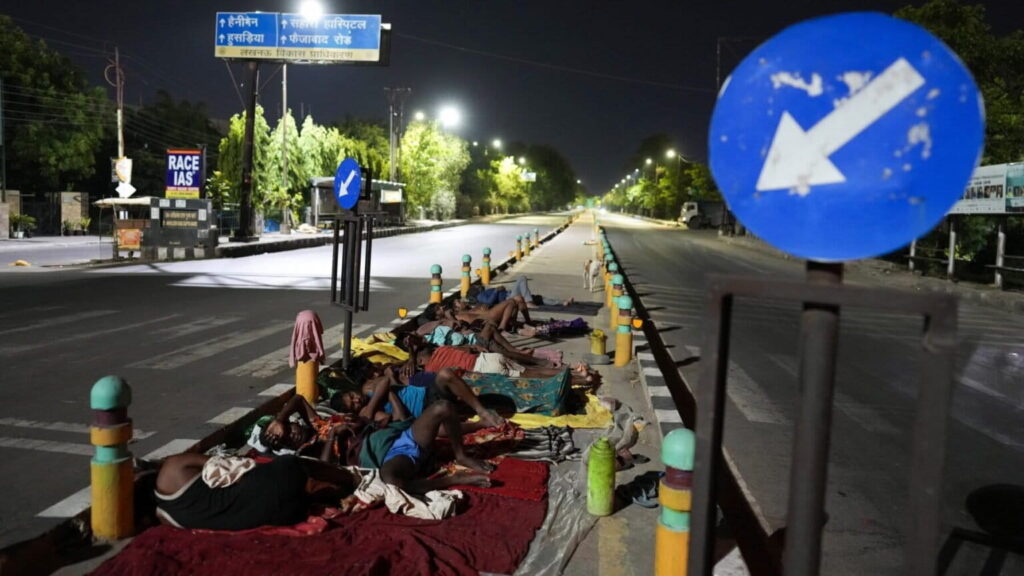
Humid heat stress extends into the night because temperatures do not fall, leaving the human body with no time to recuperate, which is particularly difficult for outdoor workers (AP Photo/Rajesh Kumar Singh)
- With El Niño emerging as a major concern this year, a study finds a strong link between ENSO and year-to-year variations in productivity losses from humid heat stress.
- The study highlights the increasing frequency of humid heat stress. However, it also finds that ENSO-linked humid heat stress and productivity losses can be predicted up to six months in advance, allowing time for preparation.
- Experts call for better forecasting of humid heat stress and productivity losses, along with measures such as changing outdoor working hours and providing shelters for vulnerable people.
Manoj Borah is a welfare officer at a tea garden in Kamrup district in Assam. He says working outdoors in tea gardens and agricultural fields is becoming increasingly difficult.
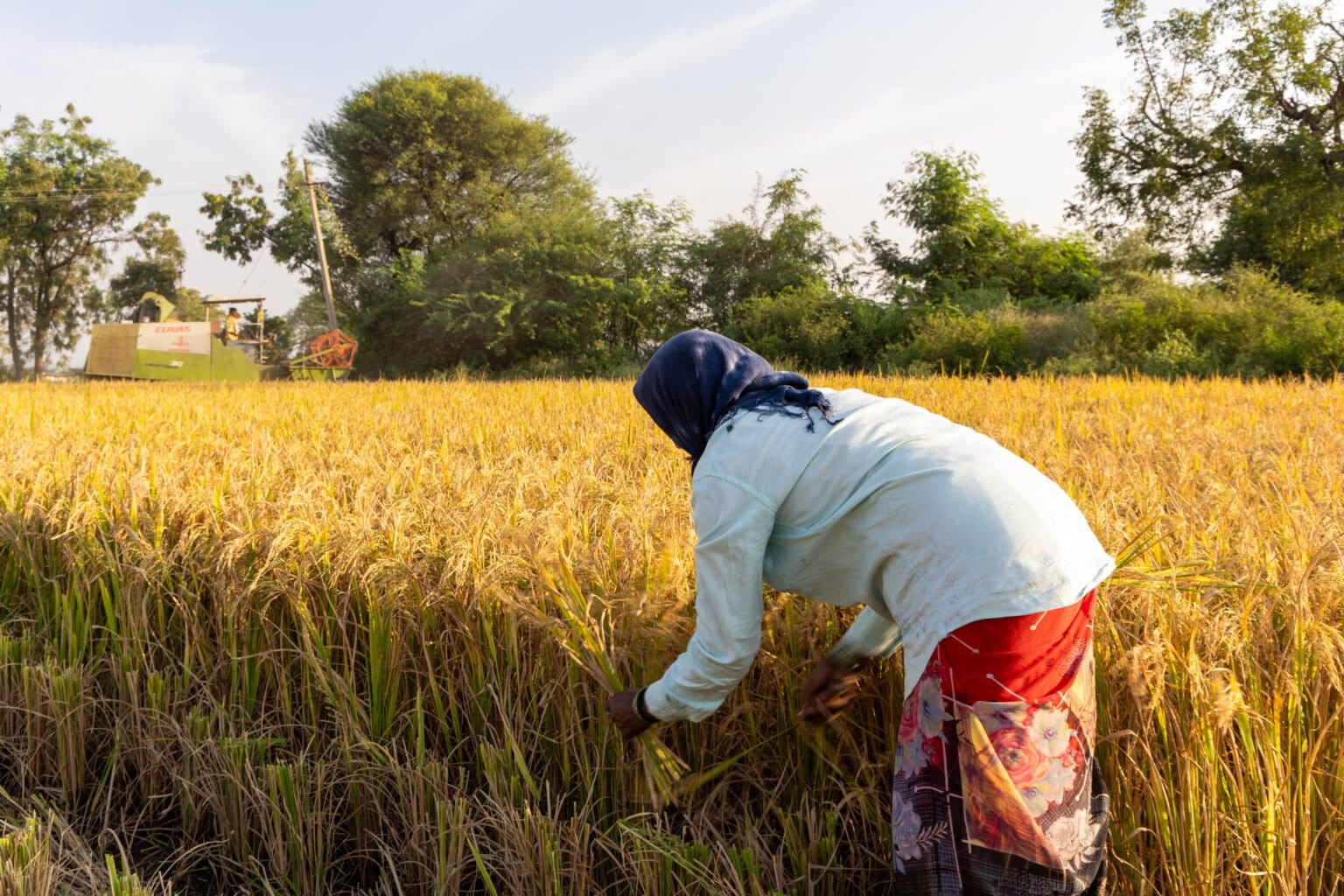
“While workers are used to daytime heat, the high temperature during the night is burning them out. It is difficult to rest at night, and this is taking a toll on their health. Without proper rest, it is difficult to go out and work in the fields the next day. In the last few years, we have had to shift the outdoor working hours so that they start at 5 AM and do not have to stretch beyond noon,” he said.
India accounts for more than half of the global rise in potential productivity loss from extreme humid heat since the mid-1980s, according to a new study published in Journal of Geophysical Research (JGR) Atmospheres, a journal of the American Geophysical Union.
“Outdoor workers in agriculture or industry, as well as those involved in exercise and sports, are advised to stop their vocation during extreme humid heat, as continued exposure can lead to severe medical conditions like heat stroke and even death,” said Subodh Kumar Saha, a scientist at the Indian Institute of Tropical Meteorology (IITM), Pune and also the paper’s corresponding author.
The study also offers some hope. Humid heat stress is closely linked to the El Niño-Southern Oscillation (ENSO), a natural cycle of warming and cooling in the tropical Pacific Ocean that shifts weather patterns worldwide. Because ENSO can be forecast months ahead, the researchers say humid heat stress can be predicted up to six months in advance. This early warning can create opportunities for adaptation planning, such as water resource management and climate-resilient agriculture.
The researchers found that year-to-year swings in potential productivity losses caused by humid heat are strongly associated with ENSO.
Saha explained that ENSO evolves slowly, so its current state indicates what large-scale climate conditions to expect several months later. “It leads to large-scale atmospheric and oceanic variability and results in temperature and moisture conditions that lead to humid heat stress. Thus, ENSO is a major contributor to humid heat stress and the related productivity loss,” Saha explained.
The researchers measured the impact using a metric called potential occupational productivity loss. It multiplies the hours of work lost to dangerous humid heat by the number of people working in a region. Because these losses closely track ENSO, the study suggests they could be predicted one to six months in advance.
Saha underlined that this matters because it links seasonal climate predictability to real-world effects on people’s livelihoods, providing a potential one to six-month window for planning and mitigation.
The heat that sweat cannot cool
Humid heat stress combines high temperature and high humidity. While temperature as an indicator of dry heat waves is well known, awareness of moist heat stress is limited.
Scientists measure humid heat using wet-bulb temperature, which captures both heat and humidity. Imagine a thermometer with its bulb wrapped in wet cloth. As water evaporates from the cloth, it cools the bulb, much as sweat evaporating from skin cools the body. The more humid the air, the less water can evaporate and the less the reading drops. A high wet-bulb temperature means the body struggles to cool itself.

Unlike dry heat stress, humid heat stress can occur at any time of day. A related measure, the wet-bulb globe temperature (WBGT), was developed in the 1950s after outbreaks of heat illness at US Army and Marine Corps training camps. It is now widely used to assess heat stress, according to a 2008 review in the Journal of Science and Medicine in Sport.
“While dry heat waves usually occur during the daytime, humid heat waves can occur during any part of the day,” said Madhavan Nair Rajeevan, former Secretary, Ministry of Earth Sciences.
According to him, this leads to a greater impact on productivity.
The evidence is reflected in an article in Nature Communications Earth and Environment in July 2023. According to the paper, records from South Asia between 1995 and 2020 show that daily maximum wet-bulb temperature occurred several hours after the daily maximum dry-bulb temperature and extended into the evening.
However, Rajeevan added that the effect during the night could be considerably less, especially if the temperature falls below 30 degrees centigrade.
With altering sea surface temperature, high humidity during heat events is now common and heat risk, especially humid heat risk, is becoming complex and more widespread.
A paper published in February this year in the International Journal of Climatology, in which Rajeevan was one of the authors, found that daily maximum wet-bulb temperatures along India’s coasts rose significantly in every season between 1981 and 2020. The increase was sharpest on the east coast, particularly from April to June, and extremes intensified markedly after 2000.
The authors identified global warming as the main driver and warned that continued warming is likely to intensify heat stress for coastal communities.
Saha noted that this risk increases substantially as ENSO evolves, so tracking ENSO can help predict the connected rise in heat stress.
Researchers in the area emphasised that limited awareness and rising instances of humid heat stress make it urgent to accelerate early prediction, policy and adaptation solutions.
Humid heat stress and productivity connection
Humid heat stress, which combines extremely high temperatures with high humidity, affects human health even with short exposure. This is because high atmospheric moisture prevents sweat evaporation, which dissipates heat and cools the body.
According to Saha, as a result, extreme humid heat imposes greater physiological heat stress and limits the capacity for sustained physical work. Thus, when WBT exceeds 33°C, the condition is considered dangerous for health.
So, high temperature, in addition to high humidity, increases humid heat stress to a critical level.
According to Professor B.N. Goswami of Gauhati University, another author of the paper published in the Journal of Geophysical Research (JGR) Atmosphere, the duration of humid heat stress has also increased substantially, reducing the ability to recover from the stress. “In the Northeast, the average length of heat stress used to be around five days in the 1940s and 1950s. Now the average length has increased to 10 days, and sometimes it extends to 20 days too,” Goswami pointed out.
He elaborated that humid heat stress extends into the night because temperatures do not fall. As a result, the human body does not have time to recuperate, which is particularly difficult for outdoor workers exposed to heat for hours at a stretch. Thus, people, especially those working outdoors, need to stop, thereby leading to potential productivity loss.
As the body cannot cool down by sweating during humid heat stress, the heart and kidneys are gradually affected, often leading to a slow decline. He highlighted that, because of limited knowledge of this process, such casualties are often not linked to heat stress. Tackling this requires robust adaptation preparedness.
Early prediction and adaptation
The study recommends assessing the capability of seasonal prediction systems and establishing mechanisms to predict occupational productivity loss skilfully.
According to Goswami, India has adequate capability for both seasonal and short-term prediction of heat stress in the current models. The challenge lies in defining humid heat stress. “Indian data on conditions of work, vulnerability, etc. should be used to define heat stress. Moreover, it should be adequately communicated to the people, so that necessary steps can be taken in time,” he stressed.
Rajeevan underlined that since humid heat stress can be predicted early, adaptation methods can be taken up. He highlighted that these could include shifting outdoor working hours, sensitising hospitals and making proper arrangements for stay and shelters for those working outdoors or living on the streets or in the slums.
(Published under Creative Commons from Mongabay-India)