How Warming Temperature & Humidity Expand Dengue’s Reach
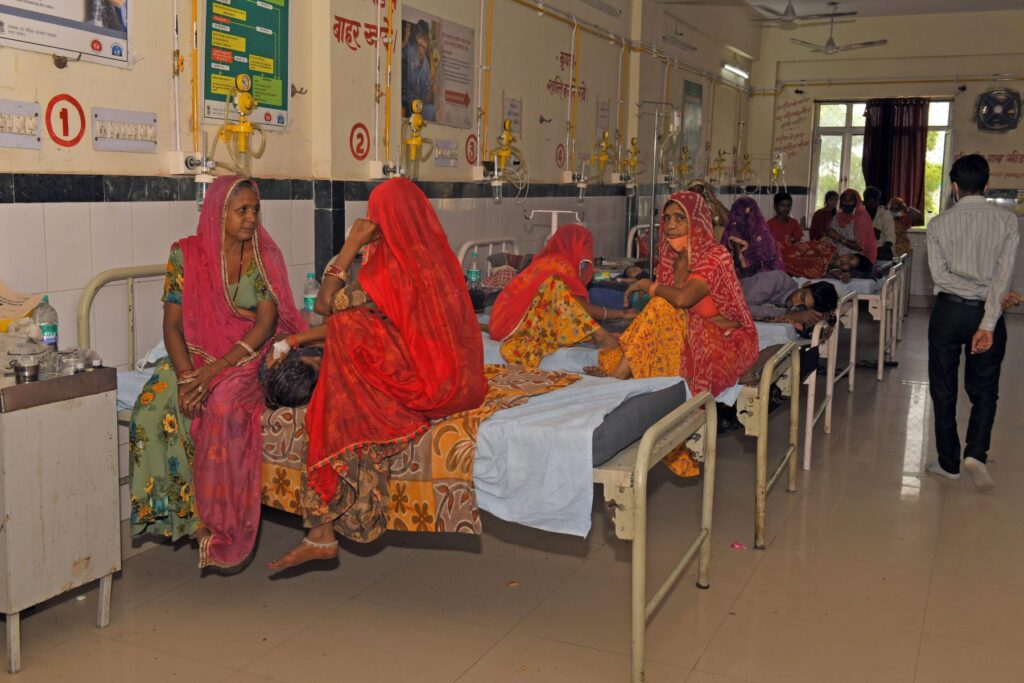
FILE PHOTO: Patients infected with dengue and malaria receiving treatment at the children's ward of a government hospital in Rajasthan (Image: Sumit Saraswat / Pacific Press / Alamy)
- Dengue is no longer confined to tropical climates and is expanding to other regions. Latest research shows that as global temperatures rise, colder regions may see increased dengue incidences.
- Warm temperatures play an important role by creating optimal conditions for the mosquito vectors.
- Humidity, meanwhile, is found to favour hatching, survival rate, and biting frequency of adult dengue mosquitoes.
Dengue, typically associated with tropical climates and low-income regions, is now spreading beyond its traditional borders. The world’s cooler areas are expected to see the biggest increase in cases according to a recent analysis of data from 21 countries by the Society of Tropical Medicine and Hygiene. The study finds that dengue fever cases rise as temperatures increase and a global rise in temperature as well as extreme heat events can lead to an increase in dengue incidences.
According to the study, dengue cases may increase by more than double by 2050 in 21 countries with a population of over 260 million people. These countries primarily lie in Southeast Asia, sub-Saharan Africa, and parts of South America. “The effects of temperature were much larger than I expected,” Marissa Childs, lead author and assistant professor of environmental health at the University of Washington said in the statement. “Even small shifts in temperature can have a big impact for dengue transmission, and we’re already seeing the fingerprint of climate warming,”
Latest data and studies say that about half of the world’s population is now at risk of dengue with an estimated 100-400 million infections occurring each year and India is among the 30 most highly endemic countries in the world. Another study published in August 2024 looked at the population at risk and highlighted that five Asian countries contributed to over 80% of the estimated increase with India and China as the top two contributors.
Shikha Taneja Malik, Senior Scientific Affairs Manager, Viral Diseases Cluster, at Drugs for Neglected Diseases (DNDi) South Asia said that India bears the majority of global dengue burden and annual incidence of dengue has increased five-fold in the last decade in India. She cited multiple reasons for this increase such as globalisation, viral evolution and climate change.
Commenting on climate change as one of the factors, she said that “we’ve observed a concerning connection between climate change, global warming, and the expanding threat of dengue. Warmer temperatures play a key role in this by creating optimal conditions for the mosquito vectors, Aedes albopictus and Aedes aegypti, which thrive between 25°C and 30°C. This warmth doesn’t just help the mosquitoes grow faster; it also shortens the viral incubation period inside the mosquito and increases how frequently they bite.”
A separate study published earlier this year highlighted the link between climate change and dengue in India. The study specifically investigated the climate-dengue links in Pune, that has a high dengue disease burden. The researchers used dengue associations with weather and developed a machine-learning model. While this framework provides an understanding on the impacts of climate change on dengue in Pune, it can be used as a template for other regions too. The study gives insights into the impact of climate on dengue occurrences and introduces a methodology for using climate change projections to assess future disease risks. “Dengue fever is a climate-sensitive disease and is significantly influenced by changes in meteorological conditions,” said the study.
There is more to this, it’s not just extreme heat alone, humidity and precipitation lead to an increase in reproductive capacity of mosquitoes, explains Taneja Malik while citing a study. She said, “Climate change has caused elevated temperatures or made the atmosphere warmer, leading to increased precipitation, or humidity. All of which has led to the accelerated reproductive capacity of mosquitoes, stimulating egg hatching and accelerating growth of the larvae, thus decreasing the time to maturity.”
So how exactly does humidity play a role?
Monsoons, usually associated with pleasant weather and cool breezes, are now regularly humid and have high temperature levels.
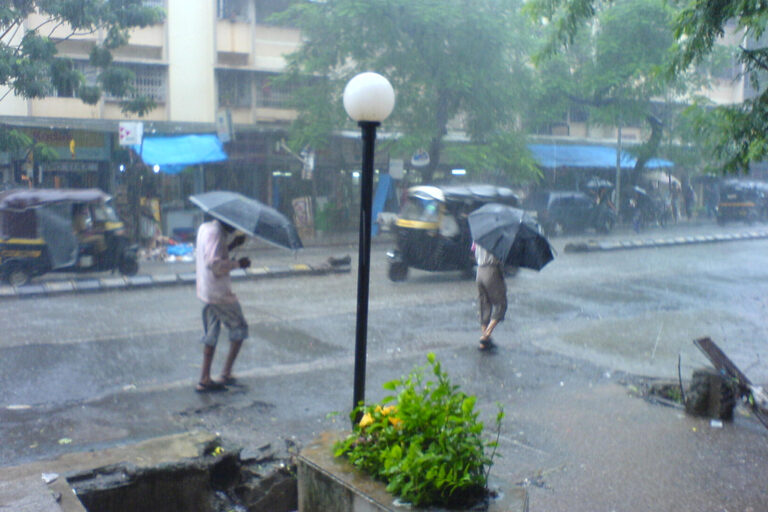
According to the Pune dengue study, “Dengue mortality over Pune is high when relative humidity levels are between 60 and 78% during the summer monsoon season (June to September).” The reason? Humidity is found to favour hatching, survival rate, and biting frequency of adult dengue mosquitoes, according to the study.
Multiple other studies have also related dengue cases to high temperature, precipitation, or humidity. Moreover, precipitation plays a vital role in mosquito survival at juvenile stages, while relative humidity prevents mosquito habitats and adult mosquitoes from drying up.
A trend analysis by Pharmeasy, a digital healthcare provider, uses their lab data to understand the pattern and highlights how dengue cases are tied to the Indian monsoon and humidity. “Lab data shows that dengue cases begin to rise in July, peak from August to October, and decline by December.” In India, the monsoon season typically lasts from July to September.
When asked how humidity impacts dengue reach, Taneja Malik said, “The dengue vector favours all tropical conditions which would lead to an increase in its multiplication. Hence, warmer temperatures, high humidity, excess precipitation, storms as well as flooding are all conducive conditions for the vector to grow.” She also highlighted how substandard housing, unplanned urbanisation, sewage and waste are also favourable conditions for an increased transmission of the disease. Running vector control drives and strengthening hospitals is the much-needed intervention to help tackle these conditions.
India is doing more in terms of research including advanced sensors and monitoring mosquitoes at species levels and genome re-sequencing. A study published in 2024 reports for the first time a high coverage genome sequence data of an Indian Ae. albopictus mosquito, noting, “This comprehensive understanding could pave the way for novel target gene identification in developing vector control measures.” The study generated high-quality genomes of Indian Ae. aegypti and Ae. albopictus that provides insights and comprehensive understanding of vector species and fills knowledge gaps.
(Published under Creative Commons from Mongabay India)