After Decades Of Drought-Proofing, J’khand Farms Still Depend On Rain
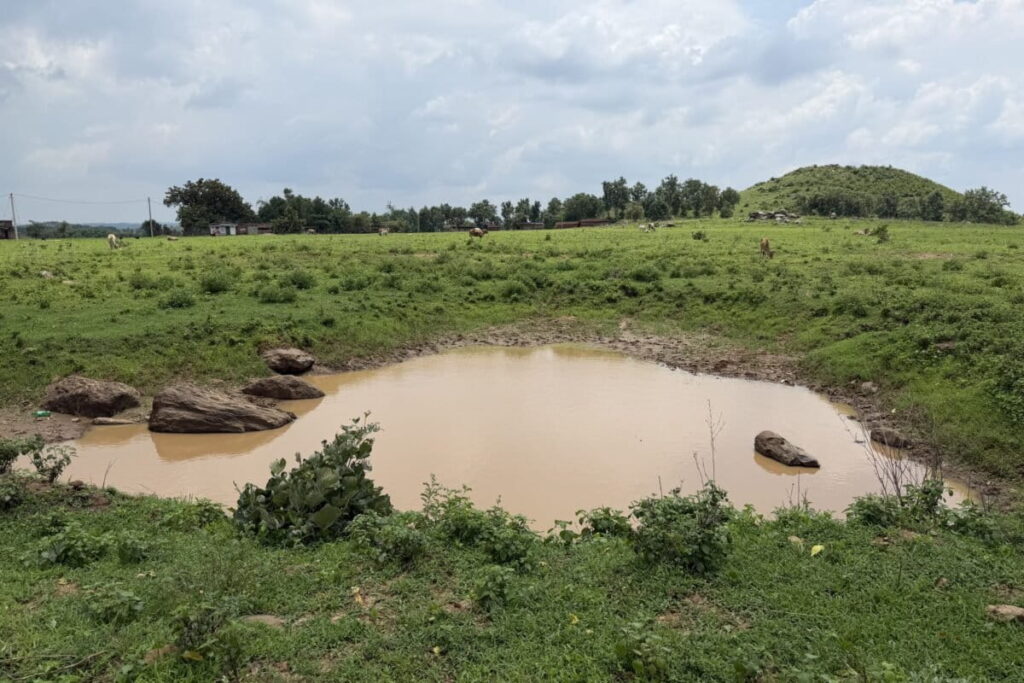
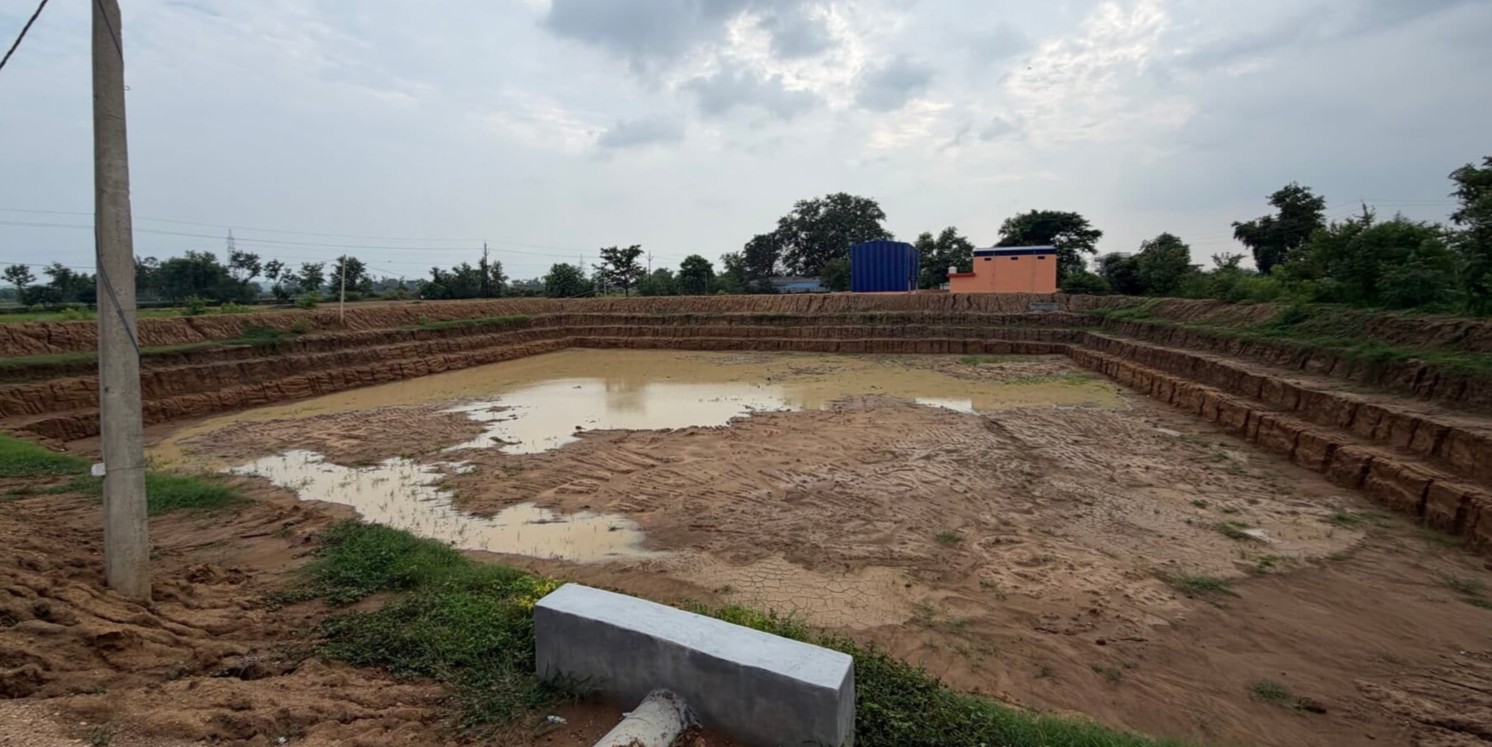
A dobha is a small pond to aid irrigation of farms. This one, near Budhibir village in Jharkhand, is almost filled with silt (Image by Ashwini Kumar Shukla)
- Though July saw more rain than expected, Jharkhand’s rainfall this year is still 48% below normal.
- Of the ten droughts Jharkhand has declared in the last 25 years, Palamu has been hit hardest every time. A looming El Niño now threatens another failed season.
- Lift irrigation, canals and ponds built over five decades to drought-proof Palamu now lie broken, abandoned and unmonitored.
Though Jharkhand received better-than-expected rainfall in July, the state remains 48% below its normal monsoon rainfall, reviving fears of another drought in one of India’s most climate-vulnerable regions. Nowhere is that anxiety more visible than in Palamu district, which has borne the brunt of every drought declared by Jharkhand over the past 25 years. With the India Meteorological Department warning that El Niño conditions could strengthen during the southwest monsoon, residents say decades of investment in drought-proofing infrastructure have been undermined by neglect, leaving agriculture almost entirely dependent on rainfall once again.
Standing amid a vast expanse of grass-covered land in Darudih village, 52-year-old farmer Koushal Kishore Vishvakarma points to what was once productive farmland.
Broken promises of drought-proofing
“This is all barren land now, but here we used to farm,” he says. “It’s covered in grass because of the fresh monsoon rain, but it’s nothing more than grazing land now.”
He gestures towards a small perennial stream more than a kilometre away.
“Can you see that river there? From there, water used to come all the way here.”
The water reached these upland fields through a lift irrigation system that pumped river water uphill to villages beyond the reach of gravity-fed canals. According to Vishvakarma, the project transformed farming across ten villages.
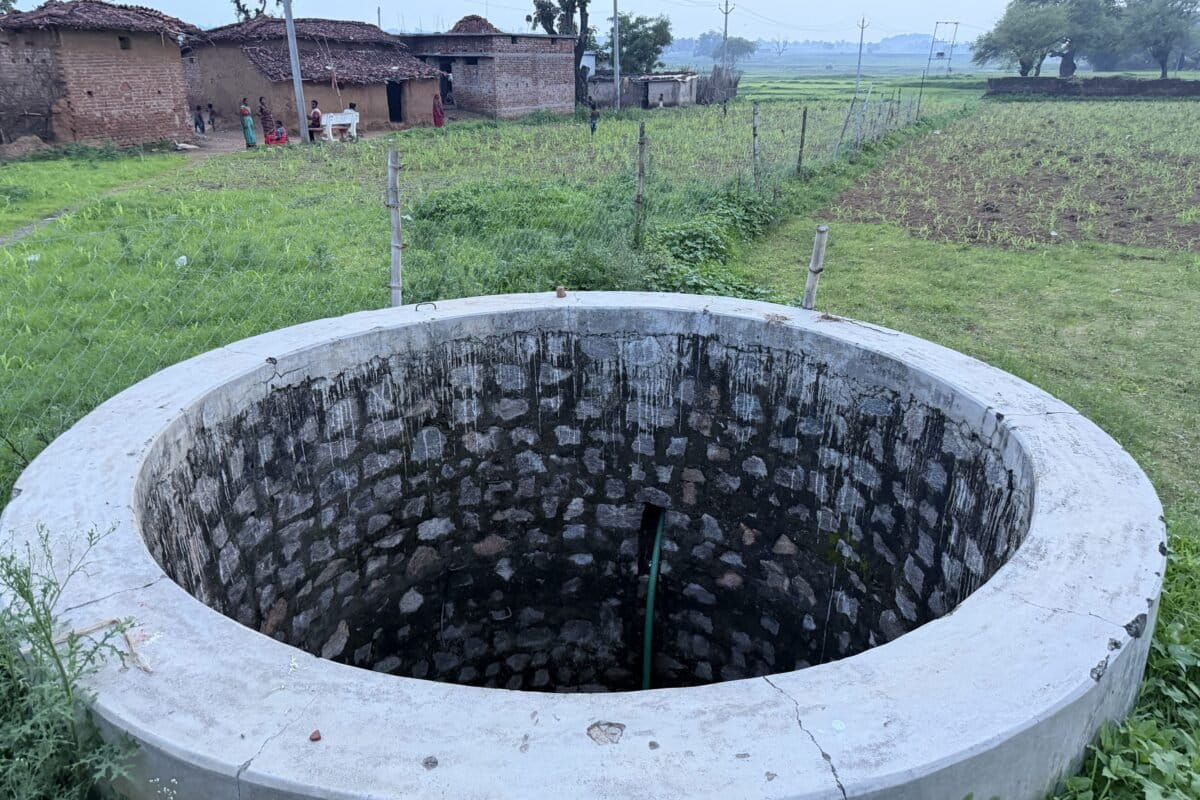
“Even in summer, people used to grow crops and vegetables,” he recalls. “On my ten acres, one year’s harvest was enough for two years. Every year I sold more than 50 quintals of grain.”
The system, however, functioned for only five years before a damaged pipeline brought it to a halt.
“After one pipe broke, nobody repaired it. Now we cultivate only during the rainy season, and only in lowland paddy fields. There is no rabi crop anymore,” he says. “With great difficulty, we manage a little paddy.”
Successive droughts have made even that increasingly difficult.
“In 2023 and 2024, the drought became so severe that almost everyone in the village migrated for work,” Vishvakarma says. “This year’s heat has also destroyed vegetable crops. We’ve never experienced nights this hot before.”
Officials acknowledge that Palamu’s irrigation infrastructure has steadily deteriorated.
“Given the geography of Palamu and the Chotanagpur plateau, lift irrigation was a very good scheme,” says Shyam Bind, Soil Conservation Officer in Palamu. “It was a huge investment with heavy underground pipelines serving multiple villages, but it became a total failure because of maintenance.”
He blames poor institutional oversight.
“Once a system is handed over, it is either never maintained or the middleman takes all the money.”
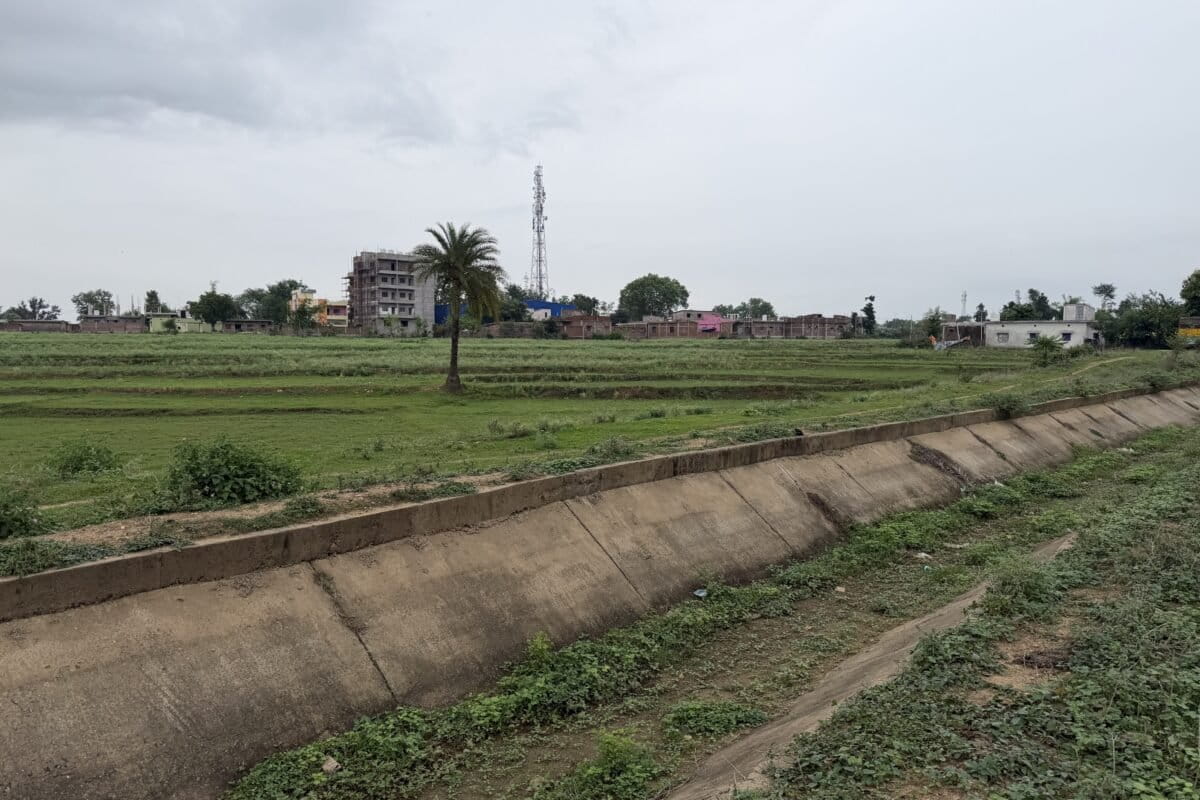
Although Jharkhand has over 17,000 surface water lift irrigation schemes, Bind admits many have effectively ceased functioning.
“This scheme is no more,” he says. When asked whether records exist documenting the condition of these projects in Palamu, he responds, “There are none.”
Farm ponds, locally known as dobhas, were introduced as another drought adaptation strategy.
“In 2015-16, we aimed to build 3,624 dobhas in the district and completed around 2,500,” Bind says. “It was a successful one-time project.”
Yet no audit has been conducted in nearly a decade to determine how many remain functional.
“If a dobha is not maintained, it fills with silt within two or three monsoons and stops holding water,” Bind admits.
Between 2021 and 2026, the district also constructed 321 larger ponds. However, instead of creating new water bodies, authorities are now focusing on reviving old ones.
“This year we are only restoring existing ponds and building five check dams,” Bind says. “If a strong El Niño develops, Palamu will be among the worst-affected districts.”
The district’s vulnerability is deeply rooted in history.
During the devastating 1966 Bihar famine, Palamu was among the worst-hit regions. Seventy-two-year-old Shrikrishna Oraon still remembers those days vividly.
“We survived by eating dry ber. There was nothing else to eat,” he says.
The famine prompted large-scale investments in ponds, wells, check dams and irrigation structures.
“My elder brother helped dig this ahara,” Oraon recalls while standing beside a village pond. “People weren’t paid in cash. They received five kilos of grain instead.”
That pond continues to support nearby paddy cultivation decades later, demonstrating how durable water infrastructure can transform agriculture when maintained.
Not all projects have endured.
The Mandal Dam canal network, launched in the 1970s to irrigate hundreds of villages across Palamu, Garhwa and Aurangabad, remains largely dry despite decades of expenditure.
“If water flowed through this canal, all these fields would be cultivated,” says farmer Basant Singh of Chiyanki village. “Many families settled here believing irrigation would change agriculture. It never happened.”
Today, he says, less than half the village’s farmland remains under cultivation.
“One out of every four men from this village has migrated,” Singh says. “Both my sons now work as daily-wage labourers in Bengaluru.”
According to Akhilesh Saha, Deputy Director at Krishi Vigyan Kendra, Palamu, less than five percent of the district’s agricultural land is irrigated, while nearly 92 percent of Jharkhand’s farmland still depends on rainfall.
“To a great extent, the government has addressed drinking water shortages,” Saha says. “But irrigation remains a major challenge. When crops fail, food security is directly affected.”
This year’s delayed monsoon has already disrupted agriculture. Between June 1 and August 4, Palamu recorded 48 percent below-normal rainfall. Paddy sowing has slowed dramatically compared with last year.
“There is still time,” Saha says. “But if rainfall doesn’t improve soon, this year’s crop will be drastically affected.”
He says climate patterns have changed significantly over the past two decades.
“Annual rainfall has declined and rainy days have fallen from around 90 to nearly 50,” he says. “Farmers are increasingly shifting from paddy to maize, pigeon pea and coarse grains.”
The agriculture department has prepared contingency plans encouraging short-duration paddy varieties, pulses and oilseeds if sowing is delayed. But when asked how many farmers adopted similar measures during last year’s drought, Saha says no estimates are available.
Farmer Basant Singh says such support rarely reaches villages like his.
“I don’t know anyone here who received those seeds,” he says. “We faced two consecutive drought years. It became so bad there wasn’t even grass left for cattle.”
Back in Darudih, Vishvakarma reflects on decades of drought-proofing efforts that have gradually fallen into disrepair.
“If the rains come on time, somehow we survive,” he says. “If they don’t, there is nothing we can do.”
After decades of investments in lift irrigation, canals, ponds, check dams and wells, Palamu’s agriculture continues to depend on the same uncertain factor it did generations ago—the arrival of the monsoon.
(Published under Creative Commons from Mongabay India)