Great Nicobar Dispute: Are Tribal Leaders ‘Not Necessary Parties’?
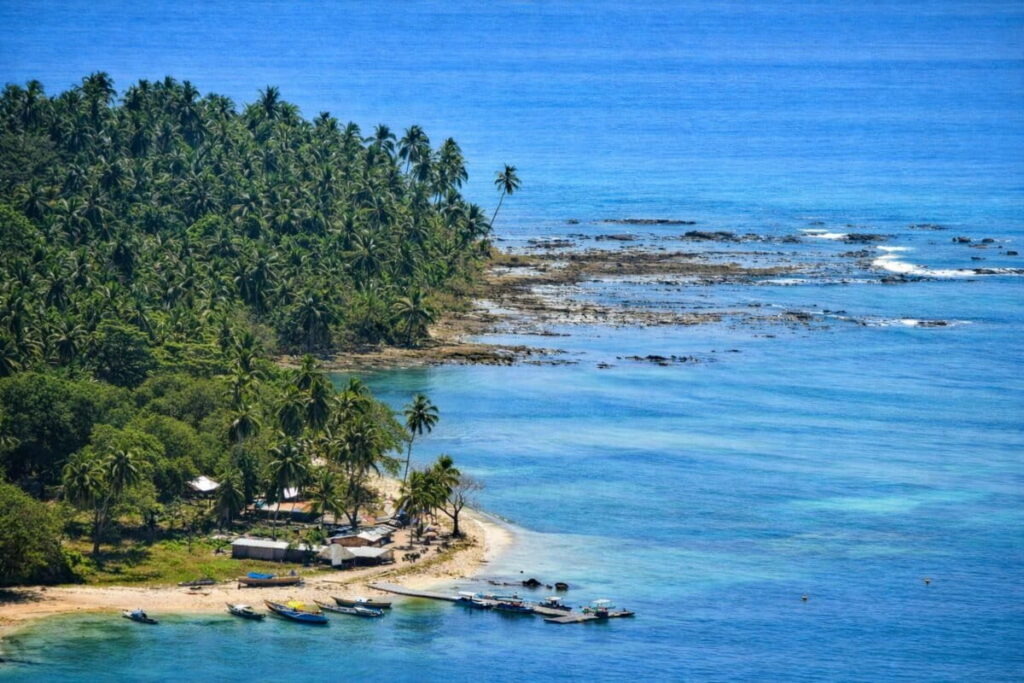
The “Holistic Development of Great Nicobar Island” infrastructure project includes building a port, township, airport, and power plants. Settlement of rights under the FRA is crucial before forest land can be diverted, but before 2022, FRA was never initiated on the Island (Representative image by Sayan Samanta via Pexels)
- The Union Tribal Affairs Ministry has told the Calcutta High Court that Nicobarese leaders seeking to join a petition on Great Nicobar forest rights are “neither necessary nor proper parties,” and were “sleeping over” their rights during the statutory process.
- The Nicobarese petitioners allege that the 2022 forest rights settlement enabling the Island’s mega development project relied on consent from non-tribal settlers.
- Though the government maintains forest rights are settled, its own annual report shows zero claims settled in the Andaman and Nicobar Islands.
The Union Ministry of Tribal Affairs has told the Calcutta High Court that Nicobarese leaders seeking to join a petition challenging the settlement of forest rights on Great Nicobar Island are “neither necessary nor proper parties,” arguing that they were “sleeping over their alleged rights during the entire statutory process.”
The dispute centres on whether the government followed the Forest Rights Act (FRA), 2006, before approving the diversion of forest land for the Great Nicobar Island development project. The law recognises the rights of tribal and other traditional forest-dwelling communities and requires their claims to be addressed before forest land is diverted.
The ongoing case was filed by former IAS officer Meena Gupta, who has challenged the Union government’s assertion that forest rights on the island had been settled. On July 9, 2026, four Nicobarese residents sought to join the petition, alleging that official certifications relied on consent from non-tribal settler communities rather than the island’s Indigenous people.
The Nicobarese and the Shompen, a particularly vulnerable and largely uncontacted tribe, are among the communities affected by the project. The island is also home to families of ex-servicemen settled there from mainland India under a government scheme beginning in 1969.
“This certificate falsely states that the concerned Gram Sabhas have consented to the diversion of forest lands and cites meetings of the Gram Sabhas of the settler community in which no Nicobarese were present,” the impleadment application states. It adds that “no Gram Sabha meeting of the tribals was ever convened to discuss the issue of diversion of forest lands for the mega-project.”
A long-standing demand among the Nicobarese has been to return to their ancestral villages after displacement caused by the 2004 tsunami. Parts of the land they seek to return to are now proposed for diversion under the development project.
Souparna Lahiri, a policy analyst associated with the Climate Land Ambition and Rights Alliance and a former member of the FRA drafting committee, criticised the ministry’s position.
“The legitimacy of the Forest Rights Act lies with the participation of the genuine forest dwellers. If they are not included in the gram sabhas, it constitutes a violation of the law,” he said.
Disputed consent and questions over forest rights settlement
The government’s Holistic Development of Great Nicobar Island project includes a transshipment port, a township, a greenfield international airport, and solar and gas power plants. The project proposes diverting around 166 square kilometres of forest land.
Under the FRA, gram sabhas play a central role in recognising individual and community forest rights. The Sub-Divisional Level Committee (SDLC) examines gram sabha resolutions and assesses claims as part of the statutory process.
Official records indicate that the SDLC was constituted on July 26, 2022. On August 12, a special gram sabha reportedly “unanimously resolved” to permit the diversion of forest land. The SDLC met the following day and concluded that the diversion would not infringe upon tribal rights. On August 16, a No Objection Certificate (NOC) bearing the signature of Barnabas Manju, chief of the Great Nicobar Tribal Council, was attached to the committee’s minutes.
Manju later sought rehabilitation within ancestral villages and withdrew his consent to the NOC in November 2022. His withdrawal letter alleged that the document had been read out only in parts, without adequately explaining the implications of diverting forest land or identifying the areas affected.
According to Lahiri, an NOC signed by a tribal chief cannot replace a formal gram sabha decision. “There has to be a quorum and a written decision by the forest gram sabha,” he said.
The Nicobarese petitioners further allege that Manju was informed of his appointment to the SDLC only on the day of its meeting and was not given sufficient information to make an informed decision. They argue that his signature could not constitute consent on behalf of the entire community.
The Tribal Affairs Ministry, however, maintains that objections raised through correspondence to various authorities did not constitute formal claims or appeals under the law. It said these objections had not been presented before the appropriate statutory forums and could not retrospectively establish a grievance.
Questions have also emerged over the government’s claim that forest rights were settled. Before 2022, the administration maintained that tribal interests were protected under the Andaman and Nicobar Islands (Protection of Aboriginal Tribes) Regulation, 1956, making a separate settlement under the FRA unnecessary.
Yet the Ministry of Tribal Affairs’ annual report for 2024-25 recorded zero forest rights claims settled in the Andaman and Nicobar Islands as of March 2025. A draft Tribal Welfare Plan prepared in October 2025 and shared with the Tribal Council in March 2026 also lists “land survey and FRA clearance” among the tasks planned for its first six months, suggesting that processes may remain pending.
The draft plan states that displaced tribal families should be granted access to forest rights near new settlements “wherever feasible,” while allowing continued access to traditional forest areas in accordance with existing laws and customary practices.
Lahiri said forest rights exist independently of government recognition. “These rights are neither created by the Act nor granted by the government. It is the duty of the government to see that those rights are settled on paper for documentary purposes,” he said.
The Union Environment Ministry reportedly approached the Supreme Court to halt proceedings in the case, but its plea was refused on October 5. Justice Joymalya Bagchi observed that the preservation of tribal culture is constitutionally protected.
The Calcutta High Court has scheduled the next hearing for November 25 and 26.